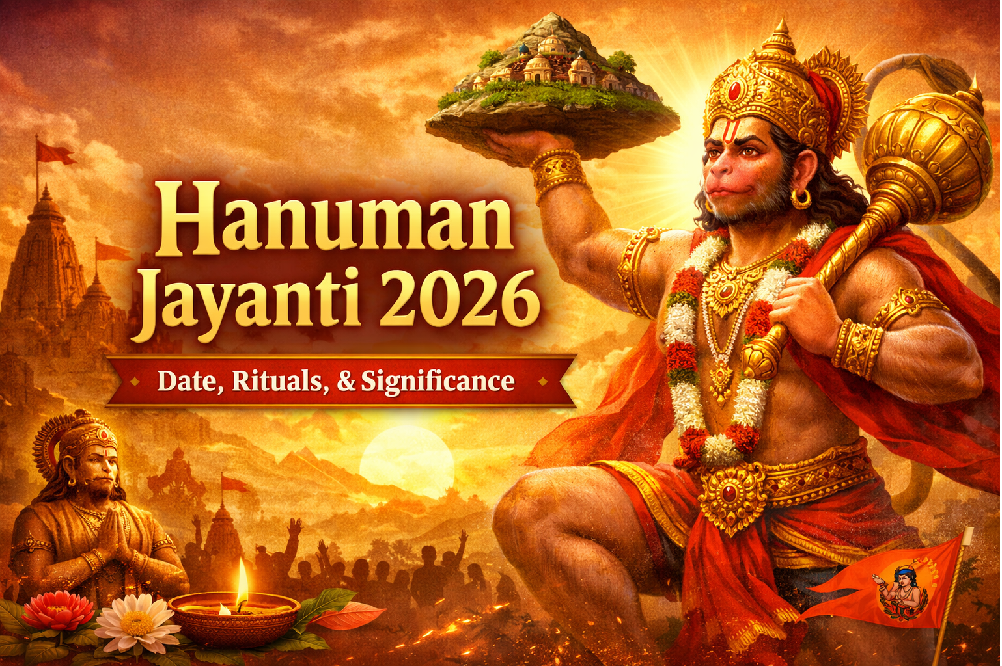
Hanuman Jayanti is one of the most sacred and also the most widely celebrated festivals in India as it is dedicated to the birth of Lord Hanuman – the god of strength, devotion, courage and selfless service. Devotees all around the country celebrate this auspicious day with a lot of faith involved in prayers, fasting, and recitations of sacred texts.
In 2026 Hanuman Jayanti fetches special spiritual significance, as it provides a combination of divine energy, auspicious timings and traditional practices which allow the devotees to connect closely with the blessings of Lord Hanuman.
This blog will walk you through all you need to know about Hanuman Jayanti 2026 – from date and timings, to rituals, mythology and more frequently asked questions.
Hanuman Jayanti 2026 Date and Muhurat
According to the Hindu Panchang (calendar), Hanuman Jayanti is celebrated on Chaitra Purnima (full moon day of Chaitra month).
Auspicious Puja Timings (Muhurat)
🕉️ Purnima Tithi
Tithi Begins
⏰ April 1, 2026 — 7:06 AM
Tithi Ends
⏰ April 2, 2026 — 7:41 AM
🌸 Puja Muhurat
Who is Lord Hanuman?
Lord Hanuman is one of the most revered deities of Hinduism. He is known as the greatest devotee of Lord Rama and a central character in epic Ramayana.
He symbolizes:
- Strength (Bajrangbali) : Lord Hanuman is known as Bajrangbali, meaning one whose body is as strong as a thunderbolt. His strength is not just physical—it represents inner power, resilience, and the ability to overcome any obstacle in life.
- Devotion (Bhakt) :Hanuman is the ultimate devotee (bhakt) of Lord Rama. His devotion teaches us the importance of faith, loyalty, and surrender to a higher purpose without ego or expectation.
- Intelligence : Beyond strength, Hanuman is extremely wise and knowledgeable. His intelligence reflects clarity of thought, problem-solving ability, and the importance of using wisdom along with power.
- Courage : Hanuman showed fearless courage in every situation—whether crossing the ocean or facing powerful enemies. He inspires us to stand strong in difficult times and act with bravery and confidence.
- Loyalty : His unwavering loyalty to Lord Rama is a symbol of true commitment. Hanuman teaches us to stay dedicated to our values, relationships, and responsibilities with honesty and integrity.
Hanuman is believed to be incarnation of Lord Shiva and son of Vayu (Wind God) which gives him immense speed and power.
Significance of Hanuman Jayanti
Hanuman Jayanti considers the divine birth of Hanuman along with his vigorous loyalty to Lord Rama. The festival teaches us important values of life such as:
- Selfless service
- Faith in God
- Discipline
- Fearlessness
- Dedication to what was righteous
Devotees believe that by worshipping Hanuman, it removes:
- Fear
- Negative energy
- Obstacles
- Evil influences
Rituals and Celebrations
Hanuman Jayanti is celebrated with devotion and enthusiasm across India.
🛕 Common Rituals:
- Early morning bath and cleanliness
- Visiting Hanuman temples
- Offering sindoor, jasmine oil, and flowers
- Reciting Hanuman Chalisa and Sundar Kand
- Observing fast (vrat)
- Distributing prasad (boondi, laddoo)
🔥 Special Practices:
- Chanting “Jai Bajrangbali”
- Reading Ramayana
- Lighting diya and incense
Spiritual Meaning of Hanuman’s Powers
Lord Hanuman is known for his extraordinary powers, which are both physical and spiritual.
Major Powers:
- Ability to fly
- Shape-shifting
- Immense strength
- Healing abilities
- Protection from evil
Spiritually, these powers represent:
- Control over mind
- Discipline over body
- Devotion beyond ego
Is Hanuman Still Alive in Kaliyuga?
According to Hindu beliefs, Hanuman is a Chiranjivi (immortal being).
It is widely believed that:
- He still exists in Kaliyuga
- He appears wherever Ram’s name is chanted
- He protects devotees from harm
This belief strengthens faith and devotion among millions of followers.
What are the 5 Forms of Hanuman?
Hanuman is worshipped in multiple forms, each representing different qualities.
Panchamukhi Hanuman (Five-faced Hanuman):
- Hanuman (East) – Courage :
The east-facing form represents the original face of Hanuman. It symbolizes bravery, strength, and fearlessness. This form gives devotees the power to overcome fear, face challenges confidently, and stay strong in difficult situations. - Narasimha (South) – Protection :
The south-facing face is of Narasimha, the fierce avatar of Lord Vishnu. It represents protection from evil forces, negative energies, and fear. This form safeguards devotees and destroys all forms of danger and injustice. - Garuda (West) – Power :
The west-facing face is Garuda, known for strength and speed. It symbolizes power, dominance, and the ability to remove obstacles, especially those related to snakes, poisons, and hidden dangers. - Varaha (North) – Prosperity :
The north-facing form is Varaha, which represents wealth, stability, and success. This form blesses devotees with prosperity, growth, and protection of material and spiritual wealth. - Hayagriva (Upward) – Knowledge :
The upward-facing face is Hayagriva, the god of wisdom and learning. It symbolizes intelligence, education, and spiritual enlightenment. This form helps devotees gain knowledge, clarity, and focus.
Each form symbolizes divine protection and strength.
Which Festival is Coming in 2026?
One of the major festivals in April is Hanuman Jayanti 2026. Other important festivals of around this time include:
- Ram Navami : Celebrates the birth of Lord Rama, symbolizing truth, righteousness, and ideal living.
- Chaitra Navratri : A 9-day festival dedicated to Goddess Durga, representing power, purity, and spiritual growth.
- Hanuman Jayanti : Marks the birth of Lord Hanuman, symbolizing strength, devotion, and courage.
Amongst them Hanuman Jayanti stands out with being full of devotion and spiritual energy.
Is Hanuman Jayanthi Twice a Year?
Yes, in some regions of India, Hanuman Jayanti is celebrated twice:
- Chaitra Purnima (North India)
- Kartik Krishna Paksha (South India)
However, the main festival in North India is in April (Chaitra month).
What is Lord Hanuman’s Luckiest Number?
There is no officially defined lucky number in scriptures, however a lot of devotees have an association with:
- Number 7 with spiritual power
- Number 11 with Hanuman (due to Ekadashi Being is fasting)
It is considered very beneficial to chant Hanuman Chalisa 11 or 108 times.
Who Was Hanuman’s Wife?
According to most mainstream beliefs:
- Hanuman was a Brahmachari (celibate)
- He never married
However, some regional stories mention Suvarchala as his wife, but this is not widely accepted in mainstream Hindu tradition.
Conclusion
Hanuman Jayanti 2026 is not an ordinary festival, it is a strong spiritual chance to unite with devotion, power, and internal discipline. Through worship of Lord Hanuman, believers are seeking bravery, safety and life direction.
It does not matter whether you are fasting, reciting prayers, or just thinking about his teachings, this Holy Monday helps us to remember that the real power is humility and devotion.