Holika DahanStory, Significance, Rituals & Importance
Holika Dahan — also called Chhoti Holi — is celebrated on the full moon night before Holi. Communities across India gather around a sacred bonfire to honour the timeless victory of truth and devotion over arrogance and evil. More than a ritual of fire, it is a ritual of purification — for the mind, the heart, and the entire community.
Hindu Mythology
The Story Behind the Flames
At the heart of Holika Dahan lies one of India’s most beloved mythological tales — the story of an unshakeable devotee, a tyrannical king, and divine protection that triumphed over every scheme.
A young prince with unwavering faith in Lord Vishnu. He chose devotion over power and chanted Vishnu’s name ceaselessly, despite every threat against him.
Prahlada’s father — a demon king who demanded worship and despised his son’s devotion to Vishnu. He devised many plots to kill Prahlada, each failing by divine will.
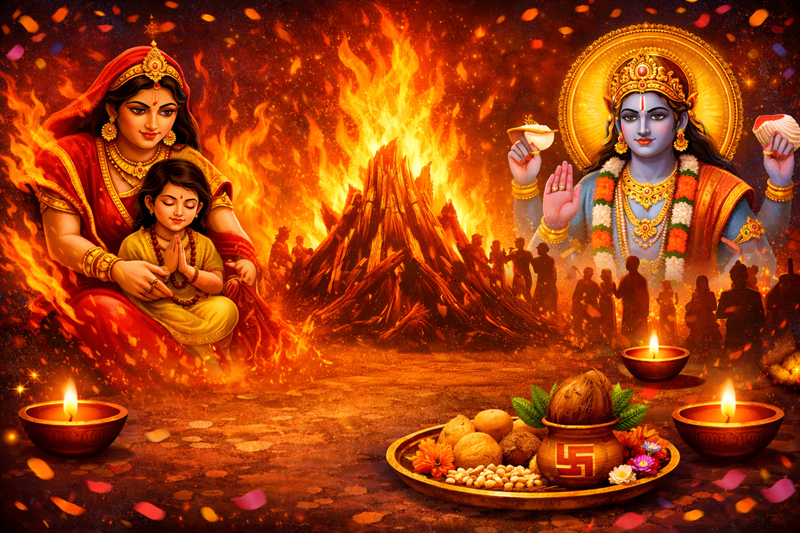
The king’s sister, gifted with a magical fire-resistant shawl. She entered a bonfire with Prahlada on her lap — but her evil intent reversed the blessing entirely.
Holika burned to ash while Prahlada emerged unharmed. Lord Vishnu’s grace shielded the innocent. Evil destroyed only itself; goodness survived.
“Evil intends harm — but the fire of righteousness always turns against the wicked. Devotion is the only shield that never breaks.”
Why We Celebrate
Lessons Written in Fire
Holika Dahan is not merely a tradition — it is a living lesson. The bonfire symbolises the burning of all negativity within us. People pray for anger, jealousy, ego, and hatred to be consumed by the flames so that happiness and light can enter their lives.
- 🌟 Truth is always stronger than deception
- 🛡️ Sincere devotion is the greatest protection
- ⚖️ Evil intentions destroy their own bearer
- 🔥 Burn ego, anger, jealousy & hatred
- 🌸 Patience and goodness bring lasting success
- 🧠 Arrogance leads to inevitable downfall
Timing
When is Holika Dahan Celebrated?
Holika Dahan falls on the full moon night (Purnima) of the Hindu month of Phalguna — usually in February or March. The exact date varies with the lunar calendar each year. The bonfire is lit at a spiritually auspicious moment called Muhurat, after sunset. The next morning is celebrated as Holi, the vibrant festival of colours.
Rituals & Customs
How Holika Dahan is Performed
Days in advance, communities gather dry wood, leaves, and cow-dung cakes, arranging them in an open area at the heart of the neighbourhood, ready for the evening ritual.
Before the fire is lit, worshippers offer flowers, roli, rice, coconut, and sweets around the pyre. Women pray especially for the health and protection of their families.
The bonfire is ignited at the astrologically auspicious time after sunset. Priests lead prayers and chants as the flames rise into the night sky.
Devotees walk around the fire (parikrama) in a clockwise direction while chanting prayers. Wheat, barley, or gram seeds offered into the flames are later distributed as blessed prasad.
Across India
Holika Dahan in Different States
From the Gangetic plains to the Deccan plateau, Holika Dahan wears many faces — yet carries one soul. Each region brings its own customs and colours to the celebration.
UP, Bihar, Delhi & Rajasthan host grand community bonfires with traditional songs and folk dances performed around the fire.
Celebrated as Dol Jatra with devotional processions and worship of Lord Krishna and Radha in a festive, colourful atmosphere.
Families celebrate with great enthusiasm and prepare special sweets like Puran Poli to share with neighbours and loved ones.
The festival marks the new harvest season with community offerings and joyful gatherings that blend tradition with celebration.
Know the Difference
Holika Dahan vs Holi
Though deeply connected, Holika Dahan and Holi are distinct in spirit, timing, and form. Understanding both enriches the full experience of this two-day celebration.
| Aspect | 🔥 Holika Dahan | 🎨 Holi |
|---|---|---|
| Timing | Night of Purnima | Next morning |
| Main Activity | Sacred bonfire ritual | Festival of colours |
| Tone | Devotional & spiritual | Joyful & playful |
| Symbolism | Victory of good over evil | Joy, unity & love |
| Focus | Prayer and purification | Celebration and community |
Science & Tradition
Scientific Reasons Behind Holika Dahan
Season Change: Holika Dahan coincides with the transition from winter to summer. The heat of the bonfire is traditionally believed to purify the surrounding air by destroying seasonal bacteria and insects that thrive in the changing environment.
Roasted Grains as Prasad: Consuming roasted wheat, barley, or gram at this seasonal shift is believed to aid digestion and help the body adjust smoothly as temperatures begin to rise.
Mental Positivity: Gathering around fire, participating in collective rituals, and chanting together are known to reduce stress, foster community bonds, and cultivate a shared sense of hope and renewal.
Celebrate Safely
Safety & Eco-Awareness
A meaningful celebration is also a safe and responsible one. As you gather around the holy fire this year, keep these simple guidelines in mind for everyone’s wellbeing.
Closing Reflection
Let the Fire Within Burn Bright
As the flames of Holika Dahan rise toward the night sky, let them carry away every trace of anger, ego, jealousy, and fear. This ancient fire does not just illuminate the darkness outside — it illuminates the darkness within us.
The story of Prahlada is a timeless reminder to stay firm in our values. Goodness, patience, and truth never perish. May this Holika Dahan bring you, your family, and your entire community renewed faith, lasting peace, and the quiet courage to always choose what is right.