Makar Sankranti is one of the most important and popular festival in India. Unlike many other Indian festivals that follow the lunar calendar, Makar Sankranti follows the solar calendar and it is celebrated every year during mid-January. In 2026, Makar Sankranti will be celebrated with great devotion, joy, and cultural diversity all over the country. This festival is also a spiritual transition, a time of the year, and the symbolic celebration of harvest so its meaning is very deep for people from all walks of life.
Makar Sankranti, is symbolic of the movement of the Sun into the zodiac sign of Capricorn or Makara. This transition is regarded as very auspicious in Hindu tradition. It is also the start of Uttarayan where days begin to get longer and brighter. Spiritually, it symbolizes the transition from darkness to light, ignorance to knowledge and negativity to positivity.
Significance of Makar Sankranti
The importance of Makar Sankranti is mythological and scientific. According to Hindu beliefs, the Sun God starts his northward journey on this day and spreads warmth, energy and life. Such a change is related to positive growth, prosperity and spiritual awakening.
From scientific point of view, Makar Sankranti is the period of winter solstice when the Sun gradually moves to the north and the days will become longer. This change has a critical role in agriculture, climate and human well-being.
Spiritually, it is that any good deed performed during Makar Sankranti like charity, prayer or holy bathing brings multiplied blessings. That is why, people wake up early, take sacred bath, donate food and clothes and offer prayers to the Sun God.
Why Makar Sankranti Is a Harvest Festival
India is an agricultural nation and the Makar Sankranti has a lot to do with farming culture. This time of the year is the time to close the winter crop season and start the new agricultural cycle. Farmers celebrate about the fruits of their hard work and give offerings to nature, the Sun and the Earth.
Different regions celebrate harvest in their own unique ways, but the core idea is the same – thankfulness, abundance and hope for a prosperous future. The festival brings farmers, families and communities together to celebrate success and renewal.
Religious Rituals and Holy Baths
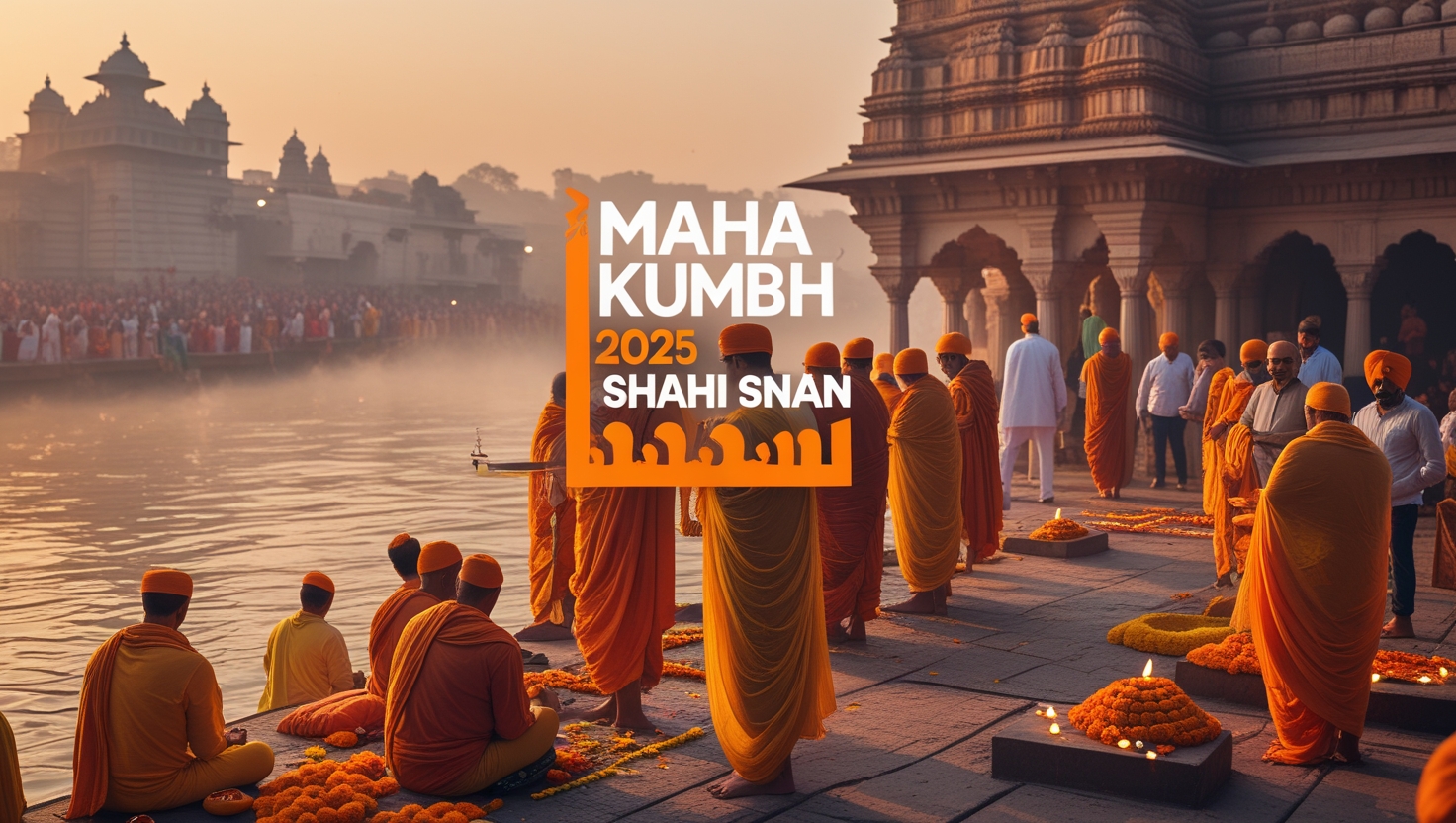
One of the most important rituals of Makar Sankranti is taking holy bath (Snan) in the sacred rivers like Ganga, Yamuna, Godavari and Kaveri. It is believed that bathing in holy rivers on this day clears one of past sins and purifies the soul.
Places such as Prayagraj (Sangam), Varanasi, Haridwar and Ganga Sagar host massive gatherings of devotees. Along with bathing, people also perform the charity (daan), i.e. giving sesame seeds, jaggery, food, clothes and money to the needy.
Traditional Foods of Makar Sankranti
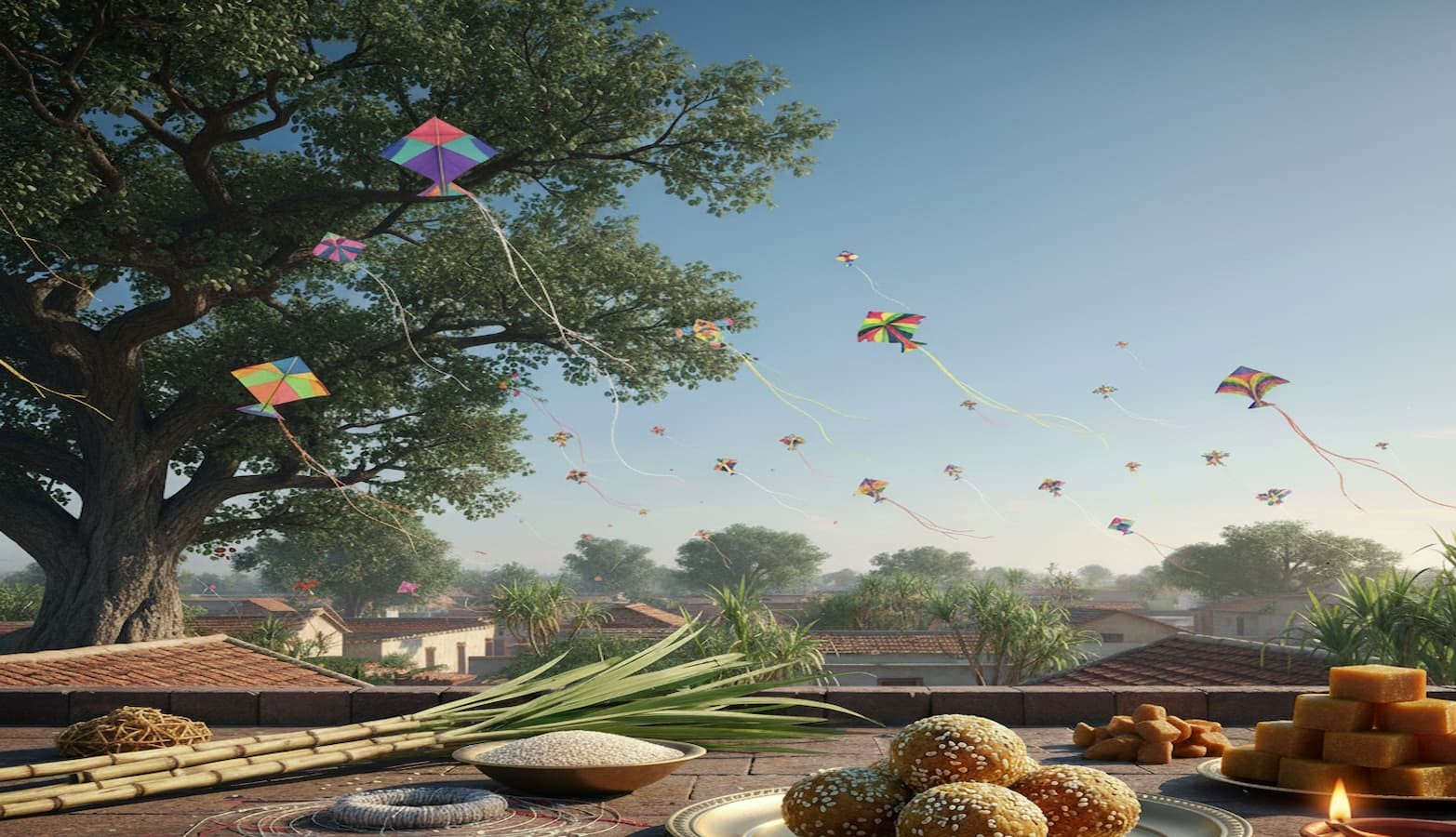
Food plays a special role in the celebrations of Makar Sankranti. Almost all areas make dishes made of sesame (til) and jaggery (gud). These ingredients are not only nutritious, but they also help to keep the body warm in winter.
Popular dishes are til-gud laddoos, chikki, pongal, pitha, khichdi and sweet rice. Sharing of sweets is symbolic of sweetness in relationships and harmony between members of society.
Makar Sankranti Celebrations Across India
India celebrates Makar Sankranti in diverse yet beautiful ways. Though the name and rituals may differ, the spirit remains the same.
Prayagraj (Uttar Pradesh) – Magh Mela
Prayagraj is famous for the sacred confluence of the Ganga, Yamuna, and Saraswati rivers. During Makar Sankranti, millions of pilgrims gather here to take a holy dip at the Sangam. Magh Mela begins on this day and continues for several weeks, filled with spiritual discourses, saints’ camps, and cultural events.
Varanasi and Ayodhya
In Varanasi, devotees perform Ganga Snan and attend grand Ganga Aarti ceremonies. Ayodhya witnesses temple rituals, charity events, and devotional gatherings, making the day spiritually uplifting.
Gujarat – Uttarayan Kite Festival
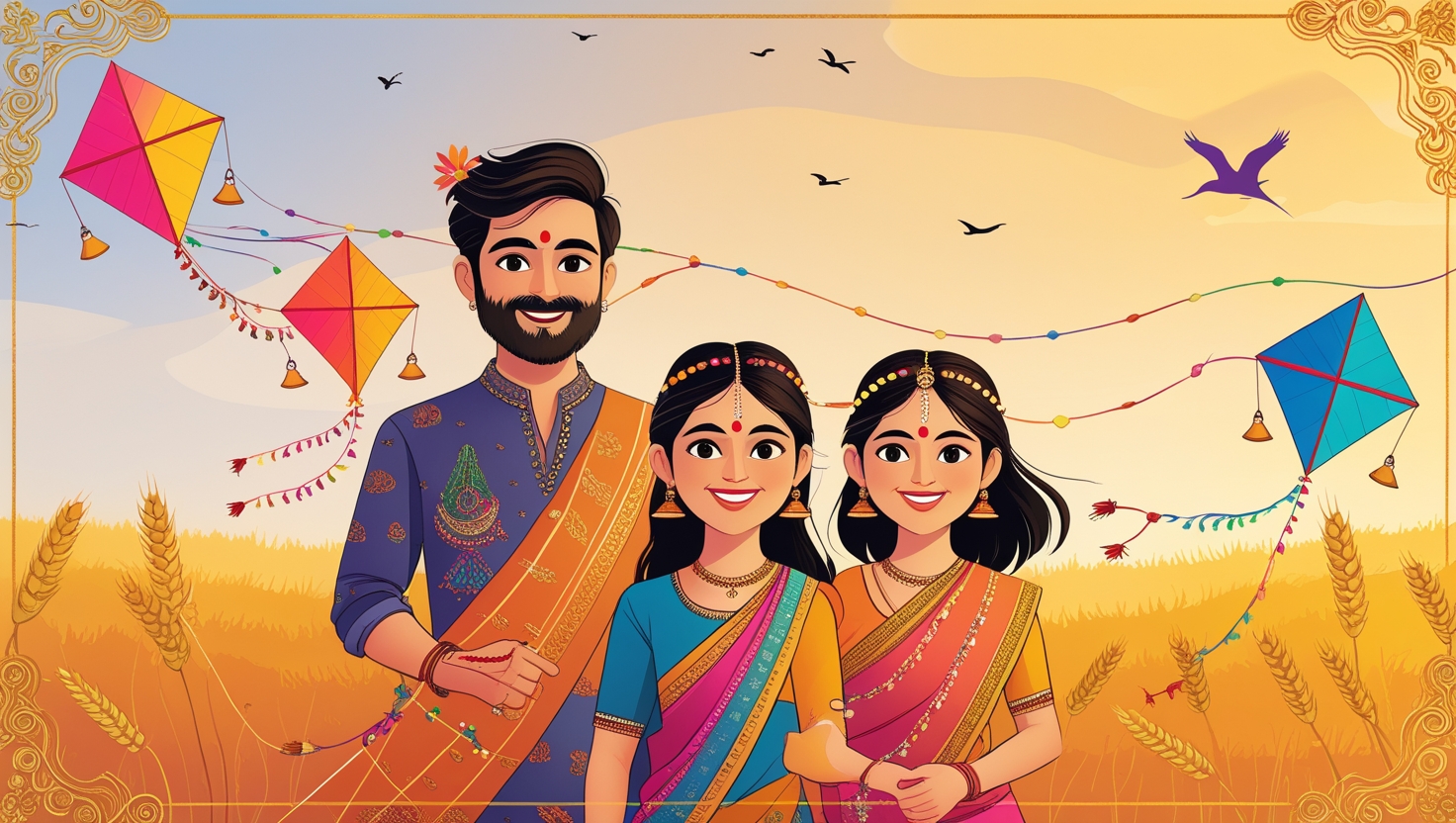
Gujarat celebrates Makar Sankranti as Uttarayan, the famous kite festival. The sky fills with colorful kites, and families gather on rooftops enjoying music, snacks, and friendly competitions. Ahmedabad hosts international kite festivals attracting tourists from around the world.
Rajasthan – Jaipur Kite Festival
Jaipur celebrates with vibrant kite flying, cultural programs, and traditional music. The festival adds color and excitement to the winter sky.
Maharashtra – Tilgul Traditions
In Maharashtra, people exchange tilgul sweets and greet each other by saying, “Tilgul ghya ani goad goad bola,” meaning “Accept this sweet and speak sweet words.” Women participate in haldi-kumkum ceremonies, strengthening social bonds.
Tamil Nadu – Pongal Festival
In Tamil Nadu, Makar Sankranti is celebrated as Pongal, a four-day harvest festival. It includes Bhogi, Thai Pongal, Mattu Pongal, and Kaanum Pongal. Farmers worship cattle, prepare sweet pongal, and decorate homes with colorful kolams.
Karnataka – Suggi Festival
In Karnataka, Suggi marks the harvest season. Villages host fairs, folk dances, and traditional celebrations honoring agriculture and nature.
West Bengal – Poush Sankranti and Ganga Sagar Mela
West Bengal celebrates Poush Sankranti with pitha festivals. Ganga Sagar Mela, held at the confluence of the Ganga and the Bay of Bengal, attracts millions of pilgrims who take holy baths and offer prayers.
Bihar – Dahi-Chura Festival
In Bihar, people enjoy traditional meals of dahi (curd), chura (flattened rice), and jaggery. It reflects simplicity and gratitude toward nature.
Assam – Magh Bihu
Assam celebrates Magh Bihu, also called Bhogali Bihu, with community feasts, bonfires (meji), and traditional games. It marks the end of the harvest season with joy and togetherness.
Punjab, Haryana, and Himachal Pradesh
In northern states, Lohri is celebrated a day before Makar Sankranti, followed by religious rituals and community meals on Sankranti day.
Makar Sankranti Wishes in English
Adding wishes to your celebrations spreads positivity and warmth. Here are a few simple wishes:
- May the Sun bring new energy, happiness, and success into your life. Happy Makar Sankranti 2026.
- Wishing you prosperity, peace, and sweet moments with your loved ones.
- May your life shine as bright as the rising Sun on this auspicious day.
Modern and Eco-Friendly Celebrations
In the current years, people have become aware of celebrating Makar Sankranti in a responsible manner. Eco friendly kites, safe flying practices and lessening of plastic usage are encouraged. Many families also take focus on digital donations and community services too; thus making the festival meaningful in the modern times.
Makar Sankranti and Indian Culture
Makar Sankranti is a great manifestation of unity in diversity in India. Though it is celebrated with various names and customs, the festival unites people through the common values of gratitude, kindness, faith and hope. It strengthens family ties and leads to social harmony.
Conclusion
Makar Sankranti 2026 is not just a festival but is a celebration of life, nature and spiritual growth. From holy baths in rivers, kites-filled sky, harvest feasts to acts of charity are the Celebrations spreading joy and positivity all across India. It is a reminder that we should embrace change, let go of negativity, and move towards a brighter and better future.
May this Makar Sankranti bring warmth, prosperity, and happiness to everyone. Happy Makar Sankranti 2026!