Karwa Chauth is one of the most cherished Hindu festivals, celebrated with devotion, love, and traditional rituals by married women across India. On this auspicious day, women observe a fast and pray for their husbands’ long life, good health, happiness, and prosperity. The festival brings families together through pre-dawn Sargi, traditional attire, mehndi, evening prayers, the recitation of the Karwa Chauth Vrat Katha, and the much-awaited Moon-sighting ritual.
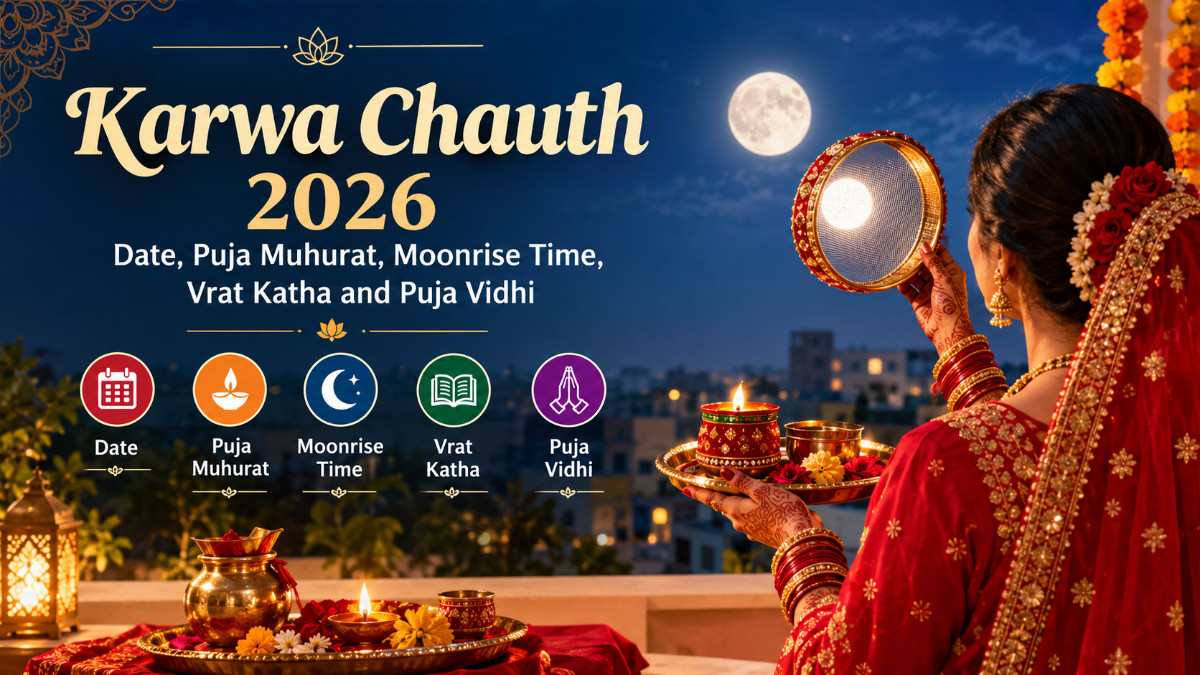
Karwa Chauth is observed on the Chaturthi Tithi of Krishna Paksha during the Hindu month of Kartik in many traditional calendars. Although customs differ among regions and families, the central observance involves fasting, worship, and prayers for marital well-being. The story of Queen Veeravati is one of the best-known traditional narratives recited during the festival.
If you are preparing to celebrate Karwa Chauth in 2026, this guide explains the festival date, important timings, Sargi traditions, puja samagri, step-by-step puja vidhi, complete Veeravati Vrat Katha, fasting customs, and frequently asked questions.
Karwa Chauth 2026 Date and Important Timings
Karwa Chauth will be observed on Thursday, October 29, 2026.
| Event | Date and Time |
|---|---|
| Karwa Chauth | Thursday, October 29, 2026 |
| Chaturthi Tithi Begins | October 29, 2026, at 1:06 AM |
| Chaturthi Tithi Ends | October 29, 2026, at 10:09 PM |
| Commonly Published Puja Muhurat | 5:38 PM to 6:56 PM |
| Moonrise Time | Varies by location |
| Traditional Fast Completion | After Moon sighting and the customary rituals |
Note: These are commonly published timings. Puja muhurat and moonrise time may differ according to location and Panchang calculations. Check a reliable local Panchang for the timings applicable to your city.
What Is Karwa Chauth and Why Is It Celebrated?
Karwa Chauth is a traditional Hindu festival associated with marital devotion, prayer, and family well-being. Many married women observe a day-long fast and pray for their husbands’ long life, health, and prosperity. In some communities, unmarried women also observe the fast while praying for a suitable life partner.
The word “Karwa” refers to a traditional water pot, while “Chauth” means the fourth lunar day. The karwa is used as part of the puja in many traditions and may be filled with water for the customary offerings.
Preparations often begin before sunrise with Sargi, a meal traditionally received from the mother-in-law in many families. During the day, women may apply mehndi, wear festive clothing, prepare the puja thali, and gather with relatives or friends for the evening ceremony.
The Moon has a special place in the observance. After the Moon becomes visible, women traditionally offer prayers and water and complete the fast according to their family customs.
Beyond the rituals, Karwa Chauth is an occasion for family connection, shared traditions, and expressions of love and commitment. The customs followed today reflect generations of religious and cultural practices passed down within families.
Karwa Chauth 2026 Puja Muhurat
The commonly published Karwa Chauth puja muhurat for October 29, 2026, is 5:38 PM to 6:56 PM.
The evening puja is an important part of the festival. Devotees arrange the puja items, worship Goddess Parvati and Lord Shiva according to their family traditions, and listen to or recite the Karwa Chauth Vrat Katha.
To prepare for the puja:
- Check the muhurat for your location.
- Arrange the karwa, puja thali, diya, flowers, and other offerings.
- Keep the Vrat Katha ready for reading or listening.
- Prepare any traditional offerings required by your family.
- Check the local moonrise time for the evening ritual.
Puja timings can vary because they are calculated using local sunrise, sunset, and other Panchang factors. Use a trusted local calendar if you want to follow a specific regional tradition.
Karwa Chauth 2026 Moonrise Time
Moonrise is one of the most anticipated moments of Karwa Chauth. Traditionally, women wait for the Moon to appear before performing the customary Moon-sighting ritual and completing their fast.
There is no single moonrise time for all of India. The Moon’s appearance depends on the observer’s location, so a time published for Delhi, Mumbai, or another city may not apply to your area.
For accurate planning, check the moonrise time for your own city on October 29, 2026.
What Is the Traditional Moon-Sighting Ritual?
Once the Moon becomes visible, many women follow these steps:
- Prepare the puja thali, sieve, diya, and water for the ritual.
- Look at the Moon through the sieve, according to family custom.
- Offer water to the Moon and pray.
- In traditions that include this practice, look at the husband through the sieve.
- Complete the fast in the customary manner, often with the husband offering water or food.
Practices vary by family and region, so the exact sequence may differ. The important point is to follow the tradition you observe and confirm the local Moon timing in advance.
Karwa Chauth Sargi: Meaning and Tradition
Sargi is the pre-dawn meal traditionally eaten before the Karwa Chauth fast begins. In many households, the mother-in-law prepares or gives Sargi to her daughter-in-law as a gesture of affection, blessings, and family connection.
The meal is usually eaten before sunrise. Afterward, women begin their fast according to their family’s tradition.
Common Sargi foods include:
- Fresh fruits
- Dry fruits and nuts
- Homemade sweets
- Roti or other traditional foods
- Yogurt or milk, if suitable
- Water and other permitted drinks before fasting begins
The menu differs among families and regions. There is no single compulsory Sargi menu for everyone.
Since the fast can continue for many hours, it is sensible to choose nourishing foods and drink sufficient water before the fasting period, if permitted by the tradition being followed.
Health note: A strict fast without water may not be suitable for everyone. People with medical conditions, those taking medicines that require food or fluids, and pregnant or breastfeeding women should seek appropriate medical advice before undertaking a strict fast. Health and safety should not be ignored for the sake of a ritual.
Karwa Chauth Puja Samagri 2026
Preparing the puja samagri in advance makes the evening ceremony easier and more organised. The exact items may differ according to family customs and regional traditions.
Commonly used puja items include:
- Karwa or a traditional water pot
- Water for the ritual
- Puja thali
- Diya and cotton wicks
- Ghee or oil for the diya
- Kumkum and roli
- Rice grains
- Flowers
- Incense sticks
- Sweets and fruits
- A sieve for the Moon-sighting ritual
- A copy of the Karwa Chauth Vrat Katha
- A red cloth or other traditional puja cloth
- Items for worshipping Goddess Parvati and Lord Shiva, according to family custom
Some families use a decorated karwa or include additional traditional offerings. Check the customs followed in your household before preparing the final list.
Karwa Chauth Puja Vidhi: Step-by-Step Rituals
The following steps describe a common form of the Karwa Chauth observance. Regional and family practices may differ.
1. Wake Up Early and Have Sargi
Wake up before sunrise and eat Sargi if it is part of your tradition. Many women receive blessings from elders before beginning the fast.
After the pre-dawn meal, begin the fast according to the custom you follow.
2. Take a Bath and Wear Traditional Clothes
Take a bath and wear clean clothes. Many women choose festive colours such as red, maroon, pink, or other traditional shades. Some also wear jewellery and apply mehndi.
Prepare the puja thali and other items ahead of time so that everything is ready for the evening.
3. Prepare the Puja Area
Clean the place where the puja will take place. Arrange the images or idols used for worship, the karwa, diya, flowers, kumkum, rice, and traditional offerings.
Keep the Vrat Katha ready so that it can be read or heard during the ceremony.
4. Worship Goddess Parvati and Lord Shiva
In many traditions, devotees worship Goddess Parvati and Lord Shiva and pray for marital happiness, peace, and family well-being.
Offer flowers, kumkum, rice, incense, and other customary items. Lord Ganesha may also be worshipped at the beginning of the ceremony according to household tradition.
5. Listen to or Read the Karwa Chauth Vrat Katha
Listening to the Vrat Katha is an important part of the observance. Women may gather with relatives or neighbours to hear the traditional story and pray together.
The story of Queen Veeravati is widely associated with Karwa Chauth. It emphasises faith, patience, devotion, and the importance of observing the ritual sincerely.
6. Perform the Evening Puja
Perform the evening puja during the appropriate local muhurat. Follow the prayers and offerings customary in your family.
In some communities, women perform the puja together and exchange traditional items or participate in a shared Vrat Katha recitation.
7. Wait for the Moon to Appear
After the puja, wait for the Moon to become visible. The waiting period is traditionally associated with patience and devotion.
Check the local moonrise time beforehand, but remember that actual visibility may be affected by clouds or other weather conditions.
8. Offer Arghya to the Moon and Complete the Fast
Once the Moon is visible, perform the customary Moon-sighting ritual. Many women look at the Moon through a sieve, offer water, and pray.
In some traditions, the woman then looks at her husband through the sieve, and he offers her water or food to complete the fast. Other families follow different customs.
Complete the fast according to your family tradition and personal health needs.
Complete Karwa Chauth Vrat Katha: The Story of Queen Veeravati
According to a popular Karwa Chauth Vrat Katha, there once lived a beautiful princess named Veeravati, who was the only sister among seven loving brothers. Her brothers adored her and always tried to protect her from every difficulty. After she grew up, she was married to a noble king. On her first Karwa Chauth after marriage, Veeravati went to her parents’ home to observe the fast for her husband’s long life and well-being. She woke up before sunrise, ate her traditional pre-dawn meal, and took a vow to observe the fast with complete devotion. Throughout the day, she neither ate nor drank, patiently waiting for the Moon to rise so that she could perform the evening rituals and break her fast. As the hours passed, she became extremely hungry, thirsty, and weak. Her seven brothers were deeply troubled to see their beloved sister suffering, and they repeatedly urged her to eat something, but Veeravati refused, explaining that she would not break her fast until she had seen the Moon. Unable to bear her condition, her brothers devised a plan. According to the traditional story, one brother climbed a tree or a high place and held a light behind a sieve or another object, creating the appearance of the Moon shining in the distance. The brothers then called Veeravati and told her that the Moon had risen. Exhausted and eager to complete the fast, Veeravati believed them. She offered her prayers, performed the customary ritual, and broke her fast. However, as soon as she began eating, she received heartbreaking news about her husband. In some versions of the story, she was told that her husband had died, while other retellings describe him as having suffered a grave misfortune. Veeravati was devastated and began to cry, wondering why such a tragedy had occurred despite her sincere devotion. Overcome with sorrow, she prayed to Goddess Parvati and begged the Divine Mother to restore her husband’s life and happiness. Moved by Veeravati’s devotion, the Goddess appeared to her or guided her through divine intervention, depending on the version of the tale. The Goddess explained that Veeravati had been deceived by her brothers and had broken her fast after seeing an artificial light instead of the actual Moon. Realising her mistake, Veeravati sincerely repented and resolved to observe the fast again with complete faith, patience, and care. She prayed with renewed determination and followed the traditional rituals faithfully. According to the popular Vrat Katha, Goddess Parvati was pleased with her devotion and granted her blessing. Through divine grace, Veeravati’s husband’s well-being was restored, and the couple was reunited. Filled with gratitude, Veeravati thanked the Goddess and understood the importance of patience, sincerity, and devotion. Since then, the story of Queen Veeravati has been narrated during Karwa Chauth to remind devotees of the traditional values associated with the fast. The tale teaches that religious observances should be followed with patience and sincerity, that even well-intentioned actions can have unintended consequences, and that faith and prayer can provide hope during difficult times. Although details of the story vary across regional and family traditions, Veeravati’s devotion and perseverance remain central to the popular Karwa Chauth Vrat Katha.
Karwa Chauth Fasting Rules and Traditions
Karwa Chauth fasting practices differ among families and communities. Some women observe a strict fast without food or water, while others adapt their observance according to health needs and household customs.
Common traditions include:
- Eating Sargi before sunrise.
- Avoiding food during the fasting period according to family practice.
- Participating in the evening puja.
- Listening to or reciting the Vrat Katha.
- Waiting for the Moon to appear before completing the customary ritual.
- Offering prayers for marital happiness and family well-being.
Health Considerations During the Fast
A strict fast without water can be physically demanding. Anyone with diabetes, kidney disease, a history of fainting, or other medical conditions should consult a qualified healthcare professional before fasting. People taking medicines that require food or fluids should also seek advice.
Pregnant or breastfeeding women should obtain appropriate medical guidance. If you experience fainting, confusion, severe weakness, or other concerning symptoms, prioritise your health rather than continuing a fast at any cost.
Religious practices can be discussed with family members or a trusted spiritual guide when health circumstances require an adjustment.
Karwa Chauth Wishes and Messages
Share these original wishes with family and friends to celebrate Karwa Chauth 2026.
- May this Karwa Chauth bring love, happiness, peace, and prosperity to your married life.
- Wishing you a blessed Karwa Chauth filled with devotion, beautiful memories, and family warmth.
- May your prayers bring peace to your heart and happiness to your home. Happy Karwa Chauth 2026!
- May the Moon-lit evening bring renewed love, understanding, and togetherness to your relationship.
- Wishing everyone observing Karwa Chauth a peaceful, meaningful, and joyful festival.
Frequently Asked Questions About Karwa Chauth 2026
1. When is Karwa Chauth in 2026?
Karwa Chauth will be observed on Thursday, October 29, 2026.
2. What is the Karwa Chauth puja muhurat in 2026?
A commonly published puja muhurat is from 5:38 PM to 6:56 PM on October 29, 2026. Timings may vary according to location and Panchang calculations.
3. What is the Karwa Chauth Moonrise Time in 2026?
Moonrise depends on your location. Check the local moonrise time for October 29, 2026, rather than relying on a time published for another city.
4. When does the Chaturthi Tithi begin and end?
The listed Chaturthi Tithi begins at 1:06 AM on October 29 and ends at 10:09 PM on October 29, 2026. Confirm the timing using a reliable Panchang for your location.
5. What is Sargi in Karwa Chauth?
Sargi is the pre-dawn meal traditionally eaten before the fast begins. In many families, it is prepared or given by the mother-in-law and may include fruits, nuts, sweets, and other foods.
6. Can unmarried women observe Karwa Chauth?
In some communities, unmarried women observe the fast with prayers for a suitable life partner. This practice is not universal and depends on family and regional customs.
7. Why is the Moon important on Karwa Chauth?
The Moon is central to the customary evening ritual. Many women wait for its appearance before offering water and prayers and completing their fast.
8. Who was Queen Veeravati?
Veeravati is the central figure in a popular Karwa Chauth Vrat Katha. The story tells how her brothers tricked her into believing the Moon had risen, leading to a misfortune involving her husband. She prayed for divine help, and the popular version ends with her husband’s well-being being restored.
9. Is the Veeravati Vrat Katha the same in every region?
No. Several traditional versions of the story exist, and details vary by region and family. The version commonly associated with Karwa Chauth emphasises devotion, patience, and sincere observance.
10. What should be included in a Karwa Chauth puja thali?
A traditional puja thali may include a diya, kumkum, rice, flowers, sweets, water, a karwa, and a sieve for the Moon-sighting ritual. The exact items depend on family customs.
11. Can fasting rules be adapted for health reasons?
Fasting customs vary, and health needs should be taken seriously. People who may be at risk from fasting should seek medical advice and discuss suitable adaptations with their family or spiritual guide.
Conclusion
Karwa Chauth 2026 will be observed on Thursday, October 29. For many families, the festival combines prayer, traditional rituals, family customs, and expressions of marital love.
From preparing Sargi before sunrise to performing the evening puja and waiting for the Moon, each part of the observance holds meaning for those who celebrate it. The traditional story of Queen Veeravati adds another layer to the festival, reminding devotees of the values of patience, sincere prayer, and faith.
If you are observing Karwa Chauth this year, prepare your puja items in advance, check your local puja and moonrise timings, and follow the customs meaningful to your family. May Karwa Chauth 2026 bring peace, happiness, love, and prosperity to everyone celebrating.