Papankusha Ekadashi is an important Hindu fasting day dedicated to Lord Vishnu, the preserver of the universe. Observed during the Shukla Paksha of the Ashwin month, this sacred Ekadashi is associated with devotion, self-discipline, charity and the pursuit of spiritual purification.
According to Hindu religious traditions, observing Papankusha Ekadashi with sincere devotion is believed to help devotees seek Lord Vishnu’s blessings, overcome negative tendencies and progress on the path of righteousness. Worship, fasting, mantra chanting, reading sacred texts and helping those in need are among the practices associated with this occasion.
Papankusha Ekadashi 2026 will be observed on Thursday, October 22, 2026. Devotees observing the fast should also pay attention to the Dwadashi Parana period on the following day.
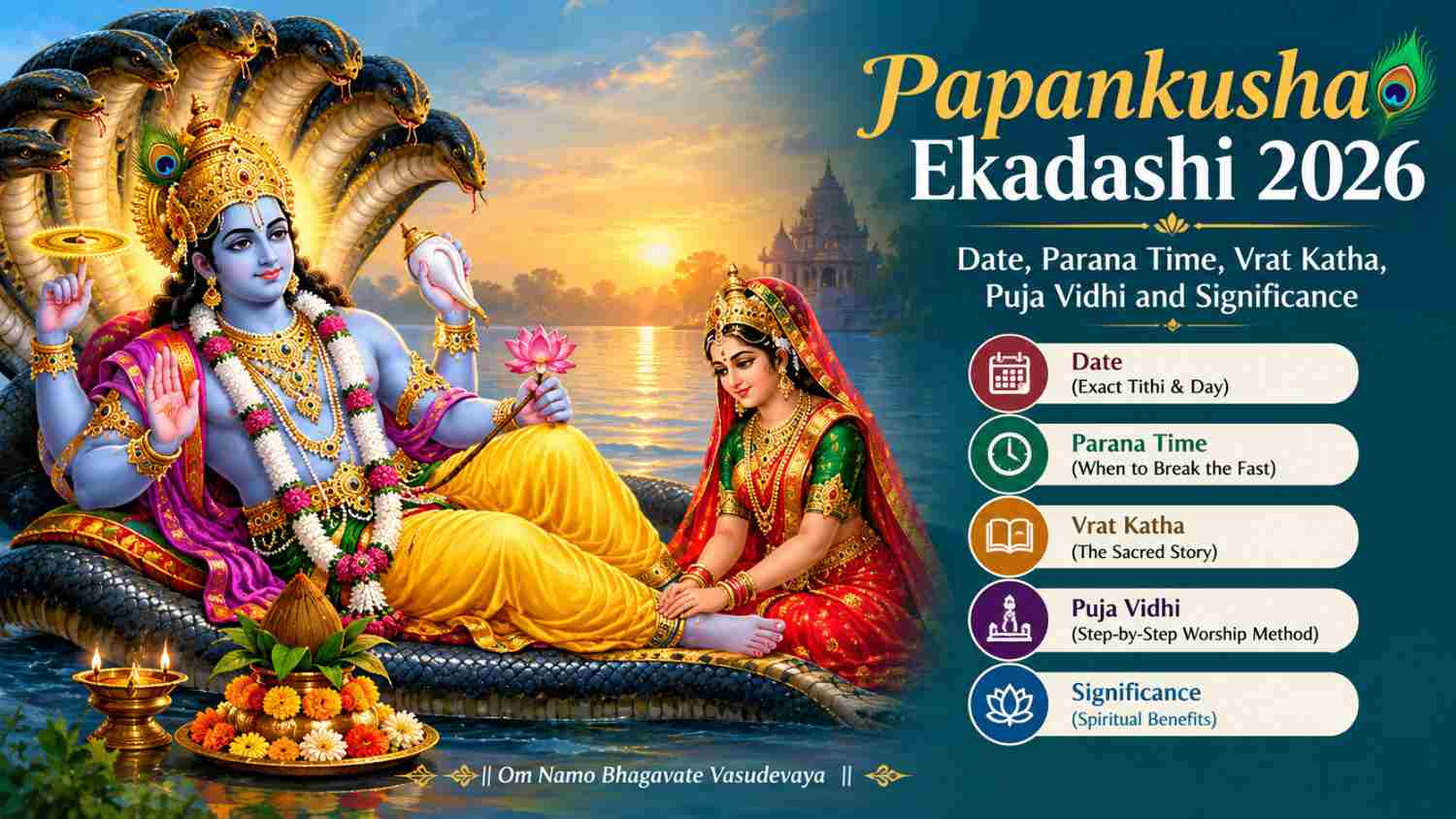
Papankusha Ekadashi 2026 Date and Time
Here are the important details for Papankusha Ekadashi in 2026.
| Details | Date and Time |
|---|---|
| Festival | Papankusha Ekadashi |
| Vrat Date | Thursday, October 22, 2026 |
| Hindu Month | Ashwin |
| Paksha | Shukla Paksha |
| Ekadashi Tithi Begins | October 21, 2:11 PM |
| Ekadashi Tithi Ends | October 22, 2:47 PM |
| Parana Date | Friday, October 23, 2026 |
| Parana Time | Check the applicable local Panchang |
| Main Deity | Lord Vishnu |
| Main Observances | Fasting, Vishnu Puja, mantra chanting and charity |
The fasting date is determined by the prevailing Ekadashi observance rules, not simply by the date on which the lunar Tithi begins. Parana should be performed during the prescribed Dwadashi period, taking local sunrise and the relevant Panchang calculation into account.
Papankusha Ekadashi Vrat Katha
According to Hindu tradition, once King Yudhishthira asked Lord Krishna about the rituals and spiritual significance of the Ekadashi that falls during the Shukla Paksha of the month of Ashwin. Lord Krishna explained that this sacred fast is known as Papankusha Ekadashi. It is believed that observing this fast with devotion helps devotees seek forgiveness for their past sins, fulfill their sincere wishes, and attain spiritual liberation. Traditional beliefs also hold that observing this vrat brings blessings to ten generations of one’s family. Lord Krishna then narrated the story associated with Papankusha Ekadashi.
Long ago, King Yudhishthira approached Lord Krishna and asked Him about the significance of Papankusha Ekadashi, its religious observances, and the spiritual benefits associated with keeping the fast.
Lord Krishna explained that Papankusha Ekadashi is a sacred day dedicated to the worship of Lord Vishnu. According to traditional belief, devotees who observe this fast with sincere faith and devotion seek forgiveness for their past wrongdoings and blessings for a righteous life. Lord Krishna then narrated a story to explain the importance of this holy occasion.
In ancient times, a hunter named Krodhan lived in the Vindhya Mountains. He was known for his cruel nature and sinful conduct. He spent most of his life hunting animals, harming living creatures, and troubling others. Compassion and kindness had little place in his heart.
As time passed, Krodhan grew old, and the end of his life drew near. Despite having spent many years committing sinful acts, he had made no effort to change his ways or follow a path of righteousness.
One day, the messengers of Yama, the god associated with death and justice, appeared before him. They informed him that his time on earth was coming to an end and that he would soon have to face the consequences of his deeds.
Terrified by the thought of death and the fate that awaited him, Krodhan became deeply anxious. For the first time, he began to reflect on the life he had lived. Realizing that he had caused suffering to countless living beings, he feared the consequences of his actions.
Desperate to find a way out of his predicament, Krodhan sought guidance from a wise sage who lived in the forest. He approached the sage respectfully and explained his situation, admitting that he had spent his life committing sinful deeds.
With folded hands, he pleaded, “O revered sage, I have wasted my life in harmful actions. Now that death is approaching, I am afraid of what lies ahead. Please show me a way through which I may seek forgiveness and find peace.”
Moved by his distress, the sage advised him to observe Papankusha Ekadashi with sincere devotion. He explained the importance of worshipping Lord Vishnu, controlling one’s senses, praying with a pure heart, and turning away from sinful conduct.
The sage taught Krodhan that genuine devotion must be accompanied by sincere repentance and a willingness to follow the path of righteousness. He encouraged the hunter to devote himself to Lord Vishnu and observe the sacred fast according to the prescribed traditions.
Krodhan accepted the sage’s guidance. He prayed to Lord Vishnu with humility and faith, seeking forgiveness for his past actions. He followed the instructions given to him and spent his remaining time in devotion, prayer, and contemplation.
According to the devotional message associated with this story, the observance of Papankusha Ekadashi represents the opportunity to turn away from wrongdoing and seek spiritual purification. The hunter’s experience illustrates the importance of repentance, faith, and the desire to change one’s conduct before it is too late.
The Religious Significance of Papankusha Ekadashi
After narrating the story, Lord Krishna explained to King Yudhishthira the spiritual importance of observing Papankusha Ekadashi. According to Hindu belief, devotees who worship Lord Vishnu on this auspicious day with sincerity and discipline receive His blessings.
The observance encourages devotees to practice self-control, offer prayers, listen to sacred stories, perform acts of charity, and avoid harmful conduct. Many devotees also observe a fast, chant the names of Lord Vishnu, and remain engaged in spiritual activities throughout the day.
Papankusha Ekadashi reminds people that past mistakes need not define their entire lives. Sincere repentance, devotion, and a commitment to righteous living are important steps toward spiritual growth.
Moral of the Story: Papankusha Ekadashi teaches the importance of faith, repentance, compassion, and righteous conduct. It inspires devotees to leave behind harmful actions and move toward a more virtuous life through devotion to Lord Vishnu.
When Is Papankusha Ekadashi in 2026?
Papankusha Ekadashi falls on October 22, 2026.
The festival is observed on the eleventh lunar day of the bright fortnight of the Ashwin month. Devotees traditionally worship Lord Vishnu, observe a fast according to their capacity and spend the day in prayer and spiritual reflection.
The Ekadashi Tithi starts on October 21 and continues until October 22. However, the principal fasting observance for 2026 is on October 22.
What Is Papankusha Ekadashi?
Papankusha Ekadashi is one of the sacred Ekadashi observances in the Hindu calendar. The name is commonly understood through two Sanskrit elements: papa, referring to sin or wrongdoing, and ankusha, meaning a goad or controlling instrument.
Together, the name conveys the spiritual idea of restraining harmful actions and turning toward a righteous life.
In the Vaishnava tradition, this day is dedicated to Lord Vishnu. Devotees use the occasion to reflect on their conduct, strengthen their faith and cultivate qualities such as compassion, honesty, patience and humility.
The fast is not only about abstaining from certain foods. Its deeper purpose is to encourage discipline in thoughts, speech and actions.
Religious Significance of Papankusha Ekadashi
Papankusha Ekadashi holds an important place in Hindu devotional traditions. Its significance is associated with the belief that sincere worship, fasting and virtuous actions help a person move away from harmful habits and toward spiritual growth.
The main aspects of its religious significance include:
1. Worship of Lord Vishnu
Lord Vishnu is worshipped as the protector and preserver of the universe. Devotees offer prayers seeking peace, wisdom, protection and spiritual guidance.
2. Spiritual Purification
The fast encourages people to reflect on their behaviour, acknowledge mistakes and make a conscious effort to improve their lives.
3. Self-Discipline
Fasting can help devotees practise restraint and mindfulness. Avoiding unnecessary distractions and spending time in prayer are also common observances.
4. Charity and Compassion
Giving food, clothing or other useful items to people in need is considered a meaningful way to observe the day.
5. Devotion and Liberation
Traditional Hindu beliefs associate Ekadashi observance with spiritual merit and progress toward liberation. These are religious beliefs rather than scientifically established outcomes.
Papankusha Ekadashi Vrat Katha
The Papankusha Ekadashi Vrat Katha is traditionally associated with the importance of devotion to Lord Vishnu, righteous conduct and the spiritual value of observing Ekadashi.
In Hindu religious literature, the importance of this Ekadashi is described through a dialogue between Lord Krishna and Yudhishthira. The account explains the merit associated with worship, fasting, charity and remembrance of Lord Vishnu.
The central teaching of the traditional narrative is that a person should not allow wrongdoing to become a permanent part of life. Genuine repentance, devotion and a commitment to righteous conduct are important steps toward inner transformation.
Papankusha Ekadashi is therefore observed as an opportunity to seek divine grace and renew one’s commitment to a virtuous life.
Devotees may read the Ekadashi Mahatmya, listen to the Vrat Katha or recite Vishnu-related prayers during the day. The exact narrative and method of recitation may vary according to the religious text or family tradition followed.
Moral of the Papankusha Ekadashi Vrat Katha
The main lesson is that devotion should be reflected in everyday conduct.
A meaningful observance includes:
- Speaking truthfully.
- Avoiding harm to others.
- Controlling anger and greed.
- Helping people in need.
- Practising forgiveness.
- Remembering the divine with sincerity.
- Correcting mistakes instead of repeating them.
The festival reminds devotees that spiritual growth involves both prayer and responsible action.
Papankusha Ekadashi Puja Vidhi
Devotees can perform Papankusha Ekadashi Puja at home by following a simple traditional routine. The procedure may vary depending on family customs and the type of fast being observed.
Step 1: Wake Up and Take a Bath
Wake up early, take a bath and wear clean clothes. Prepare the worship area and keep the necessary puja items ready.
Step 2: Take a Vrat Sankalp
Offer a prayer to Lord Vishnu and make a personal resolution to observe the fast with devotion and discipline.
Step 3: Prepare the Puja Area
Place an image or idol of Lord Vishnu on a clean platform. Arrange flowers, a diya, incense, water and suitable offerings.
Step 4: Worship Lord Vishnu
Offer flowers, sandalwood paste, tulsi leaves where appropriate, fruits and other traditional offerings. Tulsi is especially important in many forms of Vishnu worship.
Step 5: Chant Vishnu Mantras
Devotees may chant a Vishnu mantra or the Hare Krishna Mahamantra. Recitation can be done according to one’s ability and family tradition.
Step 6: Read the Vrat Katha
Read or listen to the Papankusha Ekadashi Vrat Katha and reflect on its teachings.
Step 7: Perform Aarti
Conclude the main worship with aarti and a prayer for peace, wisdom and well-being.
Step 8: Practise Charity
Offer food, clothes or other useful items to someone in need according to your means.
Step 9: Observe the Fast
Continue the chosen fasting routine throughout the day. Avoid prohibited foods according to the tradition being followed.
Step 10: Perform Parana on Dwadashi
Break the fast on the following day during the prescribed Parana period. Confirm the timing with the relevant Panchang before eating.
Papankusha Ekadashi Puja Samagri
The following items may be used for a simple home puja:
- Image or idol of Lord Vishnu
- Clean yellow or other suitable cloth
- Diya and cotton wicks
- Ghee or oil
- Incense sticks
- Flowers and garland
- Tulsi leaves
- Sandalwood paste
- Kumkum and akshat
- Water in a clean vessel
- Seasonal fruits
- Sweets or suitable bhog
- Panchamrit, if used in the family tradition
- A bell
- A copy of Vishnu-related prayers or the Vrat Katha
The entire list is not compulsory for every household. Sincere worship can be performed with simple offerings according to one’s means and tradition.
Papankusha Ekadashi Fasting Rules
Fasting practices differ among devotees. Some observe a strict fast, while others follow a fruit-based or single-meal routine without grains.
Before beginning the fast, choose a method that is suitable for your health, daily responsibilities and family tradition.
Foods Commonly Eaten During Ekadashi
Depending on the tradition followed, fasting foods may include:
- Fresh fruits
- Milk and permitted dairy products
- Nuts and seeds
- Potatoes and sweet potatoes
- Water chestnut flour
- Buckwheat flour
- Sabudana preparations
- Other foods permitted by the devotee’s fasting tradition
Food rules are not identical across all communities. Some devotees avoid particular ingredients that others permit, so it is best to follow the customs observed in your household.
Foods Commonly Avoided
Many devotees avoid:
- Rice
- Wheat
- Regular grains and cereals
- Pulses and beans
- Meat and fish
- Eggs
- Alcohol
- Onion and garlic, according to their tradition
Some devotees observe Nirjala fasting without food or water, but this is a demanding form of fasting and is not suitable for everyone.
Health reminder: People with diabetes, chronic medical conditions, pregnancy, a history of eating disorders or medication schedules that require food should seek appropriate medical advice before fasting. Children and older adults should not be pressured into strict fasting.
What Should We Eat After Papankusha Ekadashi Fast?
The fast is traditionally concluded on Dwadashi during the prescribed Parana period.
After the fasting period ends, devotees can begin with water and a simple meal that suits their health and customary practice. Some families prepare a traditional meal and offer food or charity before eating.
Avoid overeating after a strict fast. Those who have observed a prolonged fast should resume eating gently and follow any medical dietary advice they have received.
The purpose of Parana is to complete the religious observance properly, not to turn the end of the fast into an excessive feast.
Papankusha Ekadashi Parana Time 2026
Parana means breaking the Ekadashi fast on the following Dwadashi day.
In 2026, Papankusha Ekadashi Parana falls on Friday, October 23. The exact Parana window should be checked using the applicable local Panchang because sunrise, Dwadashi Tithi and the prescribed fasting rules affect the timing.
The following points are important:
- Do not assume that the fast should be broken immediately after midnight.
- Check the Dwadashi Parana period.
- Follow the rules of the Ekadashi tradition you observe.
- If you follow a specific Vaishnava calendar, use its prescribed observance and Parana timings.
- If you are uncertain, consult a knowledgeable priest or the Panchang you normally follow.
The aim is to complete the fast in accordance with the relevant religious tradition.
Which God Is Worshipped on Papankusha Ekadashi?
Lord Vishnu is the principal deity worshipped on Papankusha Ekadashi.
Devotees may also worship forms of Vishnu such as Lord Krishna or Lord Narayana, depending on their family and spiritual tradition.
Common devotional practices include:
- Reciting Vishnu Sahasranama
- Chanting Vishnu mantras
- Reading passages from the Bhagavad Gita
- Singing bhajans
- Offering tulsi leaves where appropriate
- Remembering Lord Vishnu throughout the day
The central focus is devotion, humility and a sincere effort to live according to dharma.
Mantras for Papankusha Ekadashi
Devotees may chant simple mantras during puja, meditation or throughout the day.
Vishnu Mantra
Om Namo Bhagavate Vasudevaya
This mantra is widely used in devotion to Lord Vishnu and Lord Krishna.
Om Namo Narayanaya
Om Namo Narayanaya
This is another traditional mantra associated with Lord Narayana.
Hare Krishna Mahamantra
Hare Krishna Hare Krishna, Krishna Krishna Hare Hare
Hare Rama Hare Rama, Rama Rama Hare Hare
Devotees may chant the mantra according to their capacity and customary practice. There is no need to compete over the number of repetitions; sincere devotion and concentration are central to the practice.
What Are the Benefits of Papankusha Ekadashi?
Hindu tradition associates Papankusha Ekadashi with spiritual merit and devotion to Lord Vishnu. The commonly described benefits include:
- Encouraging self-discipline through fasting
- Creating time for prayer and spiritual reflection
- Promoting generosity and charitable behaviour
- Inspiring people to correct harmful habits
- Strengthening devotion to Lord Vishnu
- Encouraging peace, compassion and humility
- Reminding devotees of the importance of righteous conduct
These benefits are understood within a religious and spiritual framework. Fasting should not be treated as a guaranteed way to obtain wealth, cure illness or secure a specific worldly result.
The most practical value of the observance is the opportunity to combine prayer with positive changes in everyday life.
What Should We Donate on Papankusha Ekadashi?
Charity is an important part of many Ekadashi observances. Devotees may donate according to their financial ability and local customs.
Suitable acts of charity include:
- Donating food to people in need
- Offering clothes to those who need them
- Supporting educational supplies for children
- Helping elderly people
- Providing assistance to a community kitchen
- Supporting a charitable cause
- Offering water or other basic necessities
Charity does not need to be expensive to be meaningful. A small act performed sincerely can be more valuable than giving beyond one’s means.
Do’s and Don’ts for Papankusha Ekadashi
Do’s
- Wake up early and maintain cleanliness.
- Worship Lord Vishnu with devotion.
- Read or listen to the Vrat Katha.
- Chant a Vishnu mantra.
- Follow your chosen fasting rules.
- Speak respectfully and avoid unnecessary conflict.
- Help someone in need.
- Check the correct Parana period before concluding the fast.
Don’ts
- Do not deliberately hurt others.
- Avoid anger, dishonesty and insulting speech.
- Do not consume foods prohibited by your chosen fasting tradition.
- Avoid treating fasting as a competition.
- Do not undertake a strict fast if it could endanger your health.
- Do not assume that one Parana time applies to every location and tradition.
These guidelines reflect common devotional values, while particular restrictions can vary by family and religious practice.
Difference Between Papankusha Ekadashi and Indira Ekadashi
Both are important Ekadashi observances in the Ashwin month, but they occur in different lunar fortnights.
| Feature | Indira Ekadashi | Papankusha Ekadashi |
|---|---|---|
| Lunar Fortnight | Krishna Paksha | Shukla Paksha |
| Month | Ashwin | Ashwin |
| Main Deity | Lord Vishnu | Lord Vishnu |
| Main Focus | Devotion and prayers associated with ancestors in traditional observance | Devotion, self-discipline and spiritual purification |
| 2026 Date | October 6 | October 22 |
Although their themes and traditions differ, both observances encourage devotion, restraint, charity and remembrance of dharma.
Frequently Asked Questions About Papankusha Ekadashi 2026
1. When is Papankusha Ekadashi in 2026?
Papankusha Ekadashi will be observed on Thursday, October 22, 2026.
2. When does Papankusha Ekadashi Tithi begin in 2026?
The Ekadashi Tithi begins on October 21, 2026, at 2:11 PM.
3. When does Papankusha Ekadashi Tithi end?
The Ekadashi Tithi ends on October 22, 2026, at 2:47 PM.
4. When is Papankusha Ekadashi Parana in 2026?
Parana falls on Friday, October 23, 2026. Check the applicable Panchang for the precise time window.
5. Which god is worshipped on Papankusha Ekadashi?
Lord Vishnu is the principal deity worshipped on Papankusha Ekadashi.
6. What is the significance of Papankusha Ekadashi?
The observance is traditionally associated with spiritual purification, devotion, self-discipline, charity and the pursuit of liberation.
7. Can we eat fruits during Papankusha Ekadashi?
Yes. Fruits are commonly permitted during many forms of Ekadashi fasting, but devotees should follow the rules of their own tradition.
8. Can we eat rice on Papankusha Ekadashi?
Many devotees avoid rice and other grains during Ekadashi. Follow the fasting rules observed in your family or spiritual tradition.
9. Is fasting compulsory on Papankusha Ekadashi?
Fasting is a traditional observance, but the form of fasting can differ. People who cannot fast for health reasons may choose prayer, mantra chanting, charity or other devotional practices.
10. Which mantra should we chant on Papankusha Ekadashi?
Devotees may chant “Om Namo Bhagavate Vasudevaya” or “Om Namo Narayanaya,” or recite other prayers to Lord Vishnu.
11. What should we donate on Papankusha Ekadashi?
Food, clothes, educational materials and other useful items can be donated according to one’s capacity.
12. Why is Papankusha Ekadashi observed?
It is observed to worship Lord Vishnu, practise self-discipline and seek spiritual growth through prayer, fasting and virtuous actions.
Conclusion
Papankusha Ekadashi 2026 will be observed on Thursday, October 22, with Parana on October 23 during the prescribed Dwadashi period. The festival offers devotees an opportunity to worship Lord Vishnu, read the Vrat Katha, chant sacred mantras, practise charity and reflect on their conduct.
The deeper message of Papankusha Ekadashi is that spiritual progress requires more than a single day of fasting. It also involves honesty, compassion, self-control and a willingness to correct one’s mistakes.
Observe the fast according to your capacity, confirm the Parana time with the relevant Panchang and focus on the values that make the day meaningful.
May Lord Vishnu bless you and your family with peace, wisdom, good health and spiritual strength.
Happy Papankusha Ekadashi 2026!