Hindu Festivals · Guru & Devotion
Guru Purnima: Meaning, Mythology & Why We Celebrate It
One full moon, one simple job: stop and thank the people who taught you how to think.
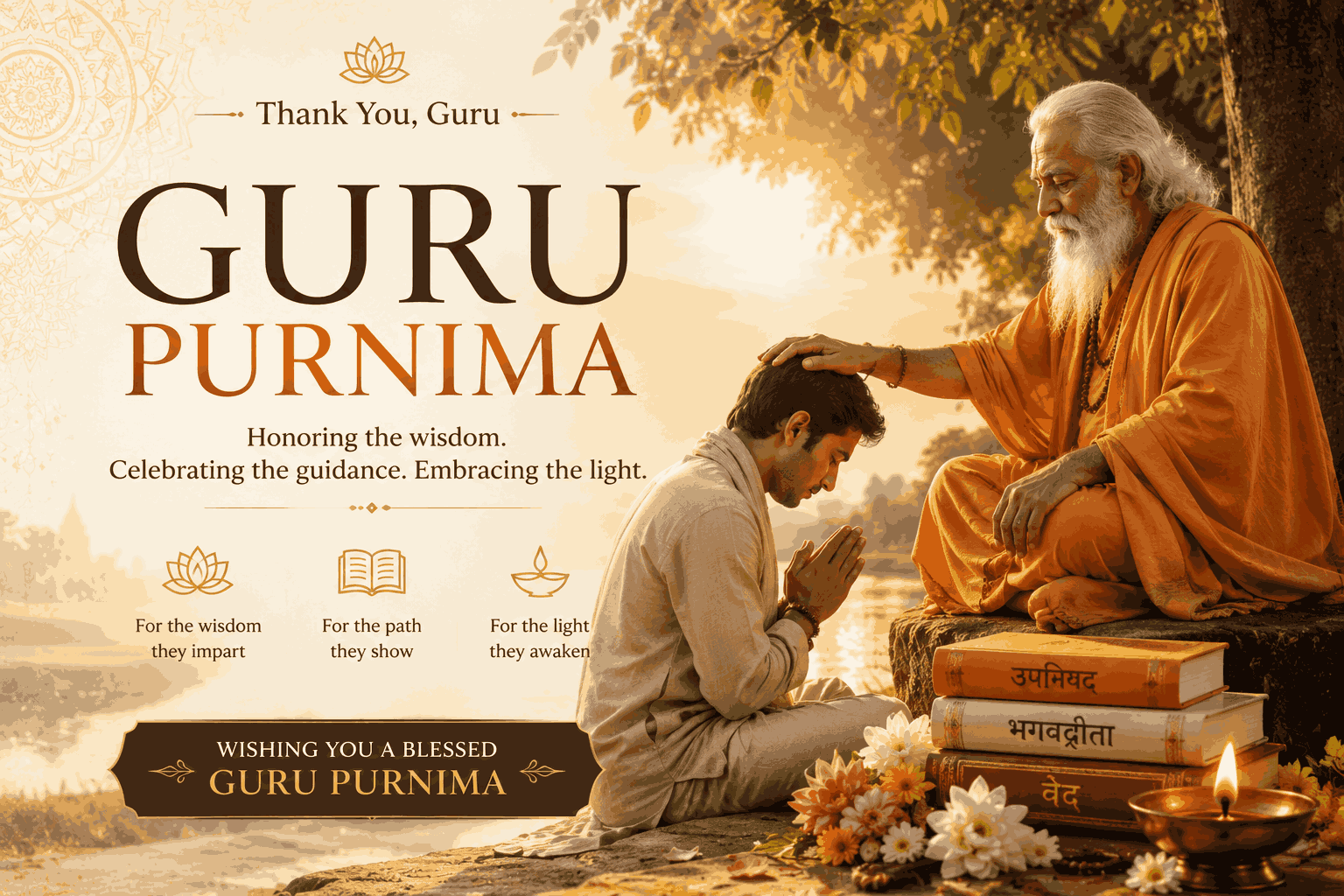
Every year, on the full moon of Ashadha, something quietly beautiful happens across India. Students touch their teacher’s feet. Ashrams fill with incense and gratitude. People who rarely say “thank you” out loud finally do. We call this day Guru Purnima, and it doesn’t ask for a temple visit or a grand ritual — it just asks you to remember who taught you how to think, and to say so.
What Does “Guru” Really Mean?
Break the Sanskrit word apart and you find two syllables: gu, meaning darkness or ignorance, and ru, meaning the one who removes it. Put them together, and a guru becomes exactly that — someone who clears away what you don’t understand and leaves you standing in a little more light. Purnima simply means full moon, the moment Indian tradition treats as whole and complete. Combine the two, and Guru Purnima becomes a full, complete moment set aside to honor whoever removed a little darkness from your life.
What Is Guru Purnima?
Guru Purnima falls on the full moon of Ashadha, the lunar month that lands somewhere in June or July and ushers in the monsoon. Hindus, Buddhists and Jains all observe the day, though each community frames its significance a little differently. Strip away the rituals, though, and every version lands on the same question: who guided you, and have you thanked them yet?
Why We Celebrate Guru Purnima
Long before India built schools and universities, it built the gurukul — a home where a student lived alongside their teacher for years, learning far more than facts. A guru taught discipline, character and how to think, not just what to think. Guru Purnima grew out of gratitude for that relationship. Students would return to their gurukul on this day, touch their teacher’s feet, and offer whatever they could — fruit, cloth, or simply their presence.
Most people today stretch the idea well past the classroom. They thank a parent, a coach, a mentor, or anyone who nudged them toward a better path. The day works like a yearly reset button: pause, look back, and acknowledge who helped you become who you are.
The Mythological Significance of Guru Purnima
Like most living traditions, Guru Purnima carries more than one origin story. Hindus, yogis, Buddhists and Jains each trace it back to a different moment — and together, those stories explain why the day means so much across such different paths.
Ved Vyasa, the Original Guru
Hindus also call this day Vyasa Purnima, and the reason runs deep. Tradition marks it as the birth anniversary of the sage Ved Vyasa, who compiled the four Vedas, wrote the eighteen Puranas, composed the Brahma Sutras, and authored the Mahabharata. Because he gathered and organized such vast knowledge, devotees regard him as the Adi Guru of the Hindu tradition — the source every teacher after him has drawn from. Many spiritual lineages open their Guru Purnima rituals by honoring Vyasa before they honor their own living teacher.
Shiva as the Adi Guru
Yogic tradition tells a different story. It holds that Shiva became the first Adi Guru on this very day, sitting on the banks of a Himalayan lake and transmitting the science of yoga to the Saptarishi, the seven legendary sages. Through them, that knowledge eventually reached the rest of humanity. This is why many yoga schools treat Guru Purnima as their most important day of the year.
Buddha’s First Sermon
Buddhists mark the day for a different reason entirely, and they even give it its own name: Dharmachakra Pravartana Diwas, “the day the wheel of dharma first turned.” They believe Gautam Buddha delivered his first sermon at Sarnath on this full moon, teaching the Four Noble Truths to five disciples and founding the Sangha. That moment turned an enlightened man into a teacher — exactly what Guru Purnima celebrates. The day also marks the start of Vassa, a three-month retreat during the rainy season when Buddhist monks stay in one place, meditate, and deepen their study instead of travelling.
Mahavira and Gautam Swami
Jains tell their own version, centered on Lord Mahavira, the twenty-fourth Tirthankara. Tradition holds that on this full moon, Mahavira accepted a renowned scholar named Indrabhuti Gautam — better known as Gautam Swami — as his first disciple. Gautam Swami arrived skeptical, full of pointed questions, looking to test Mahavira’s wisdom. He left transformed, and went on to become one of Jainism’s most revered teachers. The day also marks the start of Chaturmas, a four-month period when Jain monks stop travelling and settle in one place to teach, study and guide their followers through the monsoon.
Many lineages use the day to honor more recent teachers too — Adi Shankaracharya, Ramanujacharya, Madhvacharya, and closer to our own time, Swami Vivekananda — each remembered for carrying the same flame a little further.
Different faiths tell different stories, but every version lands in the same place: knowledge means little until someone passes it on.
What About Guru Dakshina?
Traditionally, a student closed their years at the gurukul by offering guru dakshina — a gift to the teacher, given not as payment but as gratitude. Sometimes it was money, sometimes labor, and sometimes something far harder, the way Eklavya is said to have given his thumb to Dronacharya. Most people today keep it simpler: a letter, a small gift, or a quiet promise to live by what they were taught. The gesture matters more than its size.
How People Celebrate Guru Purnima
Ashrams and monasteries fill up early. Students touch their teacher’s feet, offer flowers, fruit or a length of cloth, and settle in for a satsang or a special discourse. Many households also perform a small puja for Lord Ganesha alongside their guru puja, asking for the wisdom to clear obstacles from the path ahead. Yoga schools often hold group meditation or chant together, while Buddhist and Jain monks mark the day by beginning their respective monsoon retreats and settling into one place for months of focused teaching.
If a teacher has passed on, students visit their memorial or simply sit quietly with the memory. Away from the ashrams, most people keep it simple. They call an old teacher, send a message, or finally say the thank-you they’d been putting off. Some devotees also book a puja in their guru’s name, asking for the wisdom to keep learning.
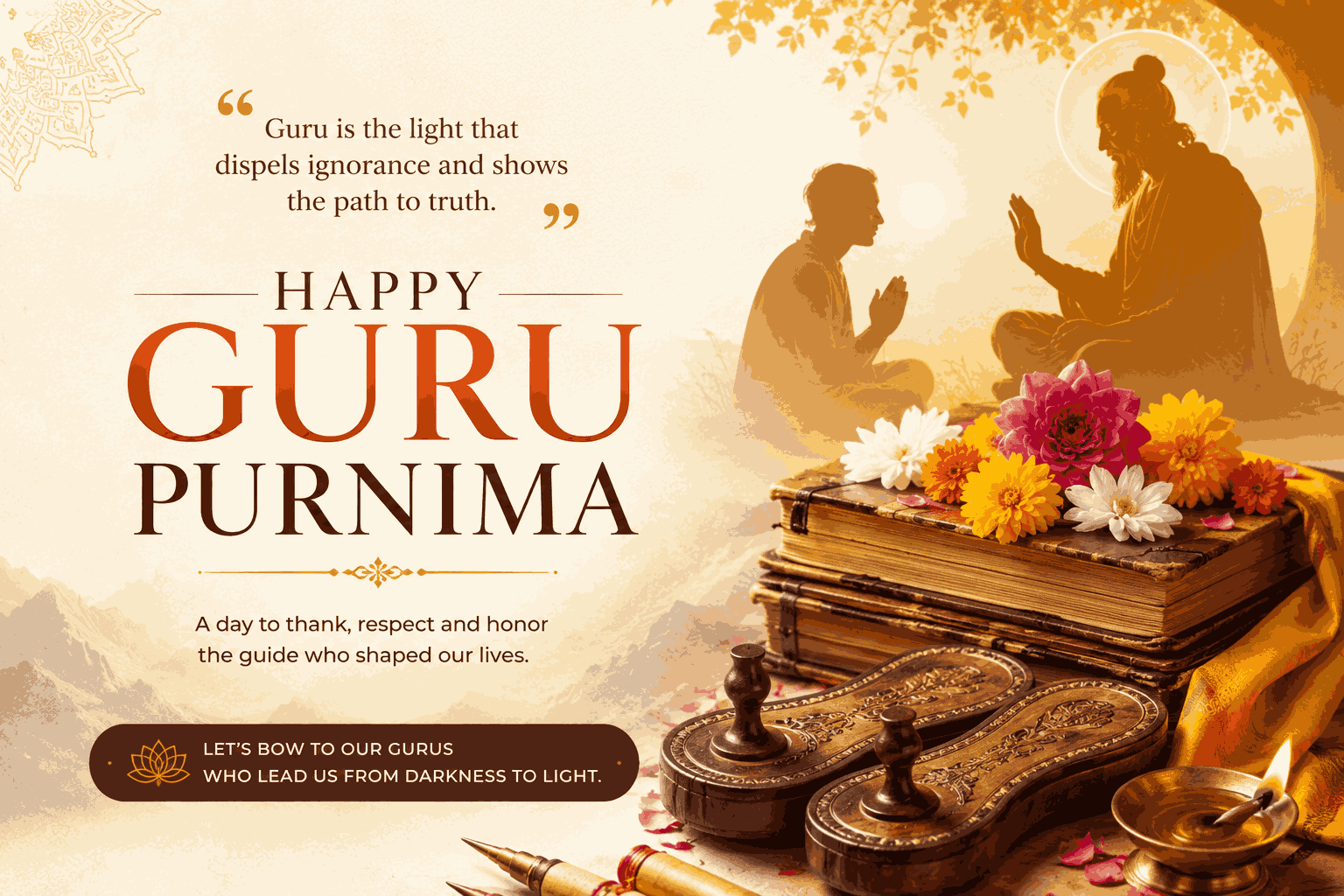
Guru Purnima Wishes to Share
- “Thank you for seeing what I couldn’t see in myself.”
- “Every lesson you gave me still guides my choices today.”
- “Happy Guru Purnima — I hope I make you proud.”
- “Some debts can never be repaid. Yours is one of them.”
- “You didn’t just teach me a subject. You taught me how to learn.”
Frequently Asked Questions
What is Guru Purnima?
Guru Purnima is a Hindu, Buddhist and Jain observance that falls on the full moon of the Ashadha month and honors one’s teacher or spiritual guide.
Why do people celebrate Guru Purnima?
People celebrate it to thank the teachers, mentors and guides who shaped their knowledge and character, continuing the age-old guru-shishya tradition of gratitude and respect.
What does the word “Guru” mean?
The word comes from two Sanskrit roots: “gu,” meaning darkness, and “ru,” meaning remover. A guru is literally someone who removes the darkness of ignorance.
Who is considered the first guru in Hindu mythology?
Hindu tradition honors sage Ved Vyasa as the first guru for compiling the Vedas and writing the Mahabharata, while yogic tradition credits Shiva as the Adi Guru who first taught the Saptarishi.
Is Guru Purnima celebrated only by Hindus?
No. Buddhists observe the day as Dharmachakra Pravartana Diwas, marking Buddha’s first sermon, and Jains honor the day Mahavira accepted Gautam Swami as his first disciple.
When does Guru Purnima fall in the calendar?
Guru Purnima always falls on the full moon of the Hindu month of Ashadha, typically in June or July. Since it follows the lunar calendar, the exact day shifts every year, so check a Panchang closer to the season.
What is another name for Guru Purnima?
Hindus often call it Vyasa Purnima, honoring sage Ved Vyasa, who compiled the Vedas and wrote the Mahabharata on this day.
What is Guru Dakshina?
Guru Dakshina is the traditional gift a student offers their teacher as a token of gratitude, historically money, labor or service, though today it’s just as often a heartfelt letter or a promise to live by what was taught.
Can I celebrate Guru Purnima without a spiritual guru?
Yes. Most people don’t have a formal spiritual guru, and that’s fine. You can dedicate the day to a teacher, parent, coach or mentor who shaped who you are, since the spirit of the day is gratitude, not a specific title.
What happens in Buddhist and Jain monasteries on Guru Purnima?
Guru Purnima marks the start of Vassa for Buddhist monks and Chaturmas for Jain monks, both multi-month monsoon retreats when monks stay in one place to meditate, study and teach instead of travelling.
In Closing
Guru Purnima was never really about rituals or dates. It’s a nudge — one day set aside to thank the people who quietly shaped who you are. Call your teacher. Touch your parent’s feet. Or just sit for a minute and remember someone who believed in you before you believed in yourself. That’s the whole festival, really.