Krishna Janmashtami is one of the most vibrant, spiritually uplifting, and widely celebrated festivals in India. It commemorates the birth of Lord Krishna, the eighth avatar of Lord Vishnu, who is revered as the Supreme Personality of Godhead in Vaishnava traditions.
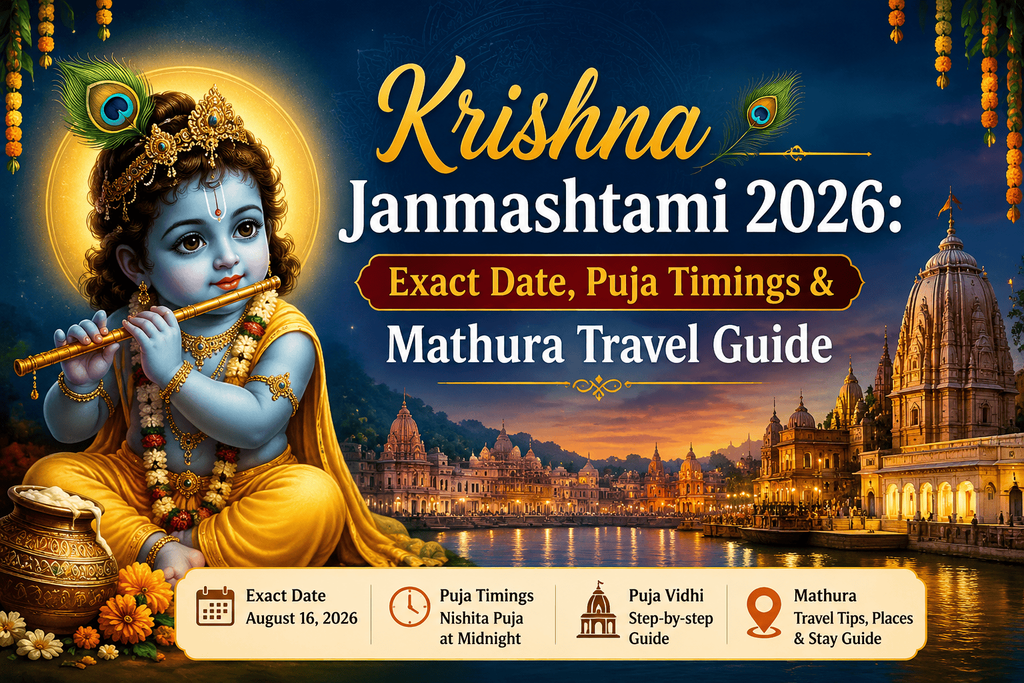
Krishna Janmashtami 2026 marks the 5,253rd birth anniversary of Lord Krishna – and in no place on earth is this moment felt more deeply than in Mathura and Vrindavan, the land where Krishna was born, raised and revealed his divine form. Millions of devotees from across India and the world converge on Braj for the midnight Janmotsav, the most spiritually charged moment of the entire Hindu calendar year. Missing the Nishita Kaal – that 45-minute midnight window – means waiting another year.
If you are planning your celebrations for Krishna Janmashtami 2026, this comprehensive guide covers everything from the exact Shubh Muhurat (auspicious timings) and strict fasting rules to step-by-step home Puja Vidhi and a complete travel itinerary for Mathura and Vrindavan.
Janmashtami 2026 Date and Shubh Muhurat
In 2026, Krishna Janmashtami will be celebrated on Friday, 4 September. The festival is observed on the eighth lunar day (Ashtami Tithi) of Krishna Paksha in the month of Bhadrapada.
The most crucial part of the celebration is the Nishita Kaal—the sacred midnight period when Lord Krishna is believed to have been born.
| Event | Date & Time (2026) |
| Ashtami Tithi Begins | 2:25 AM, 4 September |
| Ashtami Tithi Ends | 12:13 AM, 5 September |
| Rohini Nakshatra | 12:29 AM to 11:04 PM, 4 September |
| Nishita Kaal (Midnight Puja) | 11:46 PM (Sept 4) to 12:32 AM (Sept 5) |
| Gokul Nandotsav / Dahi Handi | Saturday, 5 September |
(Note: Panchang timings can vary slightly depending on your exact geographical location. Always verify with your local temple).
What is Krishna Janmashtami and why is it celebrated?
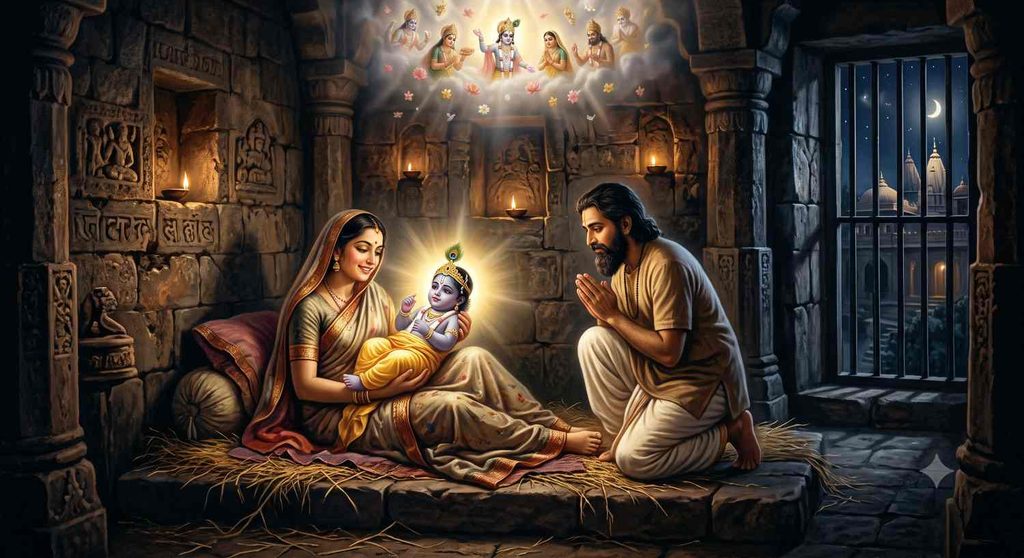
Krishna Janmashtami celebrates the birth of Lord Krishna, the eighth avatar of Vishnu, who by tradition was born at midnight in a prison cell in Mathura to Devaki and Vasudeva, to end the tyranny of the demon-king Kansa. It falls on the Ashtami (eighth day) of Krishna Paksha in the month of Bhadrapada, which is why the date shifts each year with the lunar calendar. The festival is also known as Gokulashtami, Krishnashtami, Ashtami Rohini and Sree Jayanti.
When is Krishna Janmashtami in 2026?
Krishna Janmashtami 2026 falls on Friday, 4 September 2026. Because Krishna was born when both the Ashtami Tithi and the Rohini Nakshatra were active at midnight, the precise date depends on which the tradition prioritises. Most households (the Smarta tradition) observe it on 4 September, while ISKCON and most Vaishnava temples observe it on 5 September, the day Rohini aligns at sunrise. Both are correct within their own tradition. If you are travelling to Braj, the celebrations effectively span both nights.
The Significance of Krishna Janmashtami
According to traditional accounts, Lord Krishna was born at midnight in a dark prison cell in Mathura to Devaki and Vasudeva. The reigning king, Kansa, had imprisoned them due to a prophecy predicting his downfall at the hands of their eighth child. Immediately after birth, Vasudeva carried the newborn Krishna across the turbulent Yamuna River to Gokul, where he was safely raised by Nanda and Yashoda.
Janmashtami honors this divine appearance. Devotees celebrate the triumph of good over evil, the establishment of Dharma (righteousness), and the ultimate message of love and devotion that Krishna taught throughout his life.
Step-by-Step Home Puja Vidhi
Celebrating the midnight Janmotsav at home is a deeply rewarding spiritual practice.
Follow these steps for a traditional home Puja:
- Take the Sankalpa: Begin your day by taking a sacred vow to observe the fast with pure intentions.
- Prepare the Altar: Clean your prayer space. Place a Bal Gopal (infant Krishna) idol in a small decorated cradle (Jhula). Decorate the area with fresh flowers, a yellow cloth, and Tulsi leaves.
- Prepare the Panchamrit: Mix five sacred ingredients—milk, curd, ghee, honey, and sugar—in a clean vessel.
- The Midnight Abhishek: Exactly during the Nishita Kaal (midnight), bathe the Bal Gopal idol first with the Panchamrit, and then with clean water or Gangajal.
- Aarti and Bhog: Gently dry the idol, dress him in fresh clothes, and offer Makhan-Mishri (white butter and sugar crystals), fruits, and Panjiri. Perform the Aarti, ring the bell, blow the conch, and sing devotional bhajans.
Janmashtami Fasting (Vrat) Rules
Observing a fast on Janmashtami purifies the body and mind. Depending on your health and family traditions, you can choose between two main types of fasting:
- Nirjala Vrat: A highly strict fast where the devotee consumes absolutely no food or water until the Parana (breaking of the fast) the following morning.
- Phalahar Vrat: A moderate fast where devotees eat a light, Sattvic diet.
Foods Allowed During Phalahar:
- Fresh fruits, milk, and curd
- Nuts, coconut, and Makhan
- Sabudana (tapioca pearls), Samak rice, and Kuttu (buckwheat) flour
- Rock salt (Sendha Namak) instead of regular table salt
Foods to Strictly Avoid:
- Regular grains (wheat, rice, lentils)
- Onions, garlic, and all non-vegetarian items
- Alcohol and tobacco
The fast is traditionally broken (Parana) after sunrise on the following day (5 September), once the Ashtami Tithi and Rohini Nakshatra conditions are completed.
Mathura-Vrindavan Travel Guide
If you are planning a pilgrimage to Braj (the region encompassing Mathura, Vrindavan, and Gokul), prepare for a massive influx of devotees, high energy, and a deeply emotional spiritual atmosphere.
Top Places to Visit:
- Krishna Janmabhoomi (Mathura): The exact historical birthplace of Krishna. The temple complex is the absolute center of midnight celebrations. Arrive early as security checks are tight and crowds are massive.
- Banke Bihari Temple (Vrindavan): Known for its intense devotion, stunning floral decorations, and continuous Kirtan.
- Prem Mandir & ISKCON (Vrindavan): Both temples offer spectacular light displays, immersive Krishna-themed exhibitions, and deeply moving spiritual music.
- Gokul (for Nandotsav): Visit Gokul on the morning of 5 September. The town explodes in joy to celebrate baby Krishna’s arrival with Dahi Handi (breaking butter pots) and local street celebrations.
Pro-Travel Tips: Leave heavy luggage at your hotel, wear highly comfortable footwear for walking, keep a pre-decided meeting point with your family (mobile networks jam easily), and carry a water bottle to stay hydrated in the September heat.
Frequently Asked Questions (FAQ)
1. Where is the birthplace of Krishna in Mathura?
Lord Krishna is traditionally believed to have been born at Krishna Janmabhoomi in Mathura, Uttar Pradesh. The site is associated with the ancient prison cell (Garbha Griha) where, according to Hindu tradition, Krishna was born to Devaki and Vasudeva.
2. What is the history of Krishna Janmabhoomi?
Krishna Janmabhoomi is one of the most important pilgrimage sites in Mathura and is traditionally regarded as the birthplace of Lord Krishna. Over the centuries, the site has seen the construction and destruction of several religious structures. Today, the Shri Krishna Janmabhoomi Temple complex attracts devotees throughout the year, with especially large crowds during Janmashtami.
3. Where is the temple of Krishna’s birthplace located?
The Shri Krishna Janmabhoomi Temple is located in Mathura, Uttar Pradesh, India. It stands in the heart of the old city and is a major pilgrimage destination for devotees visiting Mathura and the Braj region.
4. Is Janmashtami on 4 or 5 September 2026?
For your blog, use September 4, 2026, as the date of Krishna Janmashtami. The celebration is observed according to the Hindu lunar calendar, so the Gregorian date can vary depending on the calendar and tradition being followed.
5. Which is the real date of Janmashtami?
Krishna Janmashtami 2026 is on September 4, 2026, according to the date being followed for this celebration. The festival is traditionally observed on Krishna Paksha Ashtami, the eighth lunar day of the dark fortnight of the month of Bhadrapada.
6. Is Janmashtami and Krishna Jayanthi different?
Janmashtami and Krishna Jayanthi refer to the same festival celebrating the birth of Lord Krishna, but the name commonly used can vary by region. Janmashtami is widely used across North India, while Krishna Jayanthi or Krishna Janmashtami is commonly used in parts of South India.
The rituals and customs may also differ from one region to another. For example, some communities observe fasting and a midnight celebration, while others have additional traditions such as devotional singing, Krishna-themed decorations and special temple ceremonies.
7. Is it Ashtami Rohini today?
Ashtami Rohini is a traditional observance associated especially with Kerala and some South Indian traditions. It refers to the combination of Ashtami Tithi (the eighth lunar day) and Rohini Nakshatra, which is traditionally associated with Krishna’s birth.
Therefore, simply having Ashtami Tithi does not necessarily mean that the day is Ashtami Rohini. Both the Tithi and Rohini Nakshatra need to coincide according to the relevant local calendar.
8. Are Janmashtami and Ashtami Rohini the same?
They are closely related but are not exactly the same term. Janmashtami is the festival celebrating the birth of Lord Krishna and is primarily associated with Krishna Paksha Ashtami.