
Rishi Panchami 2026: Rishi Panchami is an important Hindu observance dedicated to the Saptarishis (seven revered sages) and Goddess Arundhati. The day is traditionally associated with purification, repentance, self-discipline and respect for the ancient Rishi tradition.
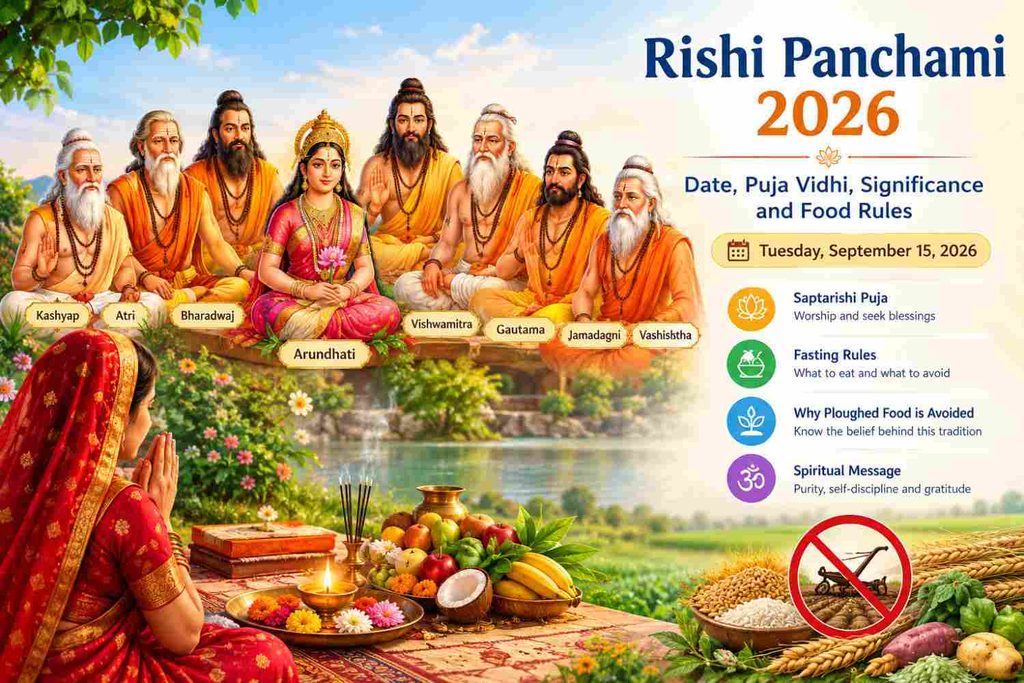
For many Hindu families, particularly women, Rishi Panchami is observed as a day of fasting, worship and seeking forgiveness for mistakes committed knowingly or unknowingly. A distinctive tradition associated with this observance is avoiding food produced through ploughed farming.
But when is Rishi Panchami in 2026, what is its religious significance, and why are grains grown through ploughing traditionally avoided? Here is everything you need to know.
When is Rishi Panchami 2026?
According to the Hindu calendar, Rishi Panchami will be observed on Tuesday, September 15, 2026.
The Panchami Tithi of Shukla Paksha in the month of Bhadrapada begins on September 15 at 7:44 AM and ends on September 16 at 8:59 AM.
Rishi Panchami is observed on the Panchami Tithi, and devotees traditionally perform Saptarishi Puja and remember Goddess Arundhati on this day.
Rishi Panchami 2026: Important Dates
- Rishi Panchami: Tuesday, September 15, 2026
- Panchami Tithi Begins: September 15, 2026, at 7:44 AM
- Panchami Tithi Ends: September 16, 2026, at 8:59 AM
- Main Deities: Saptarishis and Goddess Arundhati
Note: Tithi timings can vary slightly according to location and Panchang calculation. Devotees should check their local Panchang for location-specific timings.
What is Rishi Panchami?
Rishi Panchami falls on the fifth day of the bright fortnight of Bhadrapada. The observance is connected with the worship of the seven great sages known as the Saptarishis.
The day is traditionally viewed as an opportunity for self-purification and atonement. Religious traditions associate the fast with seeking forgiveness for inadvertent mistakes and maintaining purity through prayer, discipline and devotion.
The observance is particularly significant in traditions where women undertake the fast and worship the Saptarishis along with Arundhati.
Why is Rishi Panchami observed?
The central idea of Rishi Panchami is prayaschitta (atonement), purification and remembrance of the sages.
Traditional accounts connect the observance with the belief that certain mistakes may happen unknowingly in everyday life. Rishi Panchami provides an occasion to acknowledge such mistakes, seek forgiveness and follow a disciplined spiritual routine.
The observance is therefore not simply about fasting. It also represents:
- Self-reflection
- Repentance for mistakes
- Spiritual purification
- Respect for the Rishi tradition
- Self-control and simplicity
- Devotion and charity
Why is food grown by ploughing avoided on Rishi Panchami?
One of the most distinctive food traditions associated with Rishi Panchami is the avoidance of crops cultivated through ploughing.
In many families, devotees do not consume commonly cultivated grains such as wheat, rice and other foods obtained through conventional ploughed farming while observing the fast.
Instead, depending on family and regional customs, people may eat fruits, roots, tubers and other permitted fasting foods.
What is the belief behind this rule?
The traditional explanation is connected with the principle of ahimsa, or non-violence.
Ploughing disturbs the soil and may harm tiny living organisms present in the earth. Because Rishi Panchami is associated with purification, restraint and avoiding acts considered harmful to living beings, some traditions developed the practice of avoiding food obtained through ploughed land on this day.
This is primarily a religious and traditional belief, rather than a modern agricultural or scientific dietary rule.
The underlying message is to practice restraint and show respect toward nature and living beings.
What can be eaten on Rishi Panchami?
Food customs can differ between regions and families. Those observing the fast generally follow a simple sattvic or fasting diet according to their tradition.
Commonly permitted foods may include:
- Fresh fruits
- Certain roots and tubers
- Coconut
- Milk and other permitted dairy products
- Fasting foods permitted by the family’s tradition
Many devotees specifically avoid grains and food associated with ploughed cultivation.
Because fasting rules differ considerably across communities, it is best to follow the Panchang and family tradition used in your household.
Which Saptarishis are worshipped on Rishi Panchami?
The seven sages traditionally remembered as the Saptarishis are:
- Kashyapa
- Atri
- Bharadwaja
- Vishwamitra
- Gautama
- Jamadagni
- Vashishtha
Along with these sages, Goddess Arundhati, the wife of Sage Vashishtha, is also traditionally worshipped.
Arundhati is revered in Hindu tradition as a symbol of devotion, virtue and marital fidelity.
Rishi Panchami Puja Vidhi
Devotees can perform the puja according to their family tradition. A simple traditional procedure is as follows:
1. Take an early morning bath
Wake up early, bathe and wear clean clothes. Devotees then make a sankalp to observe the fast and perform the day’s worship.
2. Prepare the puja place
Clean the place of worship and arrange an idol, image or symbolic representation of the Saptarishis and Goddess Arundhati.
3. Invoke the Saptarishis
Remember and invoke Kashyapa, Atri, Bharadwaja, Vishwamitra, Gautama, Jamadagni and Vashishtha with devotion.
4. Offer puja items
Depending on the family tradition, offer water, flowers, sandalwood, incense, a lamp, rice or other appropriate puja materials.
5. Worship Goddess Arundhati
Offer prayers to Arundhati along with the Saptarishis and seek blessings for peace, purity and well-being.
6. Listen to or read the vrat katha
Devotees traditionally listen to or read the Rishi Panchami Vrat Katha and remember the significance of the observance.
7. Pray for forgiveness
The devotee seeks forgiveness for mistakes committed knowingly or unknowingly and prays for spiritual purification.
8. Follow the fasting tradition
Those observing the fast consume only foods permitted by their family or regional tradition. Many traditions avoid grains and crops associated with ploughed cultivation.
9. Charity and completion of the observance
After the puja, devotees may donate food, clothes or other useful items according to their capacity and local custom.
Significance of Rishi Panchami for women
Rishi Panchami has traditionally held particular importance for women in several Hindu communities.
Religious traditions associate the observance with purification and seeking forgiveness for inadvertent violations of prescribed customs. This is why women who follow the tradition may observe the fast and perform Saptarishi Puja with special devotion.
At the same time, the broader spiritual message of the festival extends beyond gender: it encourages self-reflection, discipline, gratitude and respect for the sages and nature.
Rishi Panchami Mantra
Devotees may remember the Saptarishis through traditional prayers and recitations during the puja. One traditional verse identifies the seven sages:
Kashyapo’trir Bharadwajo Vishwamitro’tha Gautamah,
Jamadagnir Vashishthashcha Saptaita Rishayah Smritah.
Devotees should follow the pronunciation and recitation tradition followed in their family or local religious practice.
Frequently Asked Questions
1. When is Rishi Panchami in 2026?
Rishi Panchami will be observed on Tuesday, September 15, 2026.
2. What is the significance of Rishi Panchami?
Rishi Panchami is traditionally observed as a day of purification, repentance, self-discipline and worship of the Saptarishis and Goddess Arundhati.
3. Why is ploughed food avoided on Rishi Panchami?
According to traditional belief, ploughing can disturb and harm tiny organisms living in the soil. Avoiding food produced through ploughed cultivation is therefore associated with the principle of non-violence and spiritual restraint.
4. Can we eat rice and wheat on Rishi Panchami?
In many traditions, devotees observing Rishi Panchami avoid rice, wheat and other grains produced through ploughed cultivation. However, fasting rules vary by region and family tradition.
5. What can be eaten during the Rishi Panchami fast?
Depending on the tradition, devotees may consume fruits, roots, tubers and other permitted fasting foods. The exact diet should be determined according to the family’s customary fasting rules.
6. Which seven sages are worshipped on Rishi Panchami?
The Saptarishis traditionally worshipped are Kashyapa, Atri, Bharadwaja, Vishwamitra, Gautama, Jamadagni and Vashishtha.
7. Why is Goddess Arundhati worshipped on Rishi Panchami?
Arundhati, the wife of Sage Vashishtha, is traditionally revered as an example of virtue, devotion and an ideal marital life. She is worshipped alongside the Saptarishis.
8. Is Rishi Panchami only for women?
Although Rishi Panchami has special importance for women in many traditions, the observance is also understood more broadly as a day dedicated to the Saptarishis, self-purification, prayer and repentance.
Final Thoughts
Rishi Panchami is more than a day of dietary restrictions. Its traditions emphasize purification, self-control, repentance, devotion and respect for the sages and nature.
The practice of avoiding food grown through ploughing is rooted in the traditional idea of non-violence toward living organisms in the soil. While customs differ from one community to another, the festival’s central message remains one of humility, gratitude and spiritual discipline.