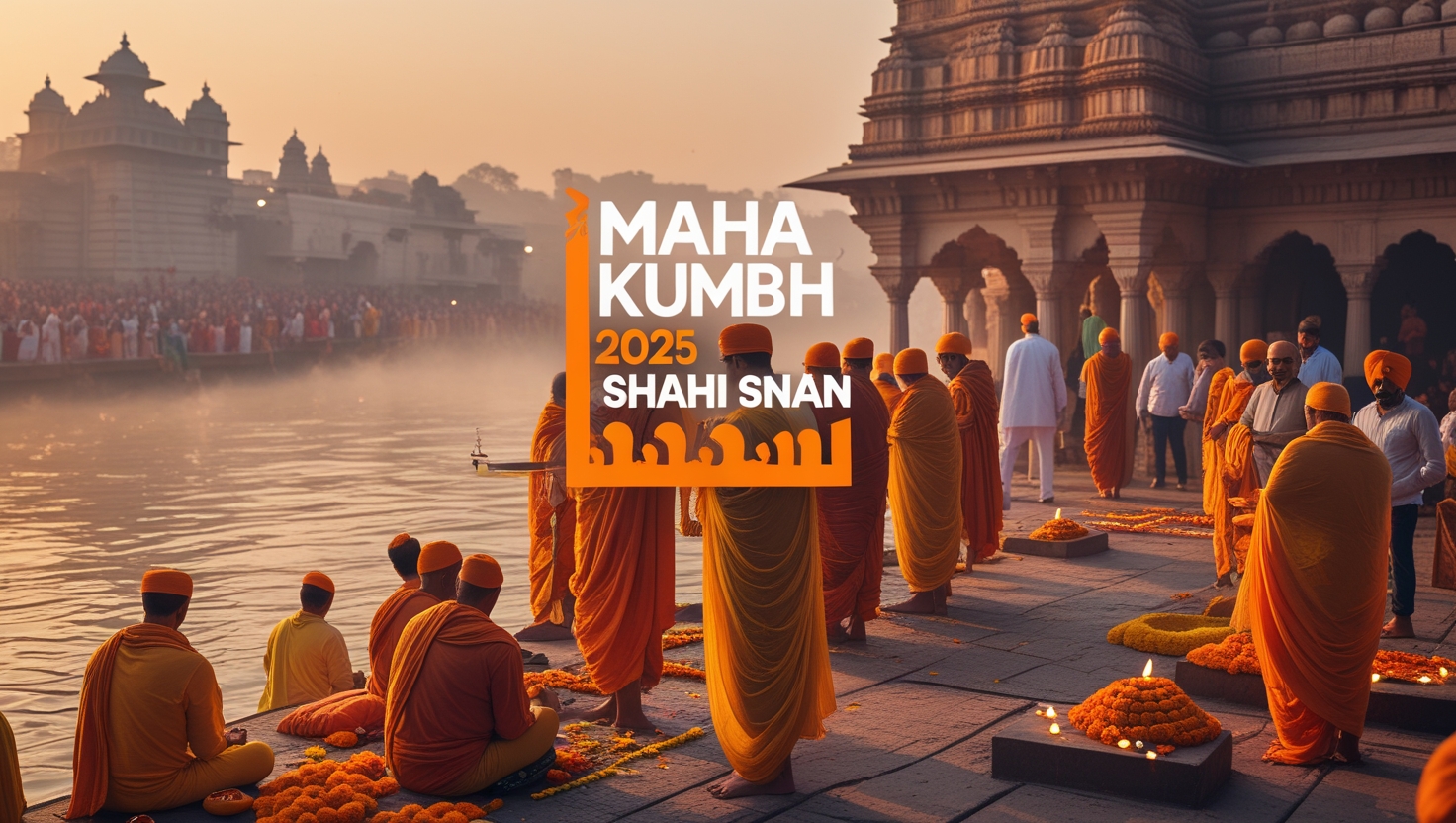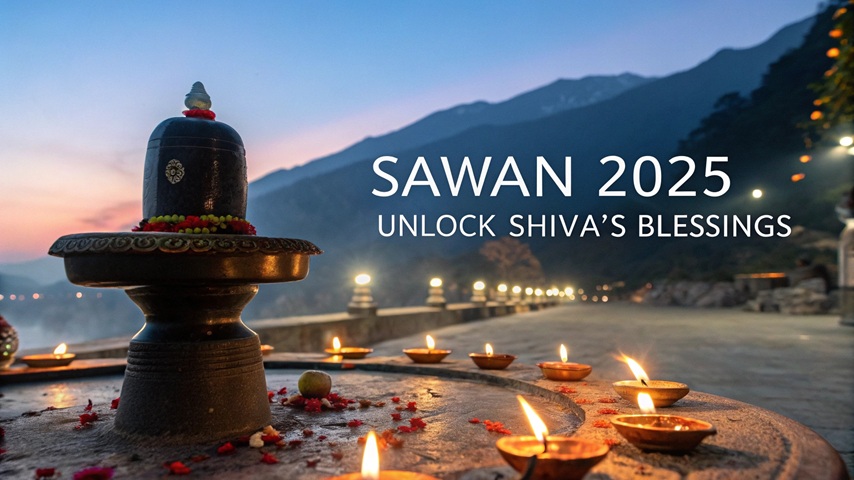
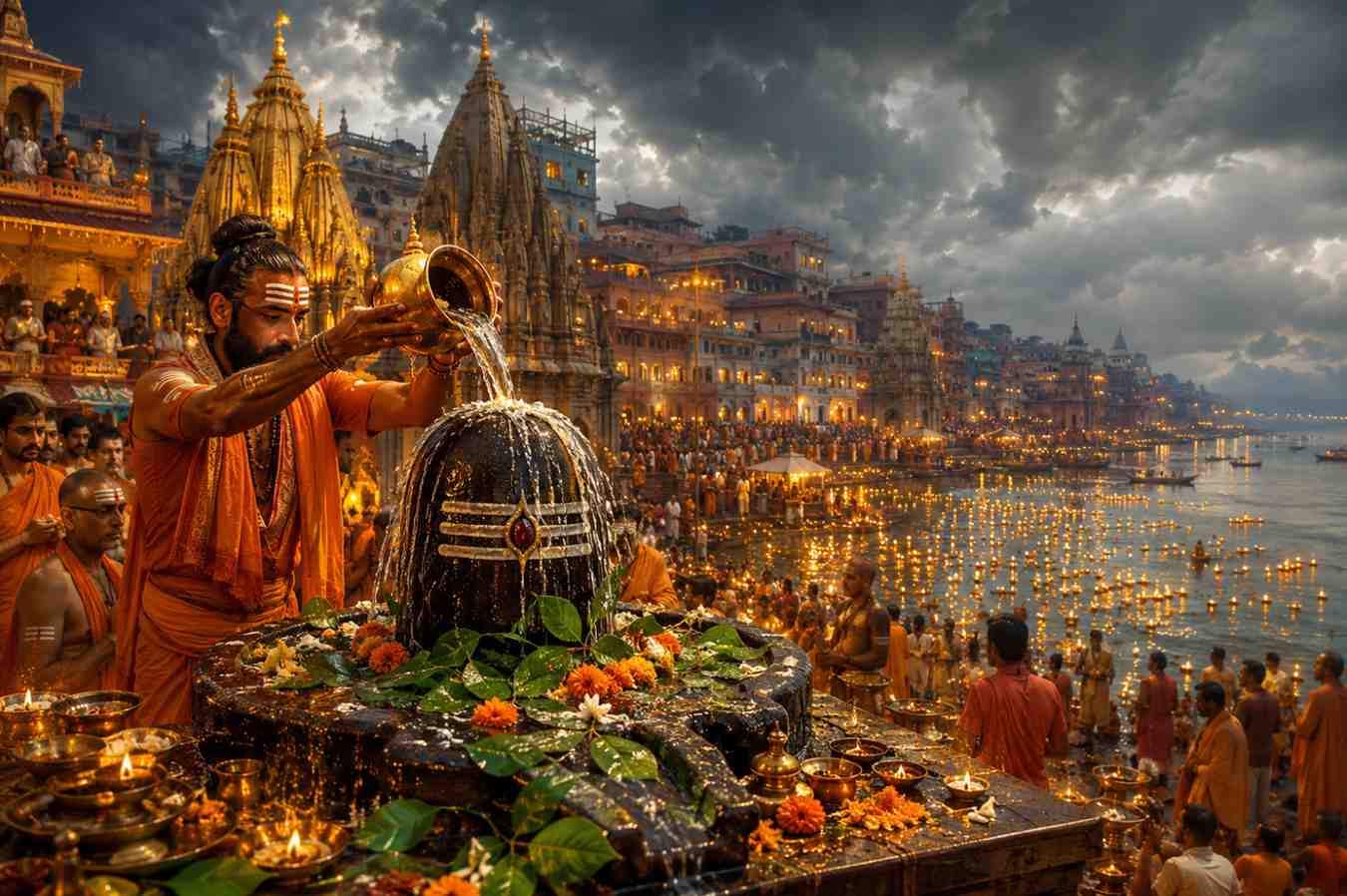
There is a moment that every Shiva devotee carries in their heart — the image of standing before the sacred Jyotirlinga at Kashi Vishwanath Temple, Gangajal flowing through their hands onto the Shivalinga, the air thick with the scent of bilva leaves and the sound of “Har Har Mahadev” rising from thousands of devoted voices.
During the holy month of Sawan (Shravan), that moment becomes reality for millions.
Sawan is the most auspicious month in the Hindu calendar for the worship of Lord Shiva. Ancient scriptures describe it as the time when Shiva himself is most accessible to devotees — when prayers travel faster, when sins dissolve more readily, and when blessings flow as freely as the holy Ganga. Across India, temples overflow with devotees. But no city on earth comes close to the spiritual intensity of Varanasi during Sawan.
Kashi — as the ancient city of Banaras is lovingly known — is not merely a city. It is the earthly abode of Lord Shiva himself. The Kashi Vishwanath Temple here is home to one of the twelve Jyotirlingas, making it the supreme destination for every Shiva devotee. Performing Sawan Puja here, especially Rudrabhishek and Jalabhishek, is believed to grant blessings beyond what any other pilgrimage can offer.
This guide is your complete companion for performing Sawan Puja in Banaras in 2026. From the dates of Sawan Somwar to the step-by-step puja vidhi, from navigating the Kashi Vishwanath Temple Corridor to booking authentic Rudrabhishek services — everything you need is right here.
Sawan 2026: Dates, Significance, and the Sacred Somvars
Sawan 2026 begins on July 30, 2026 and ends on August 28, 2026 . This gives devotees a full month to immerse themselves in the worship of Lord Shiva in Varanasi.
Sawan Somwar 2026 Dates
The Mondays (Somvar) of Sawan hold exceptional importance because Monday is the sacred day of Lord Shiva. Performing puja, especially Rudrabhishek, on these days is considered supremely meritorious:
| Sawan Somwar | Date |
|---|---|
| 1st Sawan Somwar | Monday, August 3, 2026 |
| 2nd Sawan Somwar | Monday, August 10, 2026 |
| 3rd Sawan Somwar | Monday, August 17, 2026 |
| 4th Sawan Somwar | Monday, August 24, 2026 |
Why Is Sawan the Most Sacred Month for Shiva Worship?
The Puranas offer a beautiful explanation. During the Samudra Manthan (churning of the cosmic ocean), a devastating poison called Halahala emerged that threatened to destroy all creation. Lord Shiva, out of infinite compassion, consumed this poison and held it in his throat — turning his neck blue and earning the name Neelkanth.
To soothe the burning effect of the poison, the devas poured cool water and milk over Shiva continuously. This act of sacred offering is remembered and re-enacted by devotees every Sawan through Jalabhishek and Abhishek rituals.
The month of Sawan is also when Goddess Parvati performed intense tapas to win Lord Shiva as her husband. Their divine union and the resultant cosmic harmony make Sawan a time when the energy of Shiva is most intensely present in the world.
Why Banaras is the Spiritual Capital of Shiva Worship
Kashi: Shiva’s Own City
Varanasi is called many things — Kashi, Banaras, Anandakanana (the forest of bliss). But above all, it is known as the city where Lord Shiva dwells as its eternal king and guardian.
The Kashi Khanda of the Skanda Purana — one of the most detailed ancient texts on Varanasi — describes the city as Shiva’s own domain. It says: “Kashi is not merely a tirtha; it is the very body of Shiva.” The entire city, according to this scripture, rests on Shiva’s trident. Every stone, every ghat, every lane of Varanasi is considered sacred.
Moksha in Kashi: The Tarak Mantra
What makes Kashi truly unique among all pilgrimage sites in Hinduism is its promise of Moksha — liberation from the cycle of birth and death. It is believed that those who die in Kashi receive the Tarak Mantra directly from Lord Shiva, which grants them immediate liberation. This belief draws millions of elderly devotees, sadhus, and pilgrims to Varanasi to spend their final years here.
For the living devotee visiting during Sawan, the implication is profound: worship performed in Kashi during Shravan carries the accumulated power of this ancient spiritual field.
A City Beyond Time
Varanasi is considered the oldest living city in the world, with continuous human habitation dating back over 3,000 years. Mark Twain once wrote that Banaras is older than history, older than tradition. Mahatma Gandhi called it the heart of India.
But for Shiva devotees, the simplest description is the truest: Kashi is where you feel closest to Lord Shiva.
Kashi Vishwanath Temple: The Crown Jewel of Shiva Worship
History of the Kashi Vishwanath Temple
The Kashi Vishwanath Temple stands on the western bank of the sacred Ganges in Varanasi, and its history stretches back thousands of years. The Jyotirlinga enshrined here — known as Vishweshwara or Vishwanath, meaning “Lord of the Universe” — is considered among the most powerful of the twelve Jyotirlingas scattered across India.
The current temple structure was built in 1780 by Maharani Ahilyabai Holkar of Indore, a devout queen remembered for her extensive restoration of Hindu temples. In 1853, Maharaja Ranjit Singh donated approximately 1000 kg of gold for plating the temple’s spires — giving rise to the famous “Golden Temple of Varanasi” epithet.
Over centuries, the temple witnessed periods of glory and destruction. It was partially demolished during the medieval period and rebuilt multiple times, each reconstruction an act of devotion by various Hindu kings and patrons. Today’s temple is a living symbol of resilience and unwavering faith.
Spiritual Significance of the Jyotirlinga
The twelve Jyotirlingas are believed to be columns of infinite light — manifestations of Lord Shiva’s divine essence in material form. Kashi Vishwanath is counted among the most important of these twelve. The Shiva Purana states that visiting all twelve Jyotirlingas in a lifetime grants liberation from all sins and the attainment of Moksha.
The Jyotirlinga at Kashi carries an additional distinction: it exists within the sacred precincts of Kashi, where Shiva’s blessing is believed to be omnipresent. Darshan of the Vishwanath Jyotirlinga during Sawan month is therefore considered an experience of almost incomparable spiritual potency.
Darshan Experience During Sawan
During Sawan, the Kashi Vishwanath Temple transforms into a sea of devotion. Queues begin forming before 3:00 AM. Devotees clad in saffron — particularly the Kanwariyas, who carry Ganga water from Haridwar or Varanasi on their shoulders to offer to Shiva — fill every lane of the Vishwanath Gali.
The temple opens for Mangala Aarti at 3:00 AM and remains open until approximately 11:00 PM, with several aarti ceremonies throughout the day. Each aarti is a breathtaking experience of light, devotion, and sound.
Daily Darshan Schedule (Sawan Special):
- Mangala Aarti: 3:00 AM – 4:00 AM
- Darshan begins: 4:00 AM
- Bhog Aarti: 11:15 AM
- Sandhya Aarti: 7:00 PM
- Shringaar Aarti: 9:00 PM
- Shayana Aarti: 10:30 PM
Kashi Vishwanath Temple Corridor: A Landmark of Modern Devotion
What Is the Kashi Vishwanath Corridor?
The Kashi Vishwanath Dham Corridor — inaugurated in December 2021 — is one of the most significant religious infrastructure projects in recent Indian history. Spanning approximately 5 lakh square feet, the corridor connects the Kashi Vishwanath Temple directly to the Ganga ghats, creating a continuous sacred pathway for pilgrims.
Before the corridor’s construction, the temple was nestled in a dense network of narrow lanes, limiting access and creating safety challenges during large gatherings. Today, the corridor has transformed the pilgrimage experience while maintaining its ancient spiritual character.
Facilities for Pilgrims
The corridor offers a range of thoughtfully designed facilities:
- Yatri Suvidha Kendra: Registration, locker facilities, cloakroom, and toilets
- Ghat Access: Direct walking access from the temple to Manikarnika Ghat and Lalita Ghat
- Mumukshu Bhawan: Dedicated rest area for elderly devotees
- Pilgrimage Information Center: Maps, guides, and assistance counters
- Museum: Documenting the temple’s history and significance
- Multiple entry and exit points: Reducing congestion during peak Sawan hours
- Medical facilities: First aid posts and emergency assistance
Architecture and Design
The corridor architecture draws inspiration from the ancient temple traditions of Varanasi. Constructed using Chunar sandstone — the same material used in many historical temples of the region — the complex features 24 buildings, open courtyards, and traditional artistic motifs.
The open plaza between the temple and the Ganga provides devotees with a view that was impossible before: the golden spires of Kashi Vishwanath Temple framed against the sacred river. For many pilgrims, this panorama alone is a transcendent experience.
Why the Corridor Matters During Sawan
During Sawan, the corridor becomes the heartbeat of Varanasi’s pilgrimage activity. The direct ghat access allows Kanwariyas and local devotees to collect Gangajal directly from the river and carry it seamlessly to the temple for Jalabhishek — a logistical and spiritual improvement that has deepened the Sawan experience for millions.
Step-by-Step Sawan Puja Vidhi at Kashi Vishwanath
Performing Sawan Puja with the correct Vidhi (procedure) ensures that the ritual carries its full spiritual power. Whether you perform this at Kashi Vishwanath Temple, at another Shiva temple in Varanasi, or at home with the guidance of a pandit, the following steps form the authentic Vedic procedure.
1. Sankalp (Sacred Intention)
Every ritual in Hinduism begins with Sankalp — the conscious declaration of intent. The devotee, guided by the priest, takes water in their right palm and solemnly states their name, gotra (ancestral lineage), the current tithi (date), and the purpose of the puja. This sacred resolve channels divine energy toward the specific intention — be it health, prosperity, liberation, or the welfare of loved ones.
2. Purification Ritual (Shuddhi)
Before touching the sacred Shivalinga or beginning any Abhishek, the devotee undergoes purification:
- Sprinkling of Gangajal on oneself
- Recitation of Pavamana mantras
- Achamana (sipping of sacred water) three times
- Pranayama (breath regulation) to focus the mind
3. Jalabhishek (Sacred Water Offering)
This is the central act of Sawan worship. The devotee pours Gangajal — ideally collected directly from the Ganga at Varanasi — over the Shivalinga while chanting the Panchakshara Mantra: “Om Namah Shivaya.”
The water offering symbolizes the cooling of Shiva’s throat after consuming the Halahala poison. It also represents the surrender of ego — water takes the shape of any vessel, and the devotee offers themselves fully to the Lord.
4. Panchamrit Abhishek
Panchamrit means “five nectars.” The five sacred substances used in this abhishek are:
- Milk (Dugdha) — for purity and nourishment
- Curd (Dahi) — for prosperity
- Honey (Madhu) — for sweetness in life
- Ghee (Ghrita) — for spiritual illumination
- Sugar (Mishri/Shakkar) — for liberation from bitterness
Each substance is poured over the Shivalinga separately with the appropriate mantra, then the Linga is rinsed with Gangajal.
5. Bilva Patra Offering
The bilva (bel) leaf holds a place of supreme importance in Shiva worship. The Shiva Purana states that offering one bilva leaf to Lord Shiva is equivalent to performing a thousand Ashwamedha Yagnas. The three-leafed bilva represents the three eyes of Shiva, the Trimurti (Brahma, Vishnu, Mahesh), and the three aspects of time — past, present, and future.
During Sawan, fresh bilva leaves are offered while chanting: “Tridalam Trigunaakaram Trinetram cha Triyaayudham…”
6. Rudra Chanting (Rudrabhishek Mantra)
This is the most powerful component of the puja. The Sri Rudram — from the Krishna Yajurveda — is one of Hinduism’s oldest and most sacred hymns. It has two parts:
- Namakam (11 Anuvakas): Addresses Lord Shiva by his various names and seeks protection
- Chamakam (11 Anuvakas): Requests blessings for prosperity, health, and spiritual liberation
When recited by trained Vedic priests during Rudrabhishek, the sound of the Sri Rudram creates a powerful vibrational field that is believed to purify the environment and the devotees present.
7. Aarti (Lamp Offering)
The Aarti is performed with a multi-wick lamp (deepam) while the priest sings devotional hymns. The circular motion of the lamp around the Shivalinga symbolizes the movement of the cosmos around the divine center. The devotee waves the flame before Shiva and then passes their hands through it — receiving the sacred warmth as a blessing.
The famous Shiva Aarti — “Jai Shiv Onkara, Swami Jai Shiv Onkara” — is sung at this time by the congregation.
8. Prasad Distribution
The puja concludes with the distribution of Prasad — typically milk, mishri, and sometimes panchamrit — to all devotees present. Receiving Prasad from a Shiva puja performed at Kashi Vishwanath is considered a direct blessing from Lord Vishwanath himself.
Rudrabhishek in Varanasi: The Most Powerful Sawan Ritual
What Is Rudrabhishek?
Rudrabhishek is the formal Vedic ritual of bathing the Shivalinga with sacred substances while reciting the Sri Rudram. The word “Rudrabhishek” combines “Rudra” — one of Shiva’s most powerful forms, the destroyer of suffering — and “Abhishek,” meaning sacred bathing or anointing.
This is not simply a puja; it is a full Vedic ceremony conducted by trained priests following precise scriptural injunctions. A complete Rudrabhishek can last between 1.5 to 3 hours depending on the scale — from Laghu (shorter) to Maha Rudrabhishek (the most elaborate form).
Spiritual Benefits of Rudrabhishek
The Shiva Purana and other texts enumerate the following benefits of performing Rudrabhishek:
- Removal of sins and karmic burdens accumulated over many lifetimes
- Physical health: relief from chronic illness and disease
- Mental peace: relief from anxiety, fear, and mental suffering
- Financial prosperity: removal of obstacles in business and career
- Protection from negative energies and evil influences
- Fulfillment of righteous desires (Dharmic Kama)
- Progress on the spiritual path toward liberation (Moksha)
Why Rudrabhishek in Sawan Is Especially Powerful
The energy of Sawan month amplifies the effect of every spiritual practice. Ancient texts describe Sawan as the month when the earth is most receptive to divine grace — just as rain-soaked earth receives a seed more fully than dry ground. Performing Rudrabhishek during Sawan in Kashi — where Shiva’s presence is said to be most concentrated — creates a confluence of sacred energies that is unmatched at any other time or place.
Procedure for Rudrabhishek
- Priest Invocation: The officiating pandit performs initial purifications and invokes Ganesha and the Navgrahas
- Sankalp: Devotee states their intention and names
- Kalash Sthapana: Setting up the sacred water vessel
- Sri Rudram Parayana: Recitation of the Namakam and Chamakam in Sanskrit
- Continuous Abhishek: During the chanting, the Shivalinga is bathed continuously with Gangajal, milk, honey, and other substances
- Offering of Bilva, Dhatura, and Flowers
- Aarti and Prasad
Jalabhishek at Kashi Vishwanath: The Sacred Water Ritual
Why Gangajal Is Supreme
The Ganga — revered as the goddess Ganga Maiya — is not merely a river in the Hindu worldview. She is the sacred force that carries the accumulated merit of millions of devotees, purifies all who touch her, and connects this mortal world to the divine. Gangajal (Ganga water) is therefore the most sacred substance for Abhishek.
Performing Jalabhishek with water drawn directly from the Ganga at Varanasi — especially from the ghats near the Kashi Vishwanath Temple Corridor — is considered the highest form of water offering. The Ganga at Varanasi is at the heart of Shiva’s sacred domain, and water from her at this precise location carries extraordinary sanctity.
The Kanwariya Tradition
One of the most visually striking aspects of Sawan in Varanasi is the arrival of Kanwariyas — devotees who carry Gangajal on decorated wooden yokes (Kanwar) balanced on their shoulders. Many of these devotees walk barefoot from their home towns, collecting Ganga water from specific ghats in Varanasi and carrying it to offer at Shiva temples. This tradition of sacrifice and devotion has been practiced for centuries and represents one of the most intense expressions of Shiva Bhakti in the world.
Performing Jalabhishek
Even for a regular pilgrim (not a Kanwariya), performing Jalabhishek is straightforward:
- Collect Gangajal in a copper vessel (Lota) at Dashashwamedh Ghat or the ghats accessed through the Kashi Vishwanath Corridor
- Keep the vessel sealed until reaching the temple
- Under the guidance of a priest, pour the Gangajal over the Shivalinga while chanting “Om Namah Shivaya”
- Offer bilva leaves simultaneously
- Meditate for a few moments with eyes closed, feeling the connection with Lord Vishwanath
Important Shiva Temples in Banaras for Sawan Darshan
While Kashi Vishwanath is the supreme destination, Varanasi is a city of thousands of temples. During Sawan, devotees traditionally visit several important Shiva temples in a single day — a practice known as Kashi Yatra or Panchakoshi Parikrama. Here are the most significant ones:
1. Kashi Vishwanath Temple
The Jyotirlinga and spiritual epicenter of the entire city. Non-negotiable for any Sawan pilgrim. Location: Vishwanath Gali, Varanasi | Best Visit Time: Before 6:00 AM during Sawan
2. Mrityunjay Mahadev Temple
Dedicated to Lord Shiva in his Mrityunjaya form — the conqueror of death. This temple is especially significant for those performing the Maha Mrityunjaya Jaap, a powerful mantra recitation for health and longevity. Location: Dattatreya Ghat area, Varanasi
3. Tilbhandeshwar Mahadev Temple
One of Varanasi’s most ancient temples, this Shiva shrine is associated with the legend of sesame (til) seeds. It holds particular importance for ancestral rites and the removal of ancestral debts (Pitru Dosha). Location: Tilbhandeshwar Mohalla, Varanasi
4. Kedareshwar Temple (Kedar Ghat)
Dedicated to Lord Shiva in his Kedar form, this temple is built in South Indian style and sits at the scenic Kedar Ghat. The nearby ghat is known for its calm atmosphere and is a favorite among meditators and early morning bathers. Location: Kedar Ghat, Varanasi | Specialty: South Indian architectural style; powerful during Sawan Somwar
5. Markandeya Mahadev Temple
This temple is dedicated to the legendary devotee Markandeya, who was saved from death by Lord Shiva himself. The story of Markandeya is one of the most beloved in all of Hindu tradition and is deeply relevant to Sawan worship — a reminder of Shiva’s power to overcome even death for a true devotee. Location: Near Markandeya Ghat, Varanasi
Maha Shivaratri and Sawan: Twin Peaks of Shiva Worship
The Spiritual Connection
Of all the festivals dedicated to Lord Shiva, two stand above the rest: Maha Shivaratri and Sawan. While Maha Shivaratri falls on a single night in the month of Phalgun (February-March), Sawan gives devotees an entire month of intensified worship. In a sense, Sawan is to devotional practice what Maha Shivaratri is to a single-night vigil — both are windows of unparalleled spiritual access.
Similar Spiritual Benefits
Both Maha Shivaratri and Sawan share the following benefits according to the scriptures:
- Fasting in either period is said to burn accumulated sins
- Staying awake through the night (Jaagaran) during both periods pleases Shiva greatly
- Performing Abhishek, Rudrabhishek, or Jalabhishek during either occasion grants extraordinary blessings
- Both are times when Shiva’s energy is most accessible to devotees
Sawan Shivaratri: The Best of Both
The Shivaratri that falls within the Sawan month itself — known as Sawan Shivaratri — is considered the most auspicious of all. In 2026, Sawan Shivaratri falls on August 11, 2026. Performing Rudrabhishek on this night at Kashi Vishwanath Temple is an opportunity that Shiva devotees consider a once-in-a-year blessing.
Conclusion
Lord Shiva — the Mahadeva, the Neelkanth, the Vishwanath — waits in his eternal city of Kashi through every season of every year. But during Sawan, the waiting ends. The gates of grace open wide. The Ganga flows with extra sanctity. The air of Varanasi vibrates with the sound of “Har Har Mahadev.” The ancient stones of Kashi pulse with a divine energy that devotees can feel the moment they set foot in this sacred city.
To perform Sawan Puja at Kashi Vishwanath is not merely to complete a ritual. It is to step into a river of devotion that has flowed unbroken for thousands of years — carrying kings, sages, saints, and ordinary people all toward the same divine ocean of Shiva’s grace.
Whether you travel to Varanasi in person to offer Gangajal at the feet of Lord Vishwanath, or whether you connect with him through an online Rudrabhishek performed by a trained pandit on your behalf — the Lord receives every offering made with a pure heart.
This Sawan 2026, let your prayer be heard in Kashi.
Frequently Asked Questions
Q1: What is the significance of performing Sawan Puja in Banaras specifically?
Varanasi (Kashi) is considered the earthly abode of Lord Shiva. The city sits within the sacred energy field of the Kashi Vishwanath Jyotirlinga, which is one of the twelve most powerful manifestations of Shiva on earth. Ancient texts state that worship performed in Kashi carries a thousand times the spiritual power of worship performed elsewhere. During Sawan month — when Shiva’s energy is most accessible — performing puja in Kashi creates an unparalleled confluence of sacred forces. Millions of devotees worldwide believe that a single Sawan Puja in Banaras can fulfill prayers that years of regular worship may not.
Q2: What is Rudrabhishek and how is it different from regular puja?
Rudrabhishek is a full Vedic ritual in which the Shivalinga is bathed with sacred substances — primarily Gangajal, milk, honey, curd, and ghee — while trained priests recite the Sri Rudram from the Yajurveda. Unlike regular puja, which can be performed by any devotee, Rudrabhishek requires Vedic-trained priests who can correctly pronounce the Sanskrit mantras. The Sri Rudram is believed to be one of the most powerful Vedic hymns, and its precise recitation creates a powerful spiritual vibration that purifies the environment and the devotees. A proper Rudrabhishek typically takes 1.5 to 3 hours.
Q3: Can I perform Jalabhishek at Kashi Vishwanath without a pandit?
Basic Jalabhishek — pouring Gangajal on the Shivalinga while chanting “Om Namah Shivaya” — can be performed by any devotee. However, for a complete Puja Vidhi including Sankalp, Panchamrit Abhishek, Bilva Patra offering, and Rudra recitation, the guidance of an experienced pandit is strongly recommended. The Vedic Puja provides pandit services for all levels of Sawan Puja.
Q4: What are the Sawan Somwar dates in 2026?
The four Sawan Somvars (Mondays) in 2026 fall on August 3, August 10, August 17, and August 24. Of these, performing Rudrabhishek on the first Sawan Somvar (August 3) and on Sawan Shivaratri during the holy month of Shravan is considered especially auspicious.
Q5: What is the dress code for Kashi Vishwanath Temple during Sawan?
Traditional Indian attire is required. Men should wear dhoti-kurta or a simple kurta-pyjama. Women should wear saree or salwar kameez. Shorts, sleeveless clothing, and jeans are not permitted inside the temple sanctum. Devotees performing Abhishek may be required to wear a simple dhoti or lungi provided at the temple. Most importantly, all footwear must be removed before entering the temple premises.
Q6: What is the Kashi Vishwanath Temple Corridor and how does it help during Sawan?
The Kashi Vishwanath Dham Corridor, inaugurated in 2021, is a large pilgrim complex that directly connects the Kashi Vishwanath Temple to the Ganga ghats. It spans approximately 5 lakh square feet and includes facilities like cloakrooms, toilets, rest areas, and a museum. During Sawan, the corridor is particularly valuable because it allows Kanwariyas and pilgrims to collect Gangajal from the ghats and walk directly to the temple for Jalabhishek without navigating the narrow lanes of the old city. It also has better crowd management infrastructure, making the darshan experience safer and more accessible.
Q7: Is online Rudrabhishek a valid option for those who cannot travel to Varanasi?
Yes, online Rudrabhishek — where the ritual is performed by a pandit at Kashi Vishwanath or another sacred temple in Varanasi on behalf of the devotee — is considered valid in the Vedic tradition. The key requirement is a proper Sankalp, which includes the devotee’s name and Sankalpa details, communicated to the pandit. The Vedic Puja offers live-streamed online Rudrabhishek services with complete video recording and Prasad delivery, ensuring that devotees worldwide can receive Lord Vishwanath’s blessings during Sawan.
Q8: What offerings are required for Sawan Puja at Kashi Vishwanath?
The traditional offerings for Sawan Puja include: Gangajal, milk, honey, curd, ghee, sugar (Panchamrit ingredients), bilva leaves, dhatura flower and fruit (a sacred offering specifically for Shiva), white flowers (chameli, ketaki is avoided in Shiva worship), bhasma (sacred ash), sandalwood paste, incense, a lamp (deepam) with ghee or sesame oil, and fruits as Prasad. These materials are readily available at the shops in Vishwanath Gali near the temple.
Q9: What is the relationship between Maha Shivaratri and Sawan month?
Both Maha Shivaratri and Sawan month are the highest sacred occasions for Shiva worship in the Hindu calendar. Maha Shivaratri celebrates the night of Shiva’s cosmic dance (Tandava) and his marriage to Parvati. Sawan month commemorates the Samudra Manthan episode, when Shiva consumed the Halahala poison. Both occasions are believed to be times when Shiva’s grace flows most freely. The Shivaratri that falls within Sawan (Sawan Shivaratri, August 11 in 2026) combines both auspicious energies and is the single most powerful night of the year for Shiva worship.
Q10: How far in advance should I book Sawan Puja services in Varanasi?
Given the massive influx of pilgrims during Sawan — particularly on Sawan Somvar and Sawan Shivaratri — we strongly recommend booking puja services at least 4–6 weeks in advance. Premium slots at sacred temples and highly experienced pandits fill up quickly. The Vedic Puja accepts advance bookings year-round. Contact us at thevedicpuja.in to secure your preferred date and ritual.
Book Authentic Sawan Puja
in Varanasi
Let The Vedic Puja connect you with Lord Vishwanath during the most auspicious month of the year. Our experienced Vedic pandits perform every ritual with complete scriptural authenticity, personalized Sankalp, and genuine devotion.