Have you ever wondered which single day of the year can grant the spiritual merit of all 24 Ekadashi fasts combined? The answer is Nirjala Ekadashi 2026 — the most powerful, most revered, and most challenging Ekadashi in the Hindu calendar. Observed without even a drop of water, this sacred fast is a true test of devotion, endurance, and surrender to Lord Vishnu.
In 2026, Nirjala Ekadashi falls on 25 June, a day when millions of devout Hindus across India and the world will wake before dawn, abstain completely from food and water, and immerse themselves in prayer, charity, and devotion. Whether you’re observing this fast for the first time or seeking deeper understanding of its significance, this guide covers everything you need to know — from the correct Tithi timings and Parana time to the story behind Bhimseni Ekadashi and the proper rules of complete fasting.
Let’s begin this sacred journey together.
Nirjala Ekadashi 2026: Date and Timing
Nirjala Ekadashi 2026 will be observed on Wednesday, 25 June 2026. This Ekadashi occurs during the Shukla Paksha (bright fortnight) of the Jyeshtha month according to the Hindu lunar calendar — a time when the sun blazes with intense summer heat, making the waterless fast even more of a spiritual challenge and achievement.
Ekadashi Tithi Details
| Detail | Timing |
|---|---|
| Ekadashi Tithi Begins | 24 June 2026 at approx. 04:43 AM |
| Ekadashi Tithi Ends | 25 June 2026 at approx. 06:30 AM |
| Fast Observed On | 25 June 2026 (Wednesday) |
| Paksha | Shukla Paksha |
| Month | Jyeshtha (Hindu Calendar) |
| Deity | Lord Vishnu (Trivikrama form) |
Note: Always verify exact timings with your regional Panchang, as timings may vary by 10–20 minutes depending on your city or state.
Parana Time (Breaking the Fast)
Parana is the sacred moment when you break your Nirjala Ekadashi fast the following morning. Breaking the fast outside this window is considered incomplete.
| Detail | Timing |
|---|---|
| Parana Date | 26 June 2026 (Thursday) |
| Parana Window | Approx. 05:30 AM – 08:15 AM |
| Dwadashi Tithi End | 26 June 2026 approx. 08:15 AM |
Important: The fast must be broken before Dwadashi Tithi ends. Missing the Parana window is considered a fasting error (dosh).
What is Nirjala Ekadashi?
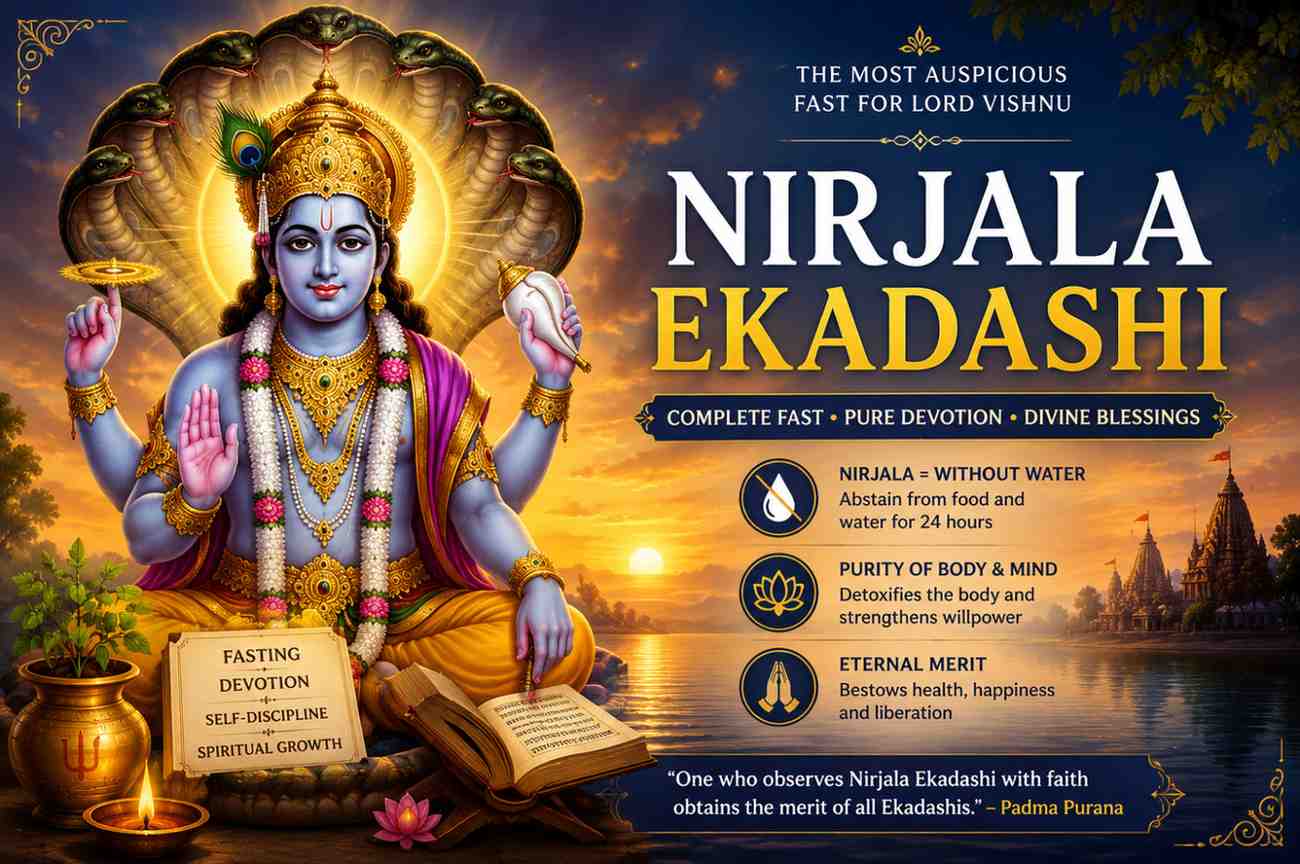
Nirjala Ekadashi is the strictest and most spiritually potent of all 24 Ekadashis observed throughout the Hindu year. The word “Nirjala” comes from two Sanskrit roots — Nir (without) and Jala (water) — meaning a fast observed without consuming any water whatsoever.
Unlike other Ekadashi fasts where devotees consume fruits, milk, or sabudana, Nirjala Ekadashi demands:
- No food — not even fruits or milk
- No water — not even a single drop
- No sleep during the night (for stricter observers)
- Complete surrender to Lord Vishnu throughout the day and night
The significance of this Ekadashi is extraordinary. According to Hindu scriptures and the Brahma Vaivarta Purana, observing Nirjala Ekadashi with complete fasting earns the devotee merit equivalent to observing all 24 Ekadashis of the year. This is why it is treasured above all other Ekadashis.
It is observed once a year, during the Shukla Paksha of Jyeshtha month, typically falling in May or June — the peak of Indian summer.
Why is it Called Bhimseni Ekadashi or Pandava Ekadashi?
The story behind the name Bhimseni Ekadashi (also called Pandava Ekadashi) is one of the most beloved tales from the Mahabharata tradition.
The Legend of Bhima and Nirjala Ekadashi
Among the five Pandava brothers, Bhima — the mighty second Pandava known for his enormous strength and even larger appetite — found it nearly impossible to fast on all 24 Ekadashis throughout the year. He approached the great sage Vedavyasa and admitted his predicament honestly.
Bhima told Vyasa:
- His other brothers — Yudhishthira, Arjuna, Nakula, and Sahadeva — all observed every Ekadashi fast faithfully
- His mother Kunti and wife Draupadi also observed all Ekadashis
- But he, Bhima, simply could not survive without food due to the powerful digestive fire (vrikodara) within him
- He asked if there was any single fast he could observe to gain the complete merit of all Ekadashis
Sage Vedavyasa, moved by Bhima’s honest devotion, revealed the secret of Nirjala Ekadashi to him:
“O Bhima, if you observe just this ONE Ekadashi — the Ekadashi of Shukla Paksha in Jyeshtha month — without consuming even a drop of water, you shall receive the complete merit of all 24 Ekadashis of the year.”
Bhima agreed and successfully observed this rigorous waterless fast. Since then, this Ekadashi has been known as Bhimseni Ekadashi or Pandava Ekadashi in his honour.
This story teaches us that:
- Honest devotion matters more than impossible vows
- God provides a path for every type of devotee
- Complete fasting even once, with full sincerity, equals a year of spiritual practice
Significance and Importance of Nirjala Ekadashi
Nirjala Ekadashi holds a position of supreme importance among all Hindu fasting days. Here’s why it’s considered the king of all Ekadashis:
Spiritual Significance
- Equivalent merit of observing all 24 Ekadashis in a single day
- Devotees believe sincere observance washes away sins accumulated over many lifetimes
- It is a day when the veil between the devotee and the divine is at its thinnest
- Fasting without water symbolises complete renunciation and surrender
Scriptural Significance
- Mentioned in detail in the Brahma Vaivarta Purana
- Referenced in the Skanda Purana as a fast that liberates the soul
- The Padma Purana declares it as the most meritorious of all Ekadashis
- Lord Vishnu Himself is said to be especially pleased on this day
Astrological Significance
- Jyeshtha Shukla Ekadashi falls when the sun is in Gemini (Mithuna Rashi)
- The intense summer heat adds to the austerity, making the sacrifice more profound
- Astrologers consider this day highly auspicious for new spiritual beginnings
Benefits Believed by Devotees
- Attainment of Moksha (liberation from the cycle of birth and death)
- Relief from pitru dosha (ancestral karma)
- Blessings for good health, prosperity, and peace
- Fulfilment of sincere desires and prayers
- Protection from untimely death and disease
Lord Vishnu Blessings on Nirjala Ekadashi
Lord Vishnu — the preserver of the universe, the all-pervading divine consciousness — is the central deity of all Ekadashi fasts. But on Nirjala Ekadashi, His blessings are said to be most abundant and most accessible.
Why Lord Vishnu is Especially Pleased on This Day
According to the Puranas:
- Lord Vishnu resides in water (Jala), so abstaining from water itself is an act of supreme reverence to Him
- The sacrifice of not drinking water even in the scorching June heat demonstrates unconditional devotion
- Lord Vishnu is known as Trivikrama — the one who measured the universe in three steps — and His grace on this day is said to span all three worlds
How to Receive Lord Vishnu’s Blessings
Morning Practices:
- Wake before sunrise (Brahma Muhurta — approx. 4 AM)
- Bathe and wear clean, preferably yellow or white clothing
- Offer tulsi leaves to Lord Vishnu (Tulsi is extremely dear to Him)
- Light a ghee lamp before the Vishnu idol or image
- Chant “Om Namo Bhagavate Vasudevaya” 108 times
Throughout the Day:
- Recite the Vishnu Sahasranama (1,000 names of Vishnu)
- Read or listen to Bhagavad Gita passages
- Chant Hare Krishna Maha Mantra
- Meditate on Lord Vishnu’s form — four-armed, holding conch, chakra, mace, and lotus
Evening and Night:
- Perform Vishnu Puja with flowers, incense, and lamps
- Keep a night vigil (Jagran) — staying awake and singing devotional songs
- Read the Nirjala Ekadashi Katha (the story of Bhima and Sage Vedavyasa)
Lord Vishnu’s most beloved offering on this day is not gold or elaborate rituals — it is sincere devotion and a pure heart.
The Waterless Fast: Meaning and Importance
The waterless fast of Nirjala Ekadashi is perhaps one of the most extraordinary spiritual practices in any religious tradition in the world. To understand its depth, we must understand what this act of abstaining from water truly represents.
The Spiritual Symbolism of Not Drinking Water
- Water is life — abstaining from it is the ultimate sacrifice
- It symbolises complete detachment from bodily needs
- It represents the devotee’s declaration: “My soul is nourished by God, not by the material world”
- The thirst experienced during fasting becomes a metaphor for longing for God
The Physical Challenge and Its Spiritual Reward
Nirjala Ekadashi falls during Indian summer (June), when temperatures across the country often exceed 40°C (104°F). Fasting without water in this heat is physically demanding. Yet, it is precisely this difficulty that makes it so spiritually potent.
The Puranas teach: “The greater the sacrifice, the greater the merit.”
Important Note on Health
Nirjala Ekadashi complete fasting (no food and water) is intended for healthy adults. The scriptures themselves acknowledge this with clear guidance:
- Children below 8 years should not observe the waterless fast
- Elderly persons may take water if medically necessary
- Pregnant women should consult both their doctor and a trusted pandit
- Those with diabetes, kidney disease, or serious illness should observe a modified fast
Dharma never demands harm to the body. When in doubt, consult your physician.
Nirjala Ekadashi Fasting Rules
Observing Nirjala Ekadashi fasting rules correctly is essential to receiving the full spiritual benefit. Here is the complete, authoritative guide.
No Food and Water — Complete Fasting Guidelines
From Dashami Evening (Day Before):
- Have your last meal before sunset on Dashami (24 June 2026)
- Avoid tamasic foods: onion, garlic, meat, eggs, alcohol
- Sleep early, rise early
- Do not eat after sunset on Dashami
On Ekadashi Day (25 June 2026) — Complete Fast:
- No food — absolutely nothing
- No water — not even a sip
- No fruit or milk (unlike regular Ekadashis)
- No pan, supari, or tobacco
- Avoid brushing teeth with paste containing water (use neem twig or dry brush instead)
- Do not swallow water even while bathing (take care)
Dos on Nirjala Ekadashi
- Wake before sunrise and bathe with clean water
- Wear clean, light-coloured clothing
- Offer tulsi and flowers to Lord Vishnu
- Chant Vishnu mantras throughout the day
- Read or listen to Ekadashi Katha
- Stay awake at night (night vigil/jagran)
- Donate water, food, clothing, and umbrellas to the needy
- Visit a Vishnu temple if possible
- Spend time in satsang, prayer, and meditation
- Keep the mind calm and peaceful
Don’ts on Nirjala Ekadashi
- Do not consume any food or water (no exceptions for healthy adults)
- Do not eat rice (especially prohibited on all Ekadashis)
- Do not cut hair or nails
- Do not engage in negative speech, gossip, or arguments
- Do not watch entertainment programmes or waste time
- Do not gamble or engage in sinful activities
- Do not harm any living being
- Do not sleep during the daytime on Ekadashi
- Do not engage in marital relations
- Do not lie or deceive anyone
Dashami and Dwadashi Rules
The fast officially spans three days in spirit:
| Day | Date | Rule |
|---|---|---|
| Dashami | 24 June | Light sattvic meal before sunset; early sleep |
| Ekadashi | 25 June | Complete fast — no food, no water |
| Dwadashi (Parana) | 26 June | Break fast in Parana window; give charity |
Fasting Duration and Parana (Breaking the Fast)
Dawn to Next Day’s Dawn — Complete Duration
The fasting duration for Nirjala Ekadashi begins at sunrise on 25 June 2026 and continues until the Parana window opens on 26 June 2026. This means the complete fast spans approximately 24 hours or more.
Breaking the Fast — Parana Time
Parana is among the most important aspects of any Ekadashi fast. Breaking the fast incorrectly or at the wrong time nullifies much of the spiritual benefit.
Nirjala Ekadashi 2026 Parana Time: 26 June 2026, approx. 05:30 AM to 08:15 AM
Rules for Parana (Breaking the Fast):
- Break the fast only within the Parana window
- Do not break the fast if Hari Vasara (first quarter of Dwadashi) has not ended
- Do not break the fast after Dwadashi Tithi ends — this is called “Dwadashi Kshaya dosh”
- First sip of water should ideally be offered to Tulsi plant, then consumed
- Begin with water or a light liquid (preferably water with tulsi or milk)
- Offer food to a Brahmin or a poor person before eating yourself
- Eat a simple, sattvic meal — avoid heavy, spicy, or tamasic food
What to Eat to Break the Fast:
- Water with tulsi leaves (first offering)
- Panchamrit (mixture of milk, curd, honey, ghee, sugar)
- Fresh fruits — banana, mango, papaya
- Sabudana khichdi or kuttu ki roti
- Avoid rice on Dwadashi if possible
- Avoid onion and garlic throughout the day
Nirjala Ekadashi During Shukla Paksha of Jyeshtha Month
The Shukla Paksha of Jyeshtha month is a period of profound spiritual energy in the Hindu calendar. Understanding this context deepens our appreciation of Nirjala Ekadashi.
What is Jyeshtha Month?
Jyeshtha is the third month of the Hindu lunar calendar, corresponding roughly to May–June in the Gregorian calendar. The name “Jyeshtha” means “the eldest” or “the most important,” reflecting both the seniority of the month and the peak intensity of the summer season.
Why Shukla Paksha Matters
- Shukla Paksha is the waxing phase of the moon — the fortnight of increasing light
- Energy, consciousness, and spiritual sensitivity are considered elevated during Shukla Paksha
- Ekadashi of Shukla Paksha is always considered more auspicious than Krishna Paksha Ekadashi
- The combination of Jyeshtha month + Shukla Paksha + Ekadashi creates a triple confluence of spiritual power
The Summer Sun Connection
The blazing June sun during Jyeshtha:
- Represents Lord Surya’s peak intensity — purifying, energising, and testing
- The physical hardship of fasting without water in extreme heat serves as a natural tapas (austerity)
- Ancient rishis knew that austerity in difficult conditions produces far greater spiritual merit than comfort-zone fasting
Austerity and Penance on Nirjala Ekadashi
Austerity (Tapas) is the ancient spiritual technology of voluntarily accepting discomfort to purify the mind, body, and soul. Nirjala Ekadashi is, at its core, a day of supreme tapas.
The Three Levels of Austerity on This Day
1 — Physical Austerity (Kayika Tapas):
- Abstaining from all food and water
- Sitting in prayer for extended periods
- Waking before sunrise and sleeping after midnight
- Maintaining physical cleanliness and discipline
2 — Verbal Austerity (Vachika Tapas):
- Speaking only what is true and kind
- Avoiding gossip, criticism, and idle conversation
- Chanting God’s name instead of speaking unnecessarily
- Observing mouna (silence) for portions of the day
3 — Mental Austerity (Manasika Tapas):
- Controlling thoughts and emotions
- Replacing negative thoughts with devotional focus
- Cultivating equanimity — not being excited by pleasure or disturbed by pain
- Meditating on Lord Vishnu’s form and qualities
The Bhagavad Gita (Chapter 17, verses 14-16) specifically describes these three forms of tapas as being most pleasing to the divine. Nirjala Ekadashi is, in essence, a one-day intensive practice of all three.
Spiritual Purification and Inner Growth
Beyond the rituals and rules, Nirjala Ekadashi is a transformational opportunity for deep spiritual purification and inner growth.
How Complete Fasting Purifies the Soul
The science behind spiritual fasting is both ancient and fascinating:
Physical Purification:
- Extended fasting triggers autophagy — the body’s cellular self-cleaning process
- The digestive system gets deep rest, allowing vital energy to be redirected upward
- Toxins accumulated in the body begin to be eliminated
Mental Purification:
- Hunger and thirst, when consciously accepted as spiritual offering, become tools of clarity
- The mind, freed from the distraction of food and bodily gratification, becomes exceptionally still and receptive
- Many devotees report profound meditative experiences and visions during Nirjala Ekadashi fasting
Soul Purification:
- According to Hindu philosophy, sins (papa karma) are burned away through sincere austerity
- The scriptures compare it to gold being purified in fire — the soul emerges purer, brighter
- Even a single sincere Nirjala Ekadashi fast is said to dissolve decades of accumulated negative karma
Inner Growth Through the Fast
This day teaches us:
- Willpower — the ability to say no to the body’s demands
- Faith — trusting that divine sustenance is real and sufficient
- Compassion — because having experienced hunger and thirst yourself, your empathy for the suffering of others deepens immeasurably
- Gratitude — the first sip of water after Nirjala Ekadashi is a moment of profound thankfulness that cannot be described, only experienced
Donation and Charity (Daan) on Nirjala Ekadashi
One of the most distinctive and beautiful aspects of Nirjala Ekadashi is the emphasis on Daan (charitable giving). The scriptures teach that fasting without charity is incomplete — the two are inseparable companions.
The Brahma Vaivarta Purana specifically lists several forms of daan as particularly meritorious on this day.
Water Donation (Jal Daan)
Water donation is the single most important charity on Nirjala Ekadashi.
Why water? Because:
- You yourself are fasting without water — and so you understand its value profoundly
- Giving water to the thirsty while you yourself are thirsty is the highest form of selfless giving
- The summer heat makes water a precious, life-saving gift for labourers, animals, and the poor
How to do Jal Daan:
- Set up a water pot (matka) outside your door for passersby to drink
- Fill earthen pots with cool water and place them on roadsides or near temples
- Donate water bottles or water coolers to hospitals, labour sites, or schools
- Feed thirsty animals — place water bowls for birds and street animals
Food Donation (Anna Daan)
While you fast without food, Anna Daan (food donation) multiplies your merit enormously.
- Cook simple, sattvic food and distribute to the poor and needy
- Donate to annadana programmes at temples
- Feed Brahmins with respect and offer them dakshina
- Donate dry rations — rice, dal, flour, ghee — to underprivileged families
Clothing Donation (Vastra Daan)
- Donate clean, usable clothes to the poor
- Particularly meaningful: donate umbrellas to protect people from the intense June sun — this is specifically mentioned in the Puranas as meritorious on Nirjala Ekadashi
- Donate chappals/footwear to barefoot labourers
Other Valuable Donations on This Day
- Sesame seeds (til) — considered purifying and protective
- Ghee lamps donated to temples
- Books of scripture donated to deserving students
- Money donations to temples, orphanages, or cow shelters (Gaushalas)
Benefits of Charity on Nirjala Ekadashi
According to the scriptures and tradition:
- Jal Daan on this day is said to quench ancestral thirst (pitru tarpan effect)
- Anna Daan ensures freedom from hunger in this and future lives
- Combined with fasting, these acts of charity create punya (merit) that protects the family for generations
- Charity performed with genuine compassion (not for show) is considered most meritorious
Benefits of Observing Nirjala Ekadashi
Thousands of devotees across generations have observed this fast and testified to its transformative impact. Here is a summary of the believed benefits:
Spiritual Benefits
- Equivalent merit of all 24 annual Ekadashis
- Removal of sins accumulated over many lifetimes
- Attainment of Moksha (liberation) at the time of death
- Lord Vishnu’s direct blessings and grace
- Freedom from the cycle of rebirth (for advanced practitioners)
- Liberation of ancestors from suffering (pitru mukti)
Material and Life Benefits
- Restoration and maintenance of good health
- Prosperity and financial stability
- Peace and harmony in family relationships
- Success in career and business endeavours
- Fulfilment of sincere desires and prayers
- Protection from misfortune and untimely death
Mental and Emotional Benefits
- Extraordinary clarity of mind after the fast
- Reduction in anxiety, fear, and emotional turbulence
- Increased patience, compassion, and willpower
- Deeper sense of gratitude for life’s blessings
- Strengthened faith and devotion
Rituals and Puja Vidhi for Nirjala Ekadashi 2026
Complete Step-by-Step Puja Vidhi
1 — Sankalpa (Resolve) — Night Before or Early Morning:
- After bathing, sit before Lord Vishnu’s image
- Take water in your right palm and make the vow: “I, [your name], resolve to observe Nirjala Ekadashi on 25 June 2026 with complete fasting, for the pleasure of Lord Vishnu and the attainment of merit.”
- Let the water fall to the ground (or a copper vessel)
2 — Morning Puja (5 AM–7 AM):
- Offer panchamrit abhishek (bathing the deity with milk, curd, honey, ghee, sugar) or simply offer clean water if doing mental puja
- Decorate with yellow flowers (marigold, champa)
- Offer fresh tulsi leaves (most beloved offering to Vishnu)
- Light ghee lamps (diyas) and incense
- Place seasonal fruits as naivedya (even though you won’t eat them)
3 — Mantra Chanting:
- Mula Mantra: “Om Namo Bhagavate Vasudevaya” — 108 times
- Dwadash Akshar Mantra: “Om Namo Bhagavate Vasudevaya” (12-syllable mantra)
- Vishnu Sahasranama: Recite the full 1,000 names
- Hare Krishna Maha Mantra: Chant with mala (rosary)
4 — Katha Reading:
- Read or listen to the Nirjala Ekadashi Katha (the story of Bhima and Vedavyasa)
- Read relevant sections from the Bhagavata Purana or Vishnu Purana
5 — Evening Aarti (6 PM–7 PM):
- Perform Vishnu Aarti with a multi-wick lamp
- Sing “Om Jai Jagdish Hare” — the classic Vishnu aarti
- Offer camphor (kapoor) aarti
6 — Night Vigil (Jagran):
- Stay awake singing bhajans, chanting mantras, or listening to kathas
- This night vigil is considered highly meritorious
- Chant the Hare Krishna Mahamantra throughout the night
7 — Parana on 26 June 2026:
- Wake before sunrise
- Offer water to the Tulsi plant
- Take the first sip of water with devotion
- Feed a Brahmin or poor person before eating
- Eat a simple sattvic breakfast
Conclusion
Nirjala Ekadashi 2026, falling on 25 June, is more than a fasting day — it is a sacred portal, an invitation from the universe to step beyond the ordinary demands of the body and touch something eternal.
In a world that constantly tells us to consume more, eat more, drink more, have more — Nirjala Ekadashi invites us into the radical freedom of having less. And in that space of voluntary simplicity, something extraordinary happens: the soul, unencumbered by the weight of constant physical craving, rises toward the divine.
Whether you’re a lifelong devotee observing this Ekadashi for the fiftieth time, or a young person experiencing it for the first time — the call is the same. Wake before dawn. Bow your head before Lord Vishnu. Accept the discomfort of thirst with grace and gratitude. Give water to those who are thirsty. Chant the divine name. And wait — not impatiently, but with the quiet confidence of someone who knows they are held.
The waterless fast may last one day. But the blessings of Lord Vishnu, the merit of sincere Daan, and the purification of a devoted heart — those last a lifetime.
Observe Nirjala Ekadashi 2026 with devotion, discipline, and love. May Lord Vishnu bless you abundantly.
Frequently Asked Questions (FAQs)
Q: When is Nirjala Ekadashi 2026?
A: Nirjala Ekadashi 2026 is on Wednesday, 25 June 2026. The Ekadashi Tithi begins on 24 June 2026 at approximately 04:43 AM and ends on 25 June 2026 at approximately 06:30 AM.
Q: What is the Parana time for Nirjala Ekadashi 2026?
A: The Parana time for Nirjala Ekadashi 2026 is on 26 June 2026, between approximately 05:30 AM and 08:15 AM. The fast must be broken within this window, before the Dwadashi Tithi ends.
Q: Can we drink water during Nirjala Ekadashi?
A: No. Nirjala Ekadashi is specifically a waterless fast — “Nirjala” means without water. Healthy adult devotees do not consume even a single drop of water. However, children, pregnant women, and those with serious illness may consume water after consulting a doctor and pandit.
Q: Why is Nirjala Ekadashi called Bhimseni Ekadashi?
A: It is called Bhimseni Ekadashi because the Pandava Bhima — who could not observe all 24 Ekadashis due to his enormous appetite — was told by sage Vedavyasa that observing just this one waterless fast would grant the merit of all 24 Ekadashis. He successfully observed it, giving this Ekadashi his name.
Q: Is Nirjala Ekadashi the most important Ekadashi?
A: Yes, Nirjala Ekadashi is considered the most important and most meritorious of all 24 Ekadashis in the Hindu year. Observing it with complete fasting (no food and water) is believed to grant the combined spiritual merit of all other Ekadashis.
Q: What should I eat to break the Nirjala Ekadashi fast?
A: Break the fast (Parana) on 26 June 2026 between 05:30 AM and 08:15 AM. Begin with water (ideally with tulsi) or panchamrit. Then eat simple sattvic foods like fruits, sabudana, or kuttu ki roti. Avoid rice, onion, and garlic.
Q: Which month does Nirjala Ekadashi fall in?
A: Nirjala Ekadashi falls in the Shukla Paksha (bright fortnight) of the Jyeshtha month of the Hindu lunar calendar, which corresponds to May or June in the Gregorian calendar. In 2026, it falls on 25 June.
Q: What is the best charity to give on Nirjala Ekadashi?
A: Water donation (Jal Daan) is the most meritorious charity on Nirjala Ekadashi. Other highly recommended donations include food (Anna Daan), clothing (Vastra Daan), umbrellas, sesame seeds, and donations to temples, orphanages, and cow shelters.
Q: How long is the Nirjala Ekadashi fast?
A: The fast lasts approximately 24 hours — from sunrise on 25 June 2026 to the Parana time on the morning of 26 June 2026. Those observing stricter rules begin the fast at sunset on Dashami (24 June), extending the duration to approximately 36 hours.
Q: Can elderly people observe Nirjala Ekadashi?
A: Elderly people with good health may observe the complete waterless fast. However, if they have medical conditions, they should consult their physician. In such cases, they may observe a modified fast with water or fruits, as the scriptures acknowledge that health must be respected.
Q: What is the significance of tulsi in Nirjala Ekadashi puja?
A: Tulsi (holy basil) is Lord Vishnu’s most beloved plant. Offering tulsi leaves during puja and placing tulsi in water during Parana is considered highly auspicious. The scriptures say that Vishnu accepts offerings made with tulsi above all else.
Q: Does observing Nirjala Ekadashi grant moksha?
A: According to Hindu scriptures including the Brahma Vaivarta Purana and Padma Purana, sincere observation of Nirjala Ekadashi with complete fasting, prayer, and charity can lead to the attainment of Moksha (spiritual liberation) — freedom from the cycle of birth, death, and rebirth.