Ahoi Ashtami is a deeply meaningful Hindu festival observed by many mothers with prayers for their children’s long life, good health, happiness, and prosperity. On this auspicious occasion, women observe a fast, worship Ahoi Mata, listen to the traditional Ahoi Ashtami Vrat Katha, and offer prayers in the evening. The festival carries a special emotional significance for families because it celebrates a mother’s love, devotion, and heartfelt wishes for her children’s future.
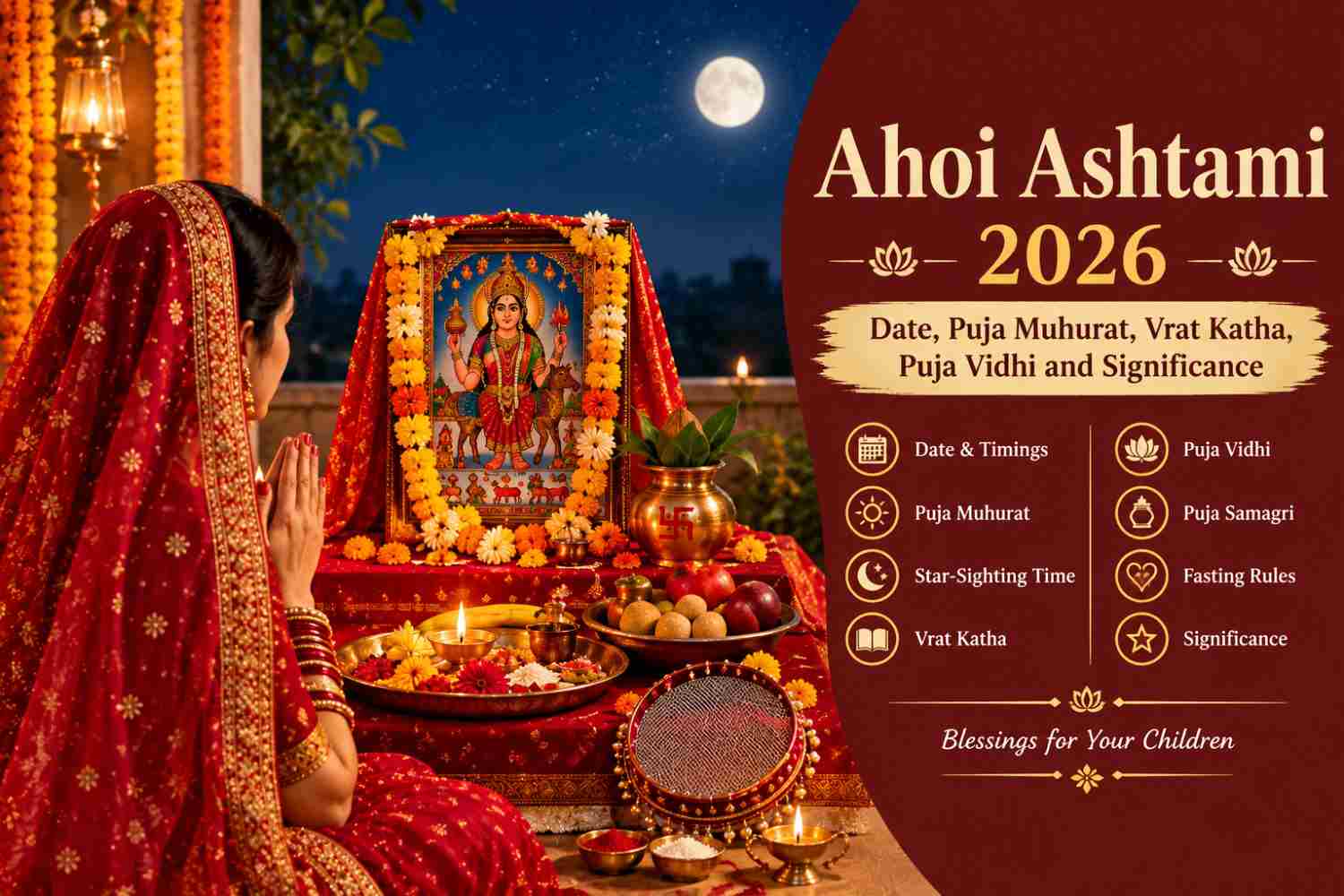
Ahoi Ashtami is traditionally observed during Krishna Paksha Ashtami in the Hindu month of Kartik according to the North Indian calendar. It usually falls four days after Karwa Chauth and around eight days before Diwali. The main rituals generally take place in the evening, when devotees worship Ahoi Mata and, according to their family traditions, offer water to the stars before completing the fast.
If you are planning to observe Ahoi Ashtami in 2026, this complete guide explains the festival date, Tithi, puja timings, fasting traditions, puja samagri, step-by-step puja vidhi, and the traditional story behind the observance.
Ahoi Ashtami 2026 Date and Day
Ahoi Ashtami will be observed on Sunday, November 1, 2026.
The festival is associated with the eighth lunar day of Krishna Paksha. Although the Tithi continues into the following afternoon, the evening observance falls on November 1.
| Event | Date and Time |
|---|---|
| Ahoi Ashtami 2026 | Sunday, November 1, 2026 |
| Ashtami Tithi Begins | November 1, 2026, at 2:51 PM |
| Ashtami Tithi Ends | November 2, 2026, at 1:10 PM |
| Delhi Puja Muhurat | 5:36 PM to 6:54 PM |
| Delhi Star-Sighting Time | Around 6:00 PM |
| Main Ritual | Evening worship of Ahoi Mata |
| Fast Completion | Traditionally after star sighting, according to family customs |
Note: Puja and star-sighting timings may vary according to local Panchang calculations. Check the timings applicable to your location before performing the rituals
Why Is Ahoi Ashtami Celebrated?
Ahoi Ashtami is traditionally observed by mothers who pray for the well-being, longevity, and prosperity of their children. Many devotees believe that worshipping Ahoi Mata with sincerity brings divine blessings to the family and helps protect children from difficulties.
The festival is also known as Ahoi Aathe because the fast is associated with the eighth lunar day, called Ashtami. The word “Ahoi” is closely connected with the traditional prayers and stories associated with Ahoi Mata.
For many families, the day begins with a resolve to observe the fast and ends with evening prayers. Mothers may prepare a picture of Ahoi Mata, arrange the puja items, listen to the Vrat Katha, and offer water to the stars according to their household customs.
Although the observance has traditionally been associated with mothers praying for their sons, many families today observe the festival for the health and happiness of all their children, regardless of gender.
Beyond the fasting ritual, Ahoi Ashtami is a reminder of parental affection, responsibility, gratitude, and the hope that children grow up healthy, confident, and happy.
Ahoi Ashtami 2026 Puja Muhurat
The published Ahoi Ashtami puja muhurat is 5:36 PM to 6:54 PM on November 1, 2026.
Evening is traditionally considered the appropriate time for worshipping Ahoi Mata. Families arrange their puja space, place the image of the Goddess, offer customary items, and listen to or read the Vrat Katha.
The exact puja window may vary according to location because sunset and other astronomical calculations differ from one place to another. Devotees should therefore check a local Panchang for their city rather than automatically following Delhi timings.
It is helpful to arrange all the puja items before the evening begins. This allows the family to focus on the prayers and the story without rushing to find essential items during the ceremony.
Ahoi Ashtami Star-Sighting Time 2026
Star sighting is an important part of Ahoi Ashtami in many North Indian traditions. Women commonly wait until stars become visible in the evening, offer water, and complete the fast according to their family customs.
Star sighting is listed at around 6:00 PM on November 1, 2026. This is a location-specific reference, not a fixed time for every city.
The actual time at which stars become visible can depend on local conditions, including the horizon, buildings, weather, and cloud cover. Some families follow a specific local ritual time, while others wait until stars can actually be seen.
Some devotees complete the fast after sighting the stars, while others follow a family tradition of waiting for the Moon. Since the Moon can rise late on Ahoi Ashtami, it is important to understand the practice followed in your household before planning the evening ritual.
Ahoi Ashtami Puja Samagri
Preparing the puja samagri in advance makes the evening observance more organised and peaceful. The exact items vary between regions and families, but the following are commonly used:
- Picture or drawing of Ahoi Mata
- Image of the small animal and its young ones associated with the traditional Vrat Katha
- A clean puja cloth
- A small pot or karwa filled with water
- A diya with a cotton wick
- Ghee or oil for the diya
- Roli or kumkum
- Rice grains
- Fresh flowers
- Incense sticks
- Fruits
- Sweets or other traditional offerings
- A small bowl or vessel for offering water
- A glass or lota of water for the evening ritual
- A copy of the Ahoi Ashtami Vrat Katha
Some families use a wall drawing made with traditional materials, while others worship a printed picture or framed image of Ahoi Mata. Follow the custom practised in your family.
Ahoi Ashtami Puja Vidhi: Step-by-Step Rituals
The traditional puja is usually performed in the evening. While the precise procedure may differ from one household to another, the following steps provide a general guide.
1. Begin the Day with a Prayer and Sankalp
Wake up in the morning, complete your daily routine, and make a sincere resolve to observe the fast according to your family’s tradition. Some devotees begin the day with a prayer for their children’s health, happiness, and long life.
The fasting rules are not identical in every family, so follow the observance customary in your household and consider your personal health needs.
2. Clean the Puja Area
Before the evening ceremony, clean the place where the puja will be performed. Arrange a clean cloth or suitable surface and place the image or drawing of Ahoi Mata in a respectful position.
Keep the diya, water vessel, flowers, rice, kumkum, offerings, and Vrat Katha ready.
3. Prepare the Image of Ahoi Mata
Place the image of Ahoi Mata in the puja area. In some traditional depictions, the Goddess is shown alongside a small animal and its young ones, which are connected with the festival’s Vrat Katha.
Some families draw the image on a wall, while others use a picture. The method depends on the tradition followed in the household.
4. Perform the Evening Puja
During the evening puja muhurat, light the diya safely and offer flowers, roli, rice, incense, and other customary items to Ahoi Mata.
Pray for the health, safety, happiness, and prosperity of your children. Many devotees also pray for peace and well-being throughout the family.
5. Read or Listen to the Ahoi Ashtami Vrat Katha
Listening to the Vrat Katha is one of the central traditions of the festival. Family members may gather while one person reads the story aloud.
The traditional narrative explains the origin of the observance and emphasises the importance of compassion, repentance, service, and sincere prayer.
6. Offer Water to the Stars
After the stars become visible, devotees in many traditions offer water as part of the evening ritual. Some families recite prayers or mantras while performing the offering.
The timing and exact method differ according to regional and household customs, so follow the practice familiar to your family.
7. Complete the Fast
After the evening rituals, complete the fast according to your family’s tradition. Some devotees break their fast after star sighting, while others follow a custom involving Moon sighting.
Those who need to modify fasting for health reasons should not disregard medical advice. A religious observance should not require someone to put their health at risk.
Ahoi Ashtami Vrat Katha: The Traditional Story of the Mother and the Syahu
The Ahoi Ashtami Vrat Katha has several regional versions. One of the best-known stories tells of a woman whose accidental action harms the young ones of a wild animal, leading to a curse and a period of sorrow. Through repentance, service, and sincere devotion, she eventually receives divine grace. The story is traditionally narrated to explain the significance of Ahoi Mata’s worship.
According to a popular version, there once lived a prosperous family in a village. The household had several sons and a daughter, and the family was preparing for the festival season before Diwali. As part of the preparations, the women of the household went to collect soil to clean and decorate their homes.
While digging the earth, the woman accidentally disturbed the den of a wild animal known in the story as a syahu. In the process, the young ones living there were killed. The woman had not intended to harm them, but the mother animal was overcome with grief. In anger and sorrow, it cursed the woman, according to the traditional narrative.
After this incident, the woman began to experience deep distress. In the version commonly told, misfortune repeatedly affected the family, and the woman suffered the loss of her children. Her grief became unbearable, and she realised that her actions, although unintentional, had caused great harm. She longed for a way to make amends and prayed for relief from her suffering.
The woman’s family was also distressed by what had happened. Seeing her sorrow, people advised her to seek divine help and perform acts of service with a sincere heart. In some versions of the story, a wise person suggests that she care for and serve a cow, regarded as sacred in Hindu tradition. The woman accepted this advice and began serving the cow with humility, devotion, and patience.
Day after day, she continued her service and prayed for forgiveness and help. Her actions reflected a genuine desire to make amends for the harm that had occurred. She did not simply ask for her troubles to disappear; she tried to respond to the situation with compassion and devotion.
As the story continues, the woman’s sincere service pleases the divine powers. In some retellings, the cow becomes an instrument of divine assistance and helps the woman approach the syahu. The woman humbly asks for forgiveness for the accidental harm she caused. Moved by her remorse and sincere efforts, the syahu eventually relents, and the curse is lifted in the traditional narrative.
Through divine grace, the woman is blessed with the happiness of motherhood again. Her suffering comes to an end, and she gives thanks for the mercy she has received. The story becomes associated with the worship of Ahoi Mata, and devotees remember it as a lesson in compassion, repentance, service, and faith.
The details of this story differ among regional traditions, and some versions describe the family relationships and events differently. Its central message, however, remains consistent: an unintended mistake should be met with sincere repentance, a compassionate heart, and a commitment to doing good.
For devotees observing Ahoi Ashtami, the Vrat Katha is more than an explanation of a ritual. It is a reminder to care for children, respect living beings, recognise the consequences of our actions, and pray with humility.
Religious Significance of Ahoi Mata Worship
Ahoi Mata is worshipped with devotion by families seeking blessings for their children’s health, safety, happiness, and future. The festival reflects the importance of a parent’s prayers and the belief that sincere devotion can bring peace and strength during difficult times.
The traditional Vrat Katha also connects the observance with compassion for animals and the importance of acknowledging mistakes. Its narrative encourages people to act responsibly, seek forgiveness when they have caused harm, and serve others with sincerity.
For many households, the ritual brings family members together. The preparation of the puja area, recitation of the story, and evening prayers create an opportunity to preserve family traditions and pass them on to younger generations.
While religious beliefs and practices vary, the broader values associated with Ahoi Ashtami—love, care, responsibility, and hope—remain meaningful to many families.
Ahoi Ashtami Fasting Rules and Important Considerations
Traditional fasting practices vary. Some devotees observe a strict fast, while others follow a modified practice based on their family’s customs, health, and personal circumstances.
Before observing the fast, keep these considerations in mind:
- Understand the fasting rules followed in your family.
- Prepare your puja items in advance so you can perform the evening rituals calmly.
- Check the local puja and star-sighting times.
- Do not ignore dizziness, faintness, severe weakness, or other concerning symptoms.
- If you have a medical condition or take medicines that require food or water, consult a qualified healthcare professional before fasting.
- Pregnant or breastfeeding women and anyone who may be vulnerable to dehydration should seek medical advice and consider an appropriate alternative.
Religious observance should be approached with care and respect for personal health. Families can discuss suitable adaptations with their spiritual guide when necessary.
Ahoi Ashtami 2026: Frequently Asked Questions
1. When is Ahoi Ashtami in 2026?
Ahoi Ashtami will be observed on Sunday, November 1, 2026.
2. What is the Ahoi Ashtami puja muhurat in 2026?
the published puja muhurat is 5:36 PM to 6:54 PM. Timings vary by location, so check your local Panchang.
3. What is the Ahoi Ashtami star-sighting time in 2026?
star sighting is listed at around 6:00 PM on November 1. Actual visibility and timing may differ by location and weather conditions.
4. When does the Ashtami Tithi begin and end in 2026?
The Ashtami Tithi is listed as beginning on November 1 at 2:51 PM and ending on November 2 at 1:10 PM. These are published Indian calendar timings; check a local Panchang for location-specific guidance.
5. Why do mothers observe Ahoi Ashtami?
Many mothers observe the fast to pray for their children’s long life, good health, happiness, and prosperity. Some families now observe it for all children, regardless of gender.
6. Who is Ahoi Mata?
Ahoi Mata is the Goddess worshipped during Ahoi Ashtami. Devotees pray to her for their children’s well-being and family happiness.
7. Is the Ahoi Ashtami Vrat Katha important?
Yes. Listening to or reading the traditional Vrat Katha is an important part of the observance in many families. The story teaches lessons about compassion, repentance, service, and devotion.
8. Do devotees break the Ahoi Ashtami fast after seeing stars or the Moon?
Many families complete the fast after seeing the stars. Some follow a tradition of waiting for the Moon. The practice depends on regional and family customs.
9. What should be included in the Ahoi Ashtami puja samagri?
Common items include an image of Ahoi Mata, a diya, flowers, roli, rice, water, fruits, sweets, and a copy of the Vrat Katha. The exact list depends on household tradition.
10. Can fasting be modified for health reasons?
Yes. Anyone for whom fasting may be medically risky should consult a qualified healthcare professional. Health concerns should be taken seriously, and fasting practices can be discussed with family or spiritual advisers.
Conclusion
Ahoi Ashtami 2026 will be observed on Sunday, November 1. The festival brings families together through prayers, the worship of Ahoi Mata, the traditional Vrat Katha, and the evening star-sighting ritual.
For many mothers, the observance is a heartfelt expression of love and concern for their children’s future. The traditional story also offers lessons in compassion, repentance, service, and faith, reminding devotees to treat living beings with care and to respond to mistakes with sincerity.
If you are observing Ahoi Ashtami this year, prepare your puja items ahead of time, confirm the timings for your location, and follow the traditions meaningful to your family. May Ahoi Mata bless every child with good health, happiness, protection, and a bright future.