Diwali, also known as Deepawali, is one of the most celebrated festivals in Hindu tradition. Known as the Festival of Lights, it brings families together through prayers, glowing diyas, colourful rangoli, festive sweets, new beginnings, and the hope of prosperity. The festival carries a powerful message: light can overcome darkness, knowledge can overcome ignorance, and goodness can prevail over evil.
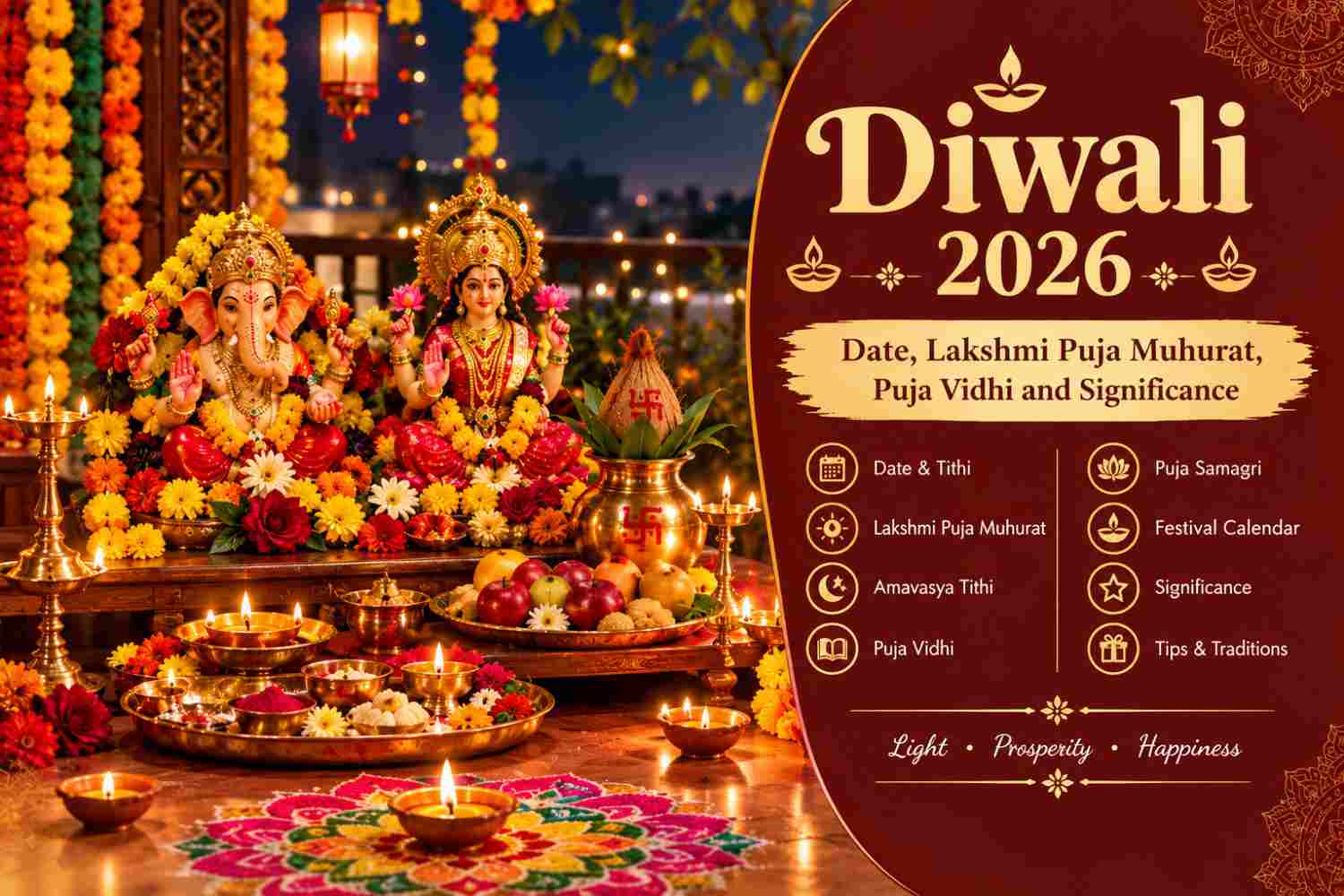
Diwali is traditionally associated with the worship of Goddess Lakshmi, the deity of wealth and prosperity, and Lord Ganesha, who is worshipped for wisdom and the removal of obstacles. Homes are cleaned and decorated, entrances are illuminated, and families perform Lakshmi Puja to express gratitude and pray for peace, abundance, and happiness in the coming year.
If you are preparing to celebrate Diwali in 2026, this guide covers the festival date, Amavasya Tithi, Lakshmi Puja muhurat, traditional rituals, puja samagri, the religious stories associated with the festival, and practical tips for a meaningful celebration.
Diwali 2026 Date and Day
Diwali will be celebrated on Sunday, November 8, 2026.
The main Diwali observance falls on Kartik Amavasya, the new-moon day of the Hindu lunar calendar. Lakshmi Puja is traditionally performed during the evening, with many families choosing an auspicious period associated with Pradosh Kaal.
Diwali 2026: Important Date and Timing Details
| Event | Date and Time |
|---|---|
| Diwali 2026 | Sunday, November 8, 2026 |
| Kartik Amavasya Tithi Begins | November 8, 2026, at 11:27 AM |
| Kartik Amavasya Tithi Ends | November 9, 2026, at 12:31 PM |
| Lakshmi Puja Muhurat | 5:54 PM to 7:50 PM |
| Pradosh Kaal | 5:31 PM to 8:09 PM |
| Main Worship | Evening Lakshmi-Ganesha Puja |
| Festival Theme | Light, prosperity, hope, and the victory of good over evil |
Important: The puja and Pradosh timings shown above are commonly published reference timings, not universal timings for every location. Local sunset, Panchang calculations, and customary practices can change the appropriate worship window. Check the local Panchang before performing the puja.
Why Is Diwali Celebrated?
Diwali has several religious and cultural meanings, and different communities celebrate it according to their own traditions. For many Hindus, the festival represents the triumph of righteousness over wrongdoing and the return of light, happiness, and peace after a period of hardship.
One of the best-known traditions connects Diwali with Lord Rama’s return to Ayodhya after fourteen years of exile and his victory over Ravana. According to the Ramayana tradition, people welcomed Rama, Sita, and Lakshmana by lighting rows of lamps. These lights symbolised joy, devotion, and the restoration of righteousness.
Another important aspect of Diwali is the worship of Goddess Lakshmi. Devotees pray for prosperity, financial stability, generosity, and harmony within the family. Lord Ganesha is worshipped alongside her because wisdom, good judgement, and the ability to overcome obstacles are considered essential for a prosperous life.
Diwali is also a time for reflection. Cleaning the home can symbolise removing disorder, while lighting a diya represents hope and awareness. Sharing food and gifts encourages generosity, and meeting relatives and friends strengthens family and community relationships.
Although customs differ between households, the festival’s central message remains widely cherished: welcome goodness, practise kindness, and allow hope to guide the beginning of a new chapter.
Diwali 2026 Lakshmi Puja Muhurat
Lakshmi Puja is the central religious observance for many families on Diwali. The commonly published reference muhurat for 2026 is 5:54 PM to 7:50 PM on Sunday, November 8.
The evening worship is traditionally planned around Pradosh Kaal, the period after sunset. Many Hindu traditions consider this period suitable for invoking Goddess Lakshmi and offering prayers for prosperity and well-being.
Before beginning the puja, families generally clean the worship area, arrange the idols or pictures of Goddess Lakshmi and Lord Ganesha, prepare offerings, and light a diya. The family may then perform the rituals together, recite prayers, and conclude with aarti.
Because auspicious timings depend on geographical location and calendar calculations, the listed time should be treated as a reference rather than a universal rule. Check the muhurat applicable to your location and follow the tradition practised in your household.
Diwali 2026 Amavasya Tithi
Amavasya is the new-moon phase of the Hindu lunar calendar. Kartik Amavasya is especially important because the main Diwali worship is traditionally associated with this lunar day.
For 2026, the published Tithi timings are:
- Amavasya begins: November 8 at 11:27 AM.
- Amavasya ends: November 9 at 12:31 PM.
The lunar Tithi and the festival’s observance date do not always begin and end at midnight. Hindu festival dates are determined using traditional calendar rules and the relevant Tithi at the prescribed period of observance.
For this reason, the main Diwali celebration in 2026 falls on November 8, even though Amavasya continues into the following day. For rituals that require a particular Tithi or muhurat, consult a reliable local Panchang.
Diwali 2026: Five-Day Festival Calendar
Diwali is widely celebrated as a multi-day festival. The sequence includes Dhanteras, Choti Diwali, the main Diwali celebration, Govardhan Puja, and Bhai Dooj. The exact observance of some days can vary according to regional traditions and calendar rules.
| Festival | Date in 2026 | Traditional Significance |
|---|---|---|
| Dhanteras | Friday, November 6 | Worship, household preparation, and prayers for health and prosperity |
| Choti Diwali / Naraka Chaturdashi | Saturday, November 7 | Symbolises the victory of good over evil |
| Diwali / Lakshmi Puja | Sunday, November 8 | Worship of Goddess Lakshmi and Lord Ganesha; lighting diyas |
| Govardhan Puja / Annakut | Tuesday, November 10 | Devotion to Lord Krishna and gratitude for nature and nourishment |
| Bhai Dooj | Wednesday, November 11 | Celebrates the loving bond between brothers and sisters |
Festival dates can vary with regional Panchang conventions, particularly when Tithis span more than one calendar day. Confirm the relevant observance with your family’s customary calendar.
Diwali Puja Samagri: Complete Checklist
Preparing the puja samagri in advance helps make the ceremony organised and peaceful. The exact list varies by family, but these items are commonly used for Lakshmi-Ganesha Puja.
- Idols or pictures of Goddess Lakshmi and Lord Ganesha
- A clean puja cloth
- A wooden platform or suitable puja table
- Diyas and cotton wicks
- Ghee or oil for the lamps
- Roli or kumkum
- Turmeric
- Akshat, or unbroken rice grains
- Fresh flowers and flower garlands
- Incense sticks and dhoop
- A kalash or water vessel
- Clean water
- Fruits and seasonal offerings
- Sweets or traditional prasad
- Betel leaves and betel nuts, if customary
- Coins or other offerings used in the family tradition
- A bell and an aarti plate
- A copy of the Lakshmi Puja prayers or aarti
- Rangoli colours or flower petals for decoration
You do not need an elaborate arrangement to make the occasion meaningful. A clean space, safe lighting, sincere prayers, and respect for family traditions are more important than purchasing every possible item.
Diwali Lakshmi Puja Vidhi: Step-by-Step Rituals
The following is a general guide to traditional Lakshmi-Ganesha Puja. Families may follow different regional procedures, so adapt the steps according to your household’s customs.
1. Clean and Prepare the Home
Cleaning is an important part of Diwali preparations. Many families tidy their homes, organise their belongings, and decorate the entrance before the festival.
Prepare the puja area in advance and ensure that the space is clean, stable, and away from flammable decorations. Place the required items within easy reach so that the evening ceremony can proceed without unnecessary interruptions.
2. Decorate the Entrance and Puja Space
Decorate the entrance with rangoli, flowers, torans, or other traditional ornaments. Place diyas in suitable, stable holders and keep them away from curtains, paper decorations, and other combustible materials.
Some families create small footprints or other auspicious designs associated with welcoming Goddess Lakshmi. These are symbolic expressions of devotion and vary between households.
3. Establish the Puja Area
Spread a clean cloth on the puja platform and place the images or idols of Goddess Lakshmi and Lord Ganesha respectfully. Arrange flowers, water, rice, kumkum, sweets, fruits, and other offerings nearby.
Make sure the lamps are positioned securely and that children cannot easily reach open flames.
4. Begin with Lord Ganesha’s Worship
Many families begin the ceremony by offering prayers to Lord Ganesha. He is traditionally worshipped for wisdom, auspicious beginnings, and the removal of obstacles.
Offer flowers, rice, or other customary items while praying for clarity, patience, and success in the coming year.
5. Worship Goddess Lakshmi
Offer flowers, kumkum, rice, sweets, fruits, and other customary offerings to Goddess Lakshmi. Pray for prosperity, peace, financial responsibility, and harmony within the family.
In many traditions, worship also includes gratitude for the resources, opportunities, relationships, and support already present in one’s life.
6. Offer Prasad and Perform Aarti
Offer the prepared prasad to the deities. Recite the Lakshmi Aarti, Ganesha Aarti, or the prayers traditionally followed in your household.
Family members may participate together. The aarti marks an important moment of shared devotion and is often followed by the distribution of prasad.
7. Light Diyas Around the Home
After the puja, light diyas in suitable places around the home. Traditionally, these lamps symbolise hope, knowledge, and the removal of darkness.
Use stable holders, keep flames away from combustible materials, and never leave burning lamps unattended. Battery-powered lights can be a suitable alternative in areas where open flames are unsafe.
8. Share Prasad and Celebrate Together
Distribute prasad among family members and welcome guests according to your tradition. Many families exchange sweets, visit relatives, offer gifts, or share a festive meal.
The spirit of Diwali is not limited to the ceremony itself. Kindness, generosity, and time spent with loved ones are equally important parts of the celebration.
Religious Significance of Goddess Lakshmi and Lord Ganesha
Goddess Lakshmi represents prosperity, abundance, good fortune, and well-being. During Diwali, devotees seek her blessings for a stable household, wise use of resources, and opportunities to support their families and communities.
Lord Ganesha represents wisdom, discernment, and the removal of obstacles. Worshipping him alongside Goddess Lakshmi reflects the understanding that prosperity is most beneficial when guided by sound judgement and responsible action.
Many families also worship Lord Kubera, who is traditionally associated with wealth, and include other prayers according to their beliefs. The precise sequence and additional deities vary by tradition.
Diwali can also encourage reflection on the meaning of prosperity. Beyond money and possessions, a fulfilling life includes good health, supportive relationships, honesty, peace of mind, and the ability to help others.
The Story of Lord Rama’s Return: Why Diwali Is Called the Festival of Lights
One of the most widely known stories associated with Diwali comes from the Ramayana tradition.
According to the traditional narrative, Lord Rama was sent into exile for fourteen years. His wife, Sita, and his brother, Lakshmana, accompanied him. During their exile, Sita was abducted by Ravana, the ruler of Lanka. Rama eventually formed an alliance with devoted companions, including Hanuman, and fought a battle to rescue Sita.
After Ravana’s defeat, Rama, Sita, and Lakshmana returned home at the end of their exile. Their return represented the restoration of righteousness and the end of a difficult period. In the popular tradition, people welcomed them by illuminating their homes with rows of oil lamps.
The lamps became a powerful symbol of celebration. They expressed the happiness of a community reunited with its beloved ruler and the hope that goodness would once again guide people’s lives.
This story is one of several traditional explanations associated with Diwali. Other communities and religious traditions connect the festival with different spiritual events and teachings. Together, these observances give Diwali a rich cultural meaning that extends beyond a single story.
For many people today, the message remains relevant: difficult periods do not last forever, and courage, loyalty, truthfulness, and compassion can help guide the way forward.
How to Celebrate an Eco-Friendly Diwali
Diwali celebrations can be joyful while also being mindful of health, the environment, and the safety of neighbours, children, older adults, and animals.
Consider these simple ideas:
- Choose reusable decorations, fresh flowers, or natural rangoli materials.
- Use diyas safely and consider energy-efficient decorative lights.
- Avoid excessive noise and smoke from firecrackers.
- Never allow children to handle fireworks without appropriate adult supervision.
- Keep pets and other animals in a calm, secure environment.
- Share homemade sweets or useful gifts instead of unnecessary disposable items.
- Donate food, clothing, or other essentials to people who need support.
- Dispose of packaging and festival waste responsibly.
- Keep entrances, stairways, and emergency exits clear of decorations.
A thoughtful celebration can preserve the beauty of tradition while showing care for the wider community.
Diwali 2026 Frequently Asked Questions
1. When is Diwali in 2026?
Diwali will be celebrated on Sunday, November 8, 2026.
2. What is the Lakshmi Puja muhurat for Diwali 2026?
The commonly published reference muhurat is 5:54 PM to 7:50 PM on November 8. The appropriate timing can vary according to location and Panchang calculations.
3. When does Kartik Amavasya begin and end in 2026?
The published Tithi begins on November 8 at 11:27 AM and ends on November 9 at 12:31 PM. Check the local Panchang if you need a location-specific calculation.
4. Which deities are worshipped on Diwali?
Goddess Lakshmi and Lord Ganesha are the principal deities worshipped during Diwali in many Hindu households. Some families also worship Lord Kubera and other deities according to their traditions.
5. Why are diyas lit on Diwali?
Diyas symbolise light, hope, knowledge, and the victory of good over evil. They also represent the joy and welcome associated with the festival.
6. What is the significance of Lakshmi Puja?
Lakshmi Puja is performed to express devotion to Goddess Lakshmi and pray for prosperity, happiness, stability, and well-being.
7. What should be included in Diwali puja samagri?
Common items include images of Goddess Lakshmi and Lord Ganesha, diyas, wicks, ghee or oil, flowers, rice, kumkum, water, fruits, sweets, incense, and an aarti plate. Follow the customs of your household.
8. What is the story behind Diwali?
One popular tradition associates Diwali with Lord Rama’s return after fourteen years of exile and his victory over Ravana. Lamps were lit to celebrate his return and symbolise the triumph of righteousness.
9. Is Diwali celebrated for five days?
Diwali is commonly associated with a five-day festival sequence that includes Dhanteras, Choti Diwali, the main Diwali celebration, Govardhan Puja, and Bhai Dooj. The exact observance dates may vary according to regional traditions and the Hindu calendar.
10. How can I celebrate Diwali safely?
Keep lamps away from flammable objects, supervise children around flames, avoid unsafe fireworks, keep walkways clear, and dispose of waste responsibly. Eco-friendly decorations and considerate celebrations can help everyone enjoy the festival.
Conclusion
Diwali 2026 will be celebrated on Sunday, November 8. The festival brings together worship, family traditions, decorative lights, festive food, and the hope of a brighter future. For many households, Lakshmi-Ganesha Puja is the central ritual, offering an opportunity to pray for prosperity, wisdom, peace, and happiness.
The traditional stories associated with Diwali remind devotees that goodness, courage, and truth deserve to be celebrated. Lighting a diya can be a simple yet meaningful expression of that belief.
As you prepare for Diwali, arrange your puja samagri, confirm the appropriate local muhurat, and celebrate with care for your family, neighbours, and environment. May this Diwali bring light to every home, peace to every heart, and new opportunities for happiness and prosperity.