Dev Uthani Ekadashi is one of the most significant Ekadashi festivals dedicated to Lord Vishnu. It is also known as Devutthana Ekadashi, Devotthan Ekadashi and Prabodhini Ekadashi. According to Hindu religious beliefs, Lord Vishnu awakens from his four-month-long cosmic sleep, known as Yoga Nidra, on this auspicious occasion.
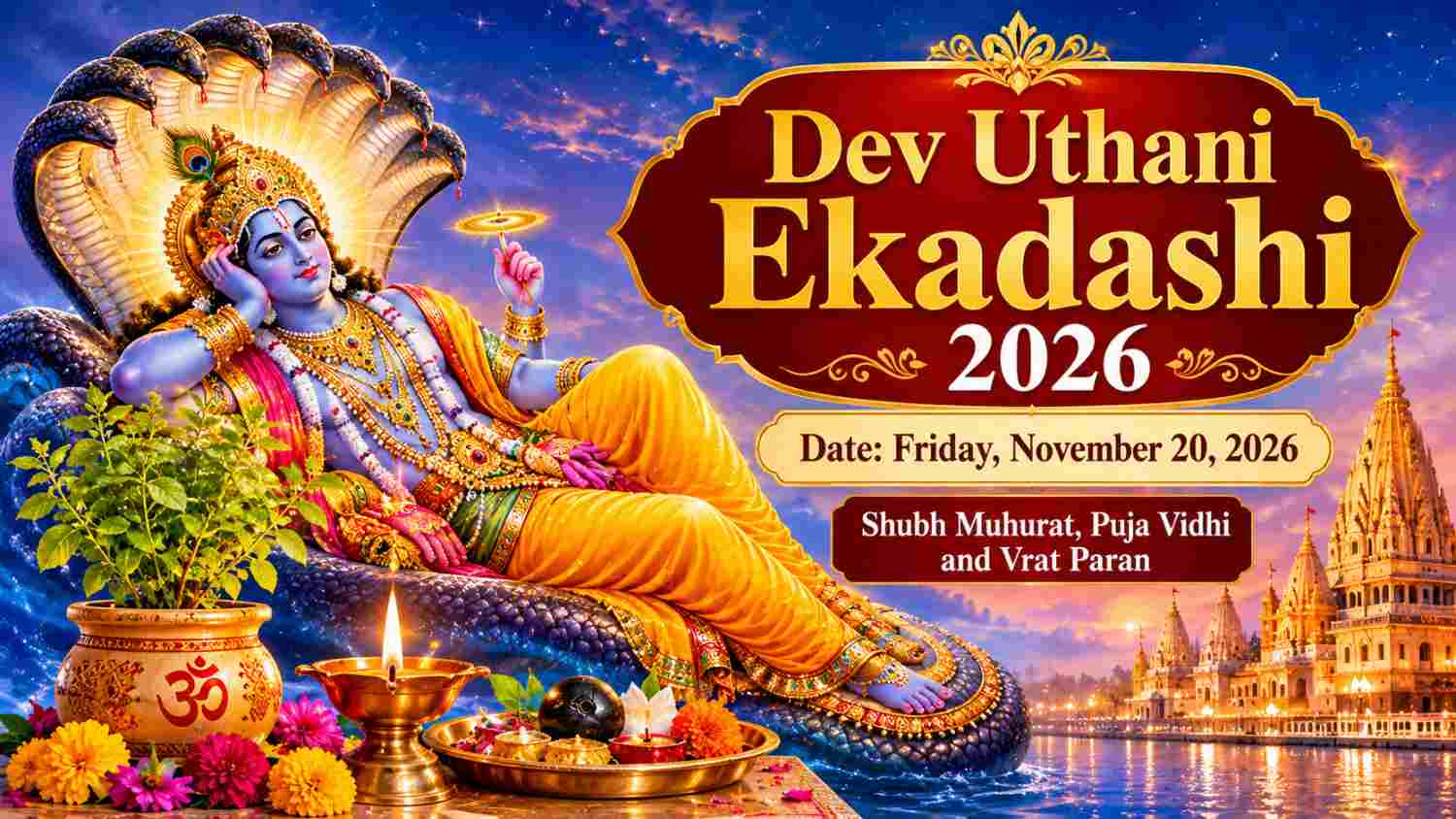
The festival is observed on the Ekadashi Tithi of Shukla Paksha in the Hindu month of Kartik. It marks the traditional conclusion of Chaturmas, a four-month period considered spiritually important in Hinduism. With the awakening of Lord Vishnu, many communities consider the period favourable for weddings and other auspicious ceremonies.
Devotees observe a fast, worship Lord Vishnu, recite religious stories, light lamps and offer prayers for happiness and prosperity. In several regions, the occasion is also associated with Tulsi Vivah, the ceremonial marriage of Goddess Tulsi and Lord Shaligram.
In 2026, Dev Uthani Ekadashi will be observed on Friday, November 20, according to the Smarta tradition. Some Vaishnava traditions will observe the fast on November 21. The date difference is important for devotees when planning their fast and prayers.
Dev Uthani Ekadashi 2026 Date and Day
Dev Uthani Ekadashi will fall on Friday, November 20, 2026, for devotees following the Smarta tradition.
The festival is observed during Kartik Shukla Ekadashi. It is believed that Lord Vishnu awakens from Yoga Nidra on this day, bringing Chaturmas to an end.
| Festival detail | Information |
|---|---|
| Festival | Dev Uthani Ekadashi |
| Year | 2026 |
| Smarta Vrat Date | Friday, November 20, 2026 |
| Vaishnava Vrat Date | Saturday, November 21, 2026 |
| Hindu Month | Kartik |
| Paksha | Shukla Paksha |
| Tithi | Ekadashi |
| Main Deity | Lord Vishnu |
| Also Known As | Devutthana Ekadashi, Prabodhini Ekadashi |
Why Are There Two Dates for Dev Uthani Ekadashi in 2026?
Some devotees may find different dates for Dev Uthani Ekadashi in 2026. This is because the Smarta and Vaishnava traditions can follow different rules for observing Ekadashi.
According to the reported Panchang timings, the Ekadashi Tithi begins after sunrise on November 20 and ends before sunrise on November 21.
- Smarta tradition: Most householders following the Smarta observance will keep the fast on Friday, November 20.
- Vaishnava tradition: Some Vaishnava devotees will observe the fast on Saturday, November 21, according to their religious tradition.
Therefore, devotees should follow their family tradition, sampradaya or the guidance of their priest rather than assuming that both dates are interchangeable.
Dev Uthani Ekadashi 2026 Tithi and Shubh Muhurat
The Ekadashi Tithi begins on the morning of November 20 and ends early on November 21. Devotees can perform their prayers during an auspicious period according to the local Panchang.
The following timings are reported for the New Delhi Panchang.
| Event | Date and time |
|---|---|
| Ekadashi Tithi Begins | November 20, 2026, 7:15 AM |
| Ekadashi Tithi Ends | November 21, 2026, 6:31 AM |
| Smarta Vrat Date | November 20, Friday |
| Abhijit Muhurat | 11:45 AM–12:28 PM |
| Hari Vasara Ends | November 21, 12:07 PM |
| Smarta Vrat Paran | November 21, 1:11 PM–3:18 PM |
Important: These timings are based on the New Delhi Panchang information reported for 2026. Tithi, puja and Paran timings can vary by location. Check the local Panchang before observing the fast or performing the rituals.
Dev Uthani Ekadashi 2026 Vrat Paran Date and Time
Vrat Paran means breaking the religious fast after completing the prescribed observance. On Ekadashi, devotees generally break their fast on the following Dwadashi Tithi, following the appropriate rules.
For devotees observing the Smarta fast on November 20, 2026, the reported Paran time is:
| Paran detail | Date and time |
|---|---|
| Vrat Date | November 20, 2026 |
| Paran Date | Saturday, November 21, 2026 |
| Hari Vasara Ends | 12:07 PM |
| Paran Time | 1:11 PM–3:18 PM |
Hari Vasara is the first part of Dwadashi and is traditionally avoided for breaking the Ekadashi fast. Devotees should wait until the prescribed time and complete Paran within the suitable window.
What About Vaishnava Vrat Paran?
Devotees following the Vaishnava tradition may observe the Ekadashi fast on November 21 instead of November 20. Their Paran will follow the corresponding Dwadashi rules.
Because the date and fasting procedure can differ by sampradaya, Vaishnava devotees should confirm their Paran time with their temple or local Panchang. The November 21 Paran window given above applies to the Smarta fast observed on November 20.
Why Is Dev Uthani Ekadashi Celebrated?
Dev Uthani Ekadashi celebrates the awakening of Lord Vishnu after his traditional four-month period of cosmic sleep.
According to Hindu belief, Lord Vishnu enters Yoga Nidra on Devshayani Ekadashi, which falls during the month of Ashadha. He awakens on Kartik Shukla Ekadashi, known as Dev Uthani Ekadashi.
This period of four months is called Chaturmas. During this time, many communities follow special religious practices, observe fasts and give importance to prayer, charity and spiritual discipline.
The awakening of Lord Vishnu is considered an important turning point in the Hindu religious calendar. It marks the conclusion of Chaturmas and the return of many auspicious ceremonies.
The festival is also associated with the beginning of the traditional wedding season. In several communities, marriages and other important religious functions are organised after Dev Uthani Ekadashi, according to suitable muhurat dates.
Religious Significance of Dev Uthani Ekadashi
Dev Uthani Ekadashi has a special place in the worship of Lord Vishnu. Devotees consider the occasion an opportunity to strengthen their faith and seek divine blessings.
1. Awakening of Lord Vishnu
The most important belief associated with this festival is that Lord Vishnu awakens from Yoga Nidra. Devotees welcome the Lord with prayers, bells, conch sounds and lamps.
2. End of Chaturmas
Dev Uthani Ekadashi marks the traditional conclusion of Chaturmas. During these four months, many devotees follow religious disciplines, perform charitable activities and focus on spiritual practices.
3. Beginning of Auspicious Ceremonies
After the conclusion of Chaturmas, many Hindu communities consider the period suitable for weddings, engagements, housewarming ceremonies and other auspicious functions. However, an individual ceremony still requires its own appropriate muhurat.
4. Importance of Lord Vishnu’s Worship
Lord Vishnu is worshipped as the preserver of the universe. Devotees offer flowers, Tulsi leaves, fruits and sweets while reciting prayers and Vishnu mantras.
5. Connection with Tulsi Vivah
Dev Uthani Ekadashi is closely associated with Tulsi Vivah in many Hindu traditions. The ceremonial marriage of Goddess Tulsi and Lord Shaligram is performed around this period. In 2026, Tulsi Vivah is listed for November 21 in the relevant festival calendars.
Dev Uthani Ekadashi Puja Vidhi 2026
Devotees observe Dev Uthani Ekadashi with fasting, prayers and special worship of Lord Vishnu. The puja can be performed at home or in a temple.
Here is a general outline of the traditional worship procedure.
Step 1: Wake Up Early and Take a Bath
Wake up early in the morning and take a bath. Wear clean clothes and prepare the place of worship. Maintain cleanliness throughout the puja.
Step 2: Take a Vrat Sankalp
After preparing for worship, take a sankalp to observe the Ekadashi fast according to your capacity and family tradition. Offer prayers to Lord Vishnu and seek blessings for the successful completion of the vrat.
Step 3: Prepare the Puja Area
Clean the home temple and arrange an image or idol of Lord Vishnu. Decorate the worship area with flowers and prepare the required puja materials.
Step 4: Offer Flowers and Tulsi Leaves
Offer fresh flowers, Tulsi leaves, fruits and sweets to Lord Vishnu. Tulsi holds a special place in Vishnu worship, so devotees traditionally include it in their offerings.
Step 5: Light a Diya and Incense
Light a ghee or oil lamp and incense sticks. Offer prayers while maintaining a peaceful atmosphere.
Step 6: Recite Vishnu Mantras
Devotees can chant Vishnu mantras according to their tradition. One commonly recited mantra is:
ॐ नमो भगवते वासुदेवाय।
You may also recite Vishnu Sahasranama or other devotional prayers.
Step 7: Read or Listen to the Vrat Katha
Read or listen to the traditional Dev Uthani Ekadashi Vrat Katha. Devotees believe that listening to religious stories helps strengthen faith and devotion.
Step 8: Perform Evening Aarti
In the evening, perform aarti of Lord Vishnu. Some traditions include lighting additional lamps and symbolically welcoming the awakening of the Lord with bells and conch sounds.
Step 9: Complete the Vrat with Paran
Devotees who observe the fast should break it on the appropriate Dwadashi according to their tradition and the local Panchang. Follow the prescribed Paran window.
Note: Puja practices may differ between regions and religious traditions. Follow your family customs or consult your priest for specific rituals.
Samagri Required for Dev Uthani Ekadashi Puja
The following items are commonly arranged for the worship of Lord Vishnu:
- Idol or picture of Lord Vishnu
- Tulsi leaves
- Yellow flowers
- Fresh fruits
- Sweets and bhog
- Turmeric and sandalwood
- Kumkum and akshat
- Diya and ghee or oil
- Cotton wicks
- Incense sticks
- Camphor
- Panchamrit, according to family custom
- Clean puja cloth
- Bell and conch, if available
- Puja plate and kalash
The exact list may vary according to family traditions and the type of puja.
Dev Uthani Ekadashi Vrat Rules
Devotees observe the Ekadashi fast according to their religious beliefs, health and family traditions.
Some commonly followed practices include:
- Begin the fast after taking a morning bath and making a sankalp.
- Worship Lord Vishnu with devotion.
- Avoid grains and regular cereals during the traditional fasting period.
- Some devotees observe a fruit-based fast, while others follow a stricter fast.
- Spend time in prayer, mantra chanting and religious reading.
- Avoid unnecessary arguments and maintain a peaceful attitude.
- Perform charity or help people in need according to your ability.
- Break the fast on Dwadashi at the prescribed time.
Fasting practices are not identical for everyone. People with medical conditions, pregnant women, older adults and those taking regular medication should not undertake strict fasting without appropriate medical advice.
What Is the Connection Between Dev Uthani Ekadashi and Tulsi Vivah?
Dev Uthani Ekadashi and Tulsi Vivah are closely connected through their religious association with Lord Vishnu.
Dev Uthani Ekadashi marks the traditional awakening of Lord Vishnu after Chaturmas. Tulsi Vivah celebrates the symbolic marriage of Goddess Tulsi with Lord Vishnu in his Shaligram form.
In several Hindu traditions, Tulsi Vivah is celebrated on Kartik Shukla Dwadashi, following Dev Uthani Ekadashi. Some families may perform the ceremony according to their regional customs.
In 2026, Tulsi Vivah is listed for Saturday, November 21. Devotees can therefore observe the Ekadashi fast on November 20 according to the Smarta tradition and participate in Tulsi Vivah on the following day, according to their local customs.
What Should Devotees Do on Dev Uthani Ekadashi?
Dev Uthani Ekadashi is an occasion for prayer, devotion and spiritual discipline. Devotees can observe the day through simple religious practices.
Worship Lord Vishnu
Offer prayers to Lord Vishnu and chant devotional mantras. Read religious texts or listen to Vishnu-related stories.
Observe the Fast According to Tradition
Choose the appropriate fasting method according to your family practice and health. A fast should be observed responsibly.
Light Lamps
Lighting a diya during worship is a common devotional practice. Families may also decorate their prayer area with flowers and traditional decorations.
Perform Charity
Many devotees consider charity an important part of religious observance. Offering food, clothes or assistance to people in need can be a meaningful way to mark the occasion.
Participate in Temple Prayers
Devotees may visit a nearby Vishnu temple and participate in prayers or special religious programmes, depending on local arrangements.
Frequently Asked Questions About Dev Uthani Ekadashi 2026
1. When is Dev Uthani Ekadashi in 2026?
Dev Uthani Ekadashi will be observed on Friday, November 20, 2026, according to the Smarta tradition. Some Vaishnava devotees will observe the fast on Saturday, November 21.
2. What is the date of Dev Uthani Ekadashi 2026?
The Smarta fasting date is November 20, 2026. The Vaishnava observance is November 21, 2026.
3. What is the Ekadashi Tithi timing in 2026?
The Ekadashi Tithi begins on November 20 at 7:15 AM and ends on November 21 at 6:31 AM, according to the reported New Delhi Panchang timings.
4. What is the shubh muhurat for Dev Uthani Ekadashi puja?
The reported Abhijit Muhurat for November 20, 2026, is 11:45 AM to 12:28 PM in New Delhi. Devotees should check their local Panchang for location-specific timings.
5. When is Dev Uthani Ekadashi Vrat Paran in 2026?
For devotees observing the Smarta fast on November 20, the reported Paran window is Saturday, November 21, from 1:11 PM to 3:18 PM.
6. Why is Dev Uthani Ekadashi celebrated?
Dev Uthani Ekadashi celebrates the traditional awakening of Lord Vishnu from his four-month-long Yoga Nidra. It also marks the conclusion of Chaturmas.
7. What is another name for Dev Uthani Ekadashi?
Dev Uthani Ekadashi is also known as Devutthana Ekadashi, Devotthan Ekadashi and Prabodhini Ekadashi.
8. What should devotees offer to Lord Vishnu on Dev Uthani Ekadashi?
Devotees traditionally offer Tulsi leaves, yellow flowers, fruits, sweets, sandalwood and other puja items to Lord Vishnu.
9. Is Tulsi Vivah celebrated on Dev Uthani Ekadashi?
Tulsi Vivah is closely associated with Dev Uthani Ekadashi. Many traditions celebrate it on Kartik Shukla Dwadashi, the day following the Smarta Ekadashi fast. In 2026, it is listed for November 21.
10. Why does the wedding season begin after Dev Uthani Ekadashi?
According to Hindu belief, Chaturmas concludes when Lord Vishnu awakens. Many communities consider the period after this observance favourable for weddings and other auspicious ceremonies.
Conclusion
Dev Uthani Ekadashi is an important Hindu festival dedicated to Lord Vishnu and his traditional awakening from Yoga Nidra. The occasion marks the end of Chaturmas and is associated with the return of auspicious ceremonies in many Hindu communities.
In 2026, the Smarta fast will be observed on Friday, November 20, while some Vaishnava traditions will observe it on November 21. For the Smarta fast, the reported Paran window is November 21 from 1:11 PM to 3:18 PM, based on the New Delhi Panchang.
Devotees can celebrate the occasion through fasting, Vishnu worship, mantra chanting, religious reading and charitable activities. Above all, the festival reminds people of the importance of faith, devotion and spiritual discipline.