Tulsi Vivah is an important Hindu religious festival that celebrates the ceremonial marriage of Goddess Tulsi with Lord Vishnu, commonly worshipped in the form of Shaligram. The occasion holds a special place in the Hindu calendar because it represents devotion, purity, prosperity and the sacred relationship between the divine couple.
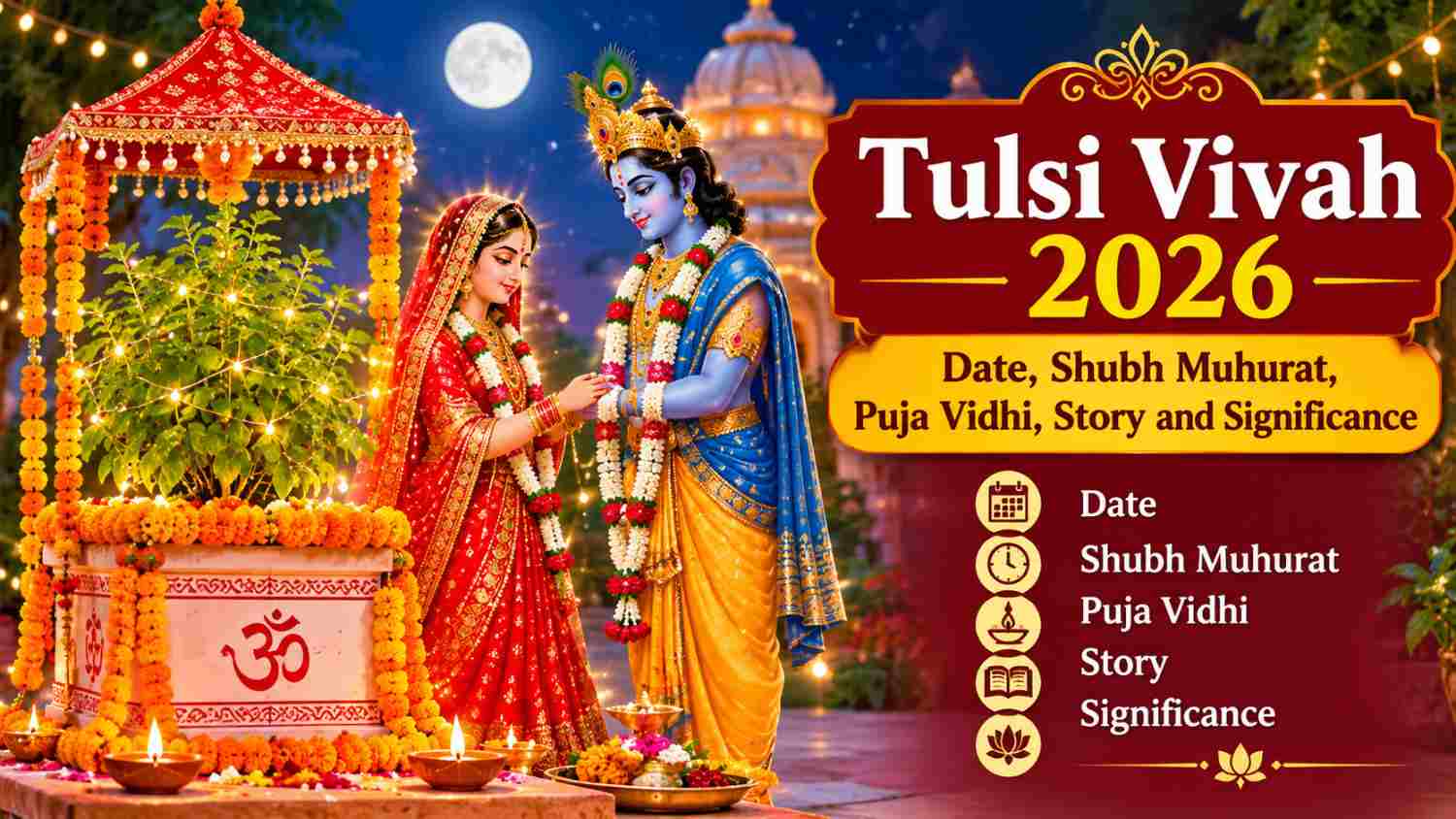
Every year, devotees organise a traditional wedding ceremony for the Tulsi plant in their homes and temples. The plant is decorated like a bride, a small mandap is prepared, and Lord Shaligram is placed beside Tulsi Mata to perform the marriage rituals. Families participate in the ceremony with flowers, lamps, sweets, prayers and devotional songs.
Tulsi Vivah is observed during the Shukla Paksha of the Kartik month. It is also associated with the period when Lord Vishnu is believed to awaken from his four-month cosmic sleep, known as Chaturmas.
In 2026, Tulsi Vivah will be observed on Saturday, November 21 according to the specific festival dates reported for the year. Devotees can use the occasion to offer prayers, perform the traditional wedding ceremony and seek blessings for peace and happiness in their families.
Tulsi Vivah 2026 Date and Day
Tulsi Vivah will be celebrated on Saturday, November 21, 2026.
The festival is traditionally associated with Kartik Shukla Dwadashi. The ceremonial marriage of Tulsi Mata and Lord Shaligram is performed according to family customs and regional traditions.
| Festival detail | Date or information |
|---|---|
| Festival | Tulsi Vivah |
| Year | 2026 |
| Date | November 21, 2026 |
| Day | Saturday |
| Hindu month | Kartik |
| Tithi | Shukla Paksha Dwadashi |
| Worshipped deities | Goddess Tulsi and Lord Vishnu |
| Form of Lord Vishnu | Shaligram |
Tulsi Vivah 2026 Tithi and Shubh Muhurat
According to the reported 2026 Panchang timings, the Dwadashi Tithi begins on November 21 and continues into the early morning of November 22.
| Event | Date and time |
|---|---|
| Dwadashi Tithi begins | November 21, 6:31 AM |
| Dwadashi Tithi ends | November 22, 4:56 AM |
| Pradosh Kaal / main puja window | November 21, 5:25 PM–7:49 PM |
| Godhuli Muhurat | November 21, 5:25 PM–6:13 PM |
Note: These are the timings reported for the 2026 observance. Panchang calculations and auspicious windows can differ according to location. Check the local Panchang before finalising the ceremony time.
Why Is Tulsi Vivah Celebrated?
Tulsi Vivah celebrates the divine marriage of Goddess Tulsi and Lord Vishnu. In Hindu tradition, Tulsi is regarded as a sacred plant and is worshipped as a manifestation of divine feminine energy.
The ceremony is not simply a symbolic wedding. It represents the spiritual connection between devotion and divine grace. Families perform the ritual with the belief that worshipping Tulsi and Lord Vishnu brings peace, harmony and auspiciousness into the household.
The festival is also connected with the conclusion of Chaturmas, the traditional four-month period during which Lord Vishnu is believed to remain in cosmic sleep. His awakening is celebrated as Devutthana Ekadashi or Dev Uthani Ekadashi.
In many Hindu traditions, the period after Dev Uthani Ekadashi is considered favourable for beginning weddings and other auspicious ceremonies. Tulsi Vivah is therefore regarded as an important occasion marking the return of auspicious activities.
The Story of Tulsi Vivah
The traditional story of Tulsi Vivah is connected with Goddess Vrinda, her devotion to Lord Vishnu and the demon king Jalandhar.
According to a popular religious legend, Vrinda was a deeply devoted woman and the wife of Jalandhar. Her devotion and spiritual power were believed to protect her husband. As long as her devotion remained unbroken, Jalandhar was considered difficult to defeat.
Jalandhar became increasingly powerful and began troubling the gods. The gods eventually approached Lord Vishnu for help because they could not defeat him through their own efforts.
According to the legend, Lord Vishnu took a form that caused Vrinda to believe her husband had returned. This interrupted her spiritual devotion, and Jalandhar consequently lost the protection associated with it. The gods were then able to defeat him.
When Vrinda discovered what had happened, she was deeply hurt and expressed her sorrow and anger towards Lord Vishnu. Different traditional accounts describe the events and curse in slightly different ways.
In one widely told version, Vrinda cursed Lord Vishnu, and he later became associated with the Shaligram stone form. After Vrinda’s death, she was believed to have transformed into the sacred Tulsi plant.
Lord Vishnu granted Tulsi a special place in his worship and promised to accept her leaves in religious offerings. The ceremonial marriage of Tulsi and Shaligram is celebrated as Tulsi Vivah.
This story explains the religious connection between Goddess Tulsi and Lord Vishnu and why Tulsi leaves hold a special place in Vaishnav worship.
Religious Significance of Tulsi Vivah
Tulsi Vivah is considered an auspicious occasion in Hindu tradition. It brings together the worship of Goddess Tulsi and Lord Vishnu through a symbolic wedding ceremony.
1. Symbol of Devotion and Purity
Tulsi is traditionally associated with devotion, purity and spiritual discipline. Worshipping the plant is considered a way of expressing respect for nature and divine energy.
2. Importance in Lord Vishnu’s Worship
Tulsi leaves are traditionally offered during the worship of Lord Vishnu and Krishna. Many devotees consider Tulsi an essential part of their daily prayers and religious offerings.
3. Beginning of the Wedding Season
Tulsi Vivah is associated with the return of auspicious ceremonies after Chaturmas. In several Hindu traditions, weddings and other religious functions begin after Devutthana Ekadashi.
4. Prayer for Family Happiness
Families perform Tulsi Vivah with the belief that the ceremony brings peace, happiness and harmony into the home. Married couples may pray for a healthy and harmonious relationship.
5. Importance of Nature
The festival also highlights the traditional respect given to the Tulsi plant. Its worship encourages families to care for the plant and recognise its importance in household and religious life.
Tulsi Vivah Puja Vidhi 2026
Tulsi Vivah is performed with rituals similar to a traditional Hindu wedding. The ceremony can be organised at home or in a temple, depending on family customs.
Here is a general outline of the traditional puja procedure.
Step 1: Clean the Puja Area
Clean the courtyard, balcony or designated worship area where the Tulsi plant is kept. Decorate the surroundings with flowers, rangoli and traditional ornaments.
Step 2: Prepare the Tulsi Mandap
Place the Tulsi plant in a suitable and clean position. Prepare a small mandap around the plant using sugarcane stalks or other traditional decorative materials.
Decorate the mandap with flowers, leaves, cloth and lights.
Step 3: Decorate Goddess Tulsi
Goddess Tulsi is traditionally decorated as a bride. Apply turmeric and sandalwood as per family custom, and offer flowers, a garland, red or yellow cloth and traditional bridal items.
The decorations may vary according to regional practices.
Step 4: Place Lord Shaligram
Place Lord Shaligram near the Tulsi plant. Shaligram is worshipped as a sacred form of Lord Vishnu.
If a Shaligram is not available, families may follow their customary practice of using an image or idol of Lord Vishnu.
Step 5: Perform Ganesh and Vishnu Puja
Begin the ceremony with prayers to Lord Ganesha. Then worship Lord Vishnu and Goddess Tulsi with flowers, incense, a lamp and traditional offerings.
Chant devotional prayers according to your family’s practice.
Step 6: Perform the Marriage Ritual
Perform the symbolic marriage ceremony between Tulsi Mata and Lord Shaligram. A family member may conduct the traditional wedding rituals, including the offering of a garland and other customary ceremonies.
In some traditions, Lord Shaligram is carried around the Tulsi plant during the ceremony.
Step 7: Offer Bhog and Perform Aarti
Offer fruits, sweets and other suitable food items as bhog. Light incense and a diya, and perform the aarti of Goddess Tulsi and Lord Vishnu.
Family members may sing devotional songs and participate in the prayers.
Step 8: Distribute Prasad
Conclude the ceremony by distributing prasad among family members and guests. Devotees may also offer food or other assistance to people in need as part of their religious observance.
Important: Ritual details can vary between regions and families. Follow your household tradition or the guidance of your local priest.
Samagri Required for Tulsi Vivah
Families generally arrange the following items for the ceremony:
- Tulsi plant and a clean pot
- Shaligram or an image of Lord Vishnu
- Flowers and garlands
- Turmeric and sandalwood
- Kumkum and akshat, where appropriate
- Red or yellow cloth
- Sugarcane stalks for the mandap, if used
- Diya, ghee or oil and cotton wicks
- Incense sticks and camphor
- Fruits and sweets
- Betel leaves and nuts, according to custom
- Traditional bridal offerings
- Puja plate and kalash
- Prasad for distribution
The exact list depends on the type of ceremony and local customs.
Tulsi Vivah Traditions Followed at Home
Tulsi Vivah is celebrated in different ways across India. Some families organise a simple puja, while others arrange an elaborate wedding ceremony.
Traditional Wedding Decorations
The Tulsi plant is decorated with flowers, colourful cloth and ornaments. A small mandap is prepared to create the atmosphere of a traditional Hindu wedding.
Devotional Songs and Bhajans
Women and other family members often sing bhajans and traditional wedding songs during the ceremony. These songs celebrate the marriage of Tulsi Mata and Lord Vishnu.
Lighting Diyas
Lighting a diya near the Tulsi plant is a common household tradition. The lamp is offered with prayers and devotion.
Offering Prasad
Fruits, sweets and other traditional offerings are prepared for the deities. After the puja, prasad is distributed among family members and visitors.
Community Celebrations
Temples and religious communities may organise group ceremonies, devotional programmes and special prayers. The scale of celebration depends on local traditions.
What Should Devotees Keep in Mind During Tulsi Vivah?
Devotees generally observe the festival with cleanliness, devotion and respect for traditional practices.
Some commonly followed practices include:
- Clean the area around the Tulsi plant before beginning the ceremony.
- Use fresh flowers and clean puja materials.
- Treat the Tulsi plant respectfully during decoration.
- Offer prayers to Lord Vishnu and Goddess Tulsi.
- Follow the puja timings according to the local Panchang.
- Avoid treating regional customs as compulsory rules for every household.
- Participate in charitable activities if possible.
The purpose of the celebration is devotion and respect, rather than the scale or expense of the decorations.
Tulsi Vivah and Dev Uthani Ekadashi: What Is the Connection?
Dev Uthani Ekadashi and Tulsi Vivah are closely connected in the Kartik month.
According to Hindu belief, Lord Vishnu enters a period of cosmic sleep during Devshayani Ekadashi and awakens on Dev Uthani Ekadashi. This period is known as Chaturmas.
The awakening of Lord Vishnu is considered an important religious occasion. Many communities regard it as the beginning of a favourable period for weddings and other auspicious ceremonies.
Tulsi Vivah follows this important observance and celebrates the marriage of Goddess Tulsi with Lord Vishnu in his Shaligram form.
However, the exact day on which families perform Tulsi Vivah can vary according to regional customs and Panchang traditions.
Frequently Asked Questions About Tulsi Vivah 2026
1. When is Tulsi Vivah in 2026?
Tulsi Vivah will be observed on Saturday, November 21, 2026, according to the specific 2026 festival calendars published by Dainik Jagran and Amar Ujala.
2. Which day is Tulsi Vivah in 2026?
Tulsi Vivah falls on Saturday, November 21, 2026.
3. What is the shubh muhurat for Tulsi Vivah 2026?
The reported evening puja window is 5:25 PM to 7:49 PM on November 21, 2026. The Godhuli Muhurat is listed as 5:25 PM to 6:13 PM. Check your local Panchang for location-specific timings.
4. Which God is married to Tulsi Mata?
According to Hindu tradition, Goddess Tulsi is ceremonially married to Lord Vishnu, commonly worshipped in the form of Shaligram.
5. Why is Tulsi Vivah celebrated?
Tulsi Vivah celebrates the divine marriage of Goddess Tulsi and Lord Vishnu. It symbolises devotion, purity and the return of auspicious religious activities after Chaturmas.
6. Can Tulsi Vivah be performed at home?
Yes. Families commonly organise Tulsi Vivah at home by decorating the Tulsi plant, placing Shaligram nearby and performing traditional wedding rituals.
7. What is required for Tulsi Vivah puja?
Common puja items include a Tulsi plant, Shaligram, flowers, garlands, turmeric, sandalwood, cloth, diya, incense, fruits and sweets. The list can vary according to family tradition.
8. Is Tulsi Vivah connected with Dev Uthani Ekadashi?
Yes. Both observances are connected with the awakening of Lord Vishnu after Chaturmas. Tulsi Vivah is celebrated during the Kartik Shukla period following Dev Uthani Ekadashi, according to the relevant regional tradition.
9. What is the significance of Tulsi leaves in Hindu worship?
Tulsi leaves are considered sacred and are traditionally offered to Lord Vishnu and Lord Krishna. They hold an important place in many Vaishnav religious practices.
10. Does the Tulsi Vivah date change every year?
Yes. Tulsi Vivah follows the Hindu lunar calendar, so its corresponding Gregorian date changes every year.
Conclusion
Tulsi Vivah is a meaningful Hindu festival that celebrates the sacred marriage of Goddess Tulsi and Lord Vishnu. The ceremony brings families together through prayers, traditional wedding rituals, devotional songs and offerings.
In 2026, the main observance is listed for Saturday, November 21. Devotees can prepare for the occasion by decorating the Tulsi plant, arranging the puja materials and checking the local Panchang for the appropriate ceremony time.
Beyond its religious significance, Tulsi Vivah reminds people of the importance of devotion, family traditions and respect for nature. Celebrated with sincerity and simplicity, the festival offers an opportunity to bring prayer and togetherness into the home.