Parsva Ekadashi 2026, also known as Parivartini Ekadashi, Parshva Ekadashi, Padma Ekadashi and Vamana Ekadashi, will be observed on Tuesday, September 22, 2026.
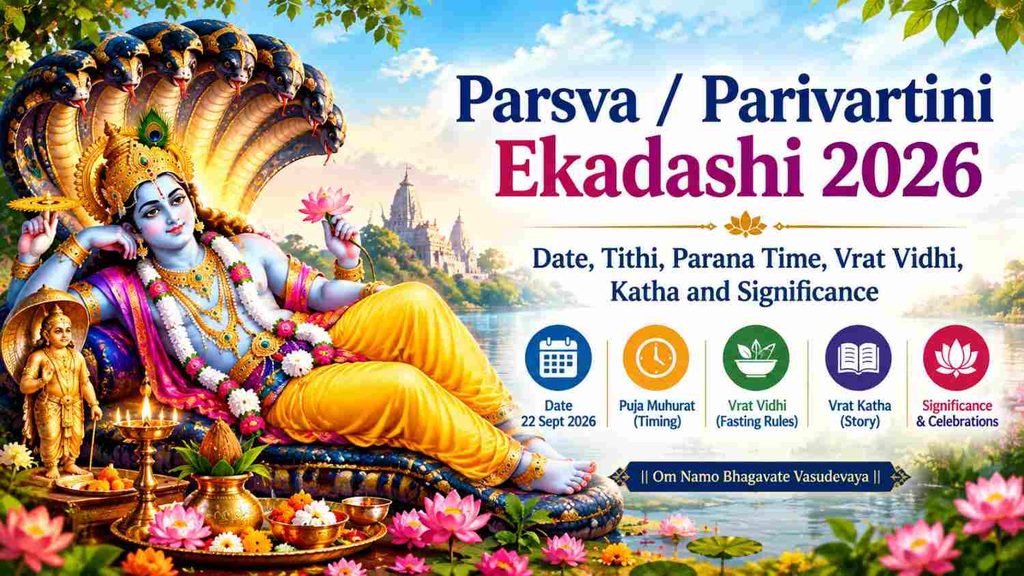
This sacred Ekadashi falls during the Shukla Paksha of the Bhadrapada month and is dedicated to Lord Vishnu. The festival has a special connection with the Chaturmas period, when Lord Vishnu is traditionally believed to be in Yoga Nidra. According to religious tradition, on Parivartini Ekadashi, Lord Vishnu changes or turns his sleeping position, which is why this Ekadashi is called “Parivartini,” meaning a change or turning.
For devotees, the day is an opportunity to observe a vrat, worship Lord Vishnu and his Vamana form, chant Vishnu mantras, listen to the Ekadashi Vrat Katha, practice self-discipline, and perform charity.
Parsva Ekadashi 2026 Date
Parsva Ekadashi 2026 will be observed on Tuesday, September 22, 2026.
The Ekadashi Tithi begins at approximately 8:00 PM on September 21, 2026, and ends at approximately 9:43 PM on September 22, 2026. Since Ekadashi Tithi is present at sunrise on September 22, the vrat is observed on September 22 according to the Udaya Tithi rule.
Quick Details
| Detail | Parsva / Parivartini Ekadashi 2026 |
|---|---|
| Festival | Parsva Ekadashi |
| Other Names | Parivartini Ekadashi, Parshva Ekadashi, Padma Ekadashi, Vamana Ekadashi |
| Date | Tuesday, September 22, 2026 |
| Hindu Month | Bhadrapada |
| Paksha | Shukla Paksha |
| Tithi Begins | September 21, around 8:00 PM |
| Tithi Ends | September 22, around 9:43 PM |
| Vrat Day | September 22, 2026 |
| Parana Date | Wednesday, September 23, 2026 |
| Parana Time | Approximately 6:09 AM to 8:35 AM |
| Main Deity | Lord Vishnu |
| Associated Form | Vamana Avatar |
| Significance | Mid-Chaturmas turning of Lord Vishnu |
The exact timing can vary slightly according to the city and Panchang used, so devotees should check the local Panchang before observing the vrat or breaking the fast.
What Is Parsva Ekadashi?
Parsva Ekadashi is the Ekadashi that falls during the Shukla Paksha of Bhadrapada.
The name “Parsva” is associated with the idea of turning or changing sides. It is particularly connected with the traditional belief that Lord Vishnu, who is resting in Yoga Nidra during Chaturmas, changes his sleeping position on this day.
Because of this belief, the festival is also called Parivartini Ekadashi, meaning the Ekadashi associated with a change or turning.
Different regions and traditions may use different names for the same observance. Common names include:
- Parshva Ekadashi
- Parivartini Ekadashi
- Padma Ekadashi
- Vamana Ekadashi
- Jaljhulani Ekadashi
The names can vary depending on regional religious traditions and the particular Vaishnava calendar being followed.
Why Is Parivartini Ekadashi Called Parivartini?
The word Parivartini refers to a change, turning, or transformation.
According to traditional belief, Lord Vishnu rests in Yoga Nidra during Chaturmas. On this Ekadashi, he is believed to turn from one side to the other while resting on Shesha.
This symbolic turning gives the festival its distinctive name.
For devotees, the idea can also be understood spiritually. A “turning” can represent an opportunity to change one’s habits, thoughts, actions, and priorities.
Therefore, Parivartini Ekadashi is not only associated with fasting but also with self-reflection, devotion and spiritual renewal.
Parsva Ekadashi 2026 Tithi Timings
The most important timing information for Parsva Ekadashi 2026 is the Ekadashi Tithi itself.
The Bhadrapada Shukla Ekadashi Tithi is expected to:
Begin: Around 8:00 PM on Monday, September 21, 2026
End: Around 9:43 PM on Tuesday, September 22, 2026
Because the Ekadashi Tithi is present at sunrise on September 22, devotees will observe the Ekadashi vrat on Tuesday, September 22, 2026.
This is why some people may initially wonder whether the vrat should be observed on September 21 or September 22. The sunrise-based observance places the fasting day on September 22.
Parivartini Ekadashi 2026 Parana Time
The Parana is the traditional process of breaking the Ekadashi fast on the following Dwadashi day.
For Parsva Ekadashi 2026, the Parana will take place on:
Wednesday, September 23, 2026
The commonly cited Parana window is approximately:
6:09 AM to 8:35 AM on September 23, 2026.
Devotees who are observing the vrat should follow the Parana timing applicable to their location and tradition.
It is important not to confuse the Ekadashi fasting day with the Parana day. The vrat is observed on September 22, while the fast is broken on September 23 during Dwadashi.
Parsva Ekadashi 2026 Puja Muhurat
Puja timings can vary according to location because sunrise, sunset and other Panchang calculations differ from one city to another.
For this reason, there is no single universal India-wide puja time that should be applied to every location.
A Delhi Panchang for September 22, 2026 lists Abhijit Muhurat around 11:49 AM to 12:37 PM, along with other auspicious periods during the day.
For a home puja, devotees can perform Lord Vishnu worship during an appropriate daytime period while following their local Panchang.
The most important dates to remember are:
Vrat: September 22, 2026
Parana: September 23, 2026
Parana Window: Approximately 6:09 AM–8:35 AM, subject to local Panchang.
How to Observe Parsva Ekadashi Vrat
Devotees observe Parsva Ekadashi in different ways depending on their family tradition and Vaishnava sampradaya.
Some people observe a strict fast, while others follow a fruit-based or lighter fasting practice.
A simple observance can include:
- Wake up early on Ekadashi.
- Take a bath and wear clean clothes.
- Clean the puja area.
- Place an image or idol of Lord Vishnu.
- Offer flowers, Tulsi leaves and fruits.
- Chant Vishnu mantras.
- Read or listen to the Parsva Ekadashi Vrat Katha.
- Avoid grains and other foods prohibited by the chosen fasting tradition.
- Spend time in prayer and meditation.
- Perform charity or offer food to people in need.
- Maintain a peaceful and devotional atmosphere.
- Break the fast on Dwadashi at the appropriate Parana time.
Fasting practices differ between traditions, so devotees should follow the rules they normally observe rather than assuming that every Ekadashi tradition is identical.
Parsva Ekadashi Puja Vidhi
A simple Lord Vishnu puja can be performed at home.
Step 1: Clean the Puja Area
Clean the area where you will perform the puja. Place a clean cloth on the worship platform.
Step 2: Place Lord Vishnu’s Image or Idol
Place an image or idol of Lord Vishnu. Devotees who specifically follow the Vamana tradition may worship Lord Vamana.
Step 3: Light a Diya
Light a diya and incense before beginning the main worship.
Step 4: Offer Water
Offer clean water while remembering Lord Vishnu and seeking his blessings.
Step 5: Offer Tulsi
Tulsi is traditionally associated with Vishnu worship. Offer Tulsi leaves where appropriate according to your tradition.
Step 6: Offer Flowers and Bhog
Offer yellow or other suitable flowers, fruits and a simple vegetarian bhog.
Step 7: Chant Vishnu Mantras
Devotees can chant Vishnu’s names or recite traditional Vishnu mantras.
Step 8: Read the Vrat Katha
Reading or listening to the Parsva Ekadashi Vrat Katha is an important devotional practice for many worshippers.
Step 9: Perform Aarti
Complete the puja with Lord Vishnu’s aarti.
Step 10: Practice Charity
Charity and helping people in need are traditionally considered meaningful activities on Ekadashi and Dwadashi.
Parsva Ekadashi Puja Samagri
The exact puja samagri can differ by tradition, but a simple home puja may include:
- Lord Vishnu or Lord Vamana image
- Clean yellow cloth
- Flowers
- Tulsi leaves
- Chandan
- Roli
- Akshat
- Diya
- Ghee or oil
- Incense sticks
- Fruits
- Coconut
- Panchamrit
- Milk
- Curd
- Honey
- Sweets
- Water
- Kalash
- Prasad
There is no need to make the ritual unnecessarily complicated. Devotional sincerity and following one’s tradition are more important than collecting a large number of items.
Parsva Ekadashi Fasting Rules
Ekadashi fasting is traditionally associated with avoiding grains and certain foods.
Depending on the tradition, devotees may choose one of several fasting patterns.
Nirjala Fast
Some devotees observe a strict fast without food or water. This should only be undertaken by people who are accustomed to it and whose health permits it.
Phalahar Fast
Some devotees consume fruits, milk and other permitted fasting foods.
Satvik Food
Others follow a simple fasting diet while avoiding grains, beans and foods prohibited by their tradition.
Commonly avoided foods may include:
- Rice
- Wheat
- Grains
- Pulses
- Certain beans
- Meat
- Alcohol
- Foods considered unsuitable for the chosen vrat
Rules vary between traditions, so the specific fasting method should be followed according to one’s family or religious practice.
People with medical conditions, children, older adults, pregnant women and anyone who should not fast should prioritize health and seek appropriate medical advice.
Parsva Ekadashi Vrat Katha
The religious significance of Parivartini Ekadashi is connected with Lord Vishnu and his Vamana form.
Traditional accounts associate this Ekadashi with the period of Chaturmas and the divine turning of Lord Vishnu while he rests in Yoga Nidra.
The Vamana connection is also important because Lord Vamana is the fifth incarnation of Lord Vishnu in the commonly followed Dashavatara tradition.
The story of Vamana and King Bali is one of the important narratives associated with Vishnu’s divine manifestations.
King Bali was known for his generosity and devotion, while Lord Vishnu appeared as Vamana, a dwarf Brahmin. The story describes how Vamana requested three steps of land and ultimately covered the worlds with his divine strides.
Because of this association, devotees may worship Lord Vamana on Parivartini Ekadashi and listen to stories connected with his incarnation.
The vrat katha is traditionally used as a way of remembering devotion, humility, faith and the power of divine grace.
Religious Significance of Parivartini Ekadashi
Parivartini Ekadashi occurs during Chaturmas, making it particularly significant in Vaishnava traditions.
The festival represents a spiritual turning point.
Devotees may use the day to think about:
- Personal transformation
- Self-discipline
- Devotion
- Forgiveness
- Spiritual growth
- Compassion
- Charity
- Control over unnecessary desires
Traditional beliefs also associate the vrat with spiritual purification and the seeking of Lord Vishnu’s blessings. Such benefits are matters of religious faith rather than scientifically established outcomes.
Importance of Lord Vamana on Parivartini Ekadashi
Lord Vamana is one of the major avatars of Lord Vishnu.
The Vamana form represents an important story in Hindu tradition involving King Bali and the three steps of the divine being.
Because Parivartini Ekadashi is associated with Lord Vishnu’s change during Chaturmas and with the Vamana tradition, many devotees include Vamana worship in their Ekadashi observance.
A devotee may therefore choose to:
- Worship Lord Vishnu
- Worship Lord Vamana
- Read the Vamana Avatar story
- Chant Vishnu’s names
- Listen to Vishnu-related devotional texts
- Offer Tulsi and fruits
- Perform charity
What to Offer Lord Vishnu on Parivartini Ekadashi?
Devotees commonly offer simple sattvic items such as:
- Tulsi leaves
- Yellow flowers
- Fruits
- Milk
- Panchamrit
- Sweets
- Coconut
- Water
- Seasonal fruits
Offerings can vary by region and tradition.
Tulsi is particularly associated with Vishnu worship, but devotees should follow their own customary puja practices.
Benefits of Observing Parivartini Ekadashi
Traditional Hindu beliefs associate Ekadashi fasting and Vishnu worship with spiritual benefits.
Devotees commonly observe the vrat with the intention of:
- Seeking Lord Vishnu’s blessings
- Developing self-discipline
- Reducing attachment to material desires
- Practicing devotion
- Seeking forgiveness
- Cultivating inner peace
- Performing charity
- Spending more time in prayer and spiritual reflection
These are religious beliefs and should be understood within their spiritual and cultural context.
What Should You Do on Parivartini Ekadashi?
If you want to observe the festival in a simple way, you can follow this routine:
Morning
- Wake up early.
- Take a bath.
- Wear clean clothes.
- Clean your puja area.
- Worship Lord Vishnu.
- Offer Tulsi, flowers and fruits.
- Take a vrat sankalp according to your tradition.
During the Day
- Follow your chosen fasting method.
- Chant Vishnu mantras.
- Read the Ekadashi Vrat Katha.
- Read or listen to the Vamana Avatar story.
- Avoid unnecessary arguments and negative activities.
- Spend time in prayer or meditation.
Evening
- Perform Vishnu aarti.
- Offer bhog.
- Listen to devotional bhajans.
- Consider helping someone in need.
Next Morning
- Perform morning prayers.
- Follow the local Panchang for Parana.
- Break the fast during the prescribed Dwadashi Parana window.
Parsva Ekadashi vs Parivartini Ekadashi
Many people search for Parsva Ekadashi while others search for Parivartini Ekadashi.
These names generally refer to the same Ekadashi observance in this context.
| Name | Meaning / Association |
|---|---|
| Parsva Ekadashi | Associated with the turning of Lord Vishnu |
| Parivartini Ekadashi | “Parivartini” refers to change or turning |
| Padma Ekadashi | Another traditional name |
| Vamana Ekadashi | Associated with Lord Vamana |
| Jaljhulani Ekadashi | Regional/traditional name |
The exact name used can vary by region and religious calendar.
Parsva Ekadashi 2026 FAQs
When is Parsva Ekadashi in 2026?
Parsva Ekadashi will be observed on Tuesday, September 22, 2026.
When is Parivartini Ekadashi 2026?
Parivartini Ekadashi will be observed on September 22, 2026. It is the same Ekadashi commonly referred to as Parsva or Parshva Ekadashi.
When does Ekadashi Tithi begin in 2026?
The Bhadrapada Shukla Ekadashi Tithi begins at approximately 8:00 PM on September 21, 2026.
When does Ekadashi Tithi end?
The Ekadashi Tithi ends at approximately 9:43 PM on September 22, 2026.
When is Parivartini Ekadashi Parana in 2026?
The Parana will be performed on Wednesday, September 23, 2026, approximately between 6:09 AM and 8:35 AM, subject to the applicable local Panchang.
Is Parsva Ekadashi also called Padma Ekadashi?
Yes. Parsva or Parivartini Ekadashi is also known as Padma Ekadashi in some traditions.
Is Parivartini Ekadashi associated with Lord Vamana?
Yes. Parivartini Ekadashi is associated with Lord Vishnu’s Vamana Avatar in traditional religious observance.
Why is it called Parivartini Ekadashi?
It is called Parivartini because religious tradition associates this day with Lord Vishnu changing or turning his sleeping position during Chaturmas.
Can I observe Parivartini Ekadashi at home?
Yes. Devotees can perform a simple Lord Vishnu or Lord Vamana puja at home, observe their chosen fasting practice, chant Vishnu’s names and perform charity.
What should be avoided during Ekadashi fasting?
Traditional Ekadashi rules generally avoid grains and certain other foods. Meat and alcohol are also generally avoided. Exact rules vary by tradition.
Is fasting compulsory on Parivartini Ekadashi?
No single fasting method applies to everyone. Devotees follow different traditions, and health should always be considered before undertaking a fast.
What is the main spiritual message of Parivartini Ekadashi?
The central theme is spiritual change and renewal. The symbolic turning of Lord Vishnu can inspire devotees to reflect on their own habits, actions, devotion and spiritual direction.
Conclusion
Parsva Ekadashi 2026, also known as Parivartini Ekadashi, will be observed on Tuesday, September 22, 2026.
The Bhadrapada Shukla Ekadashi Tithi begins around 8:00 PM on September 21 and ends around 9:43 PM on September 22. The vrat is therefore observed on September 22. The fast is broken on Wednesday, September 23, with the commonly cited Parana window falling around 6:09 AM to 8:35 AM, subject to local Panchang calculations.
The festival is associated with Lord Vishnu, the Vamana Avatar, Chaturmas and the traditional belief that Lord Vishnu changes his sleeping position during this period.
For devotees, Parivartini Ekadashi is more than a fasting day. It can be a time to pause, pray, practice self-discipline, help others and reflect on positive changes in life.
Whether you observe a strict fast, a simple fruit-based vrat, or participate in Vishnu worship at home or in a temple, the most important part is to follow your tradition with sincerity and respect.